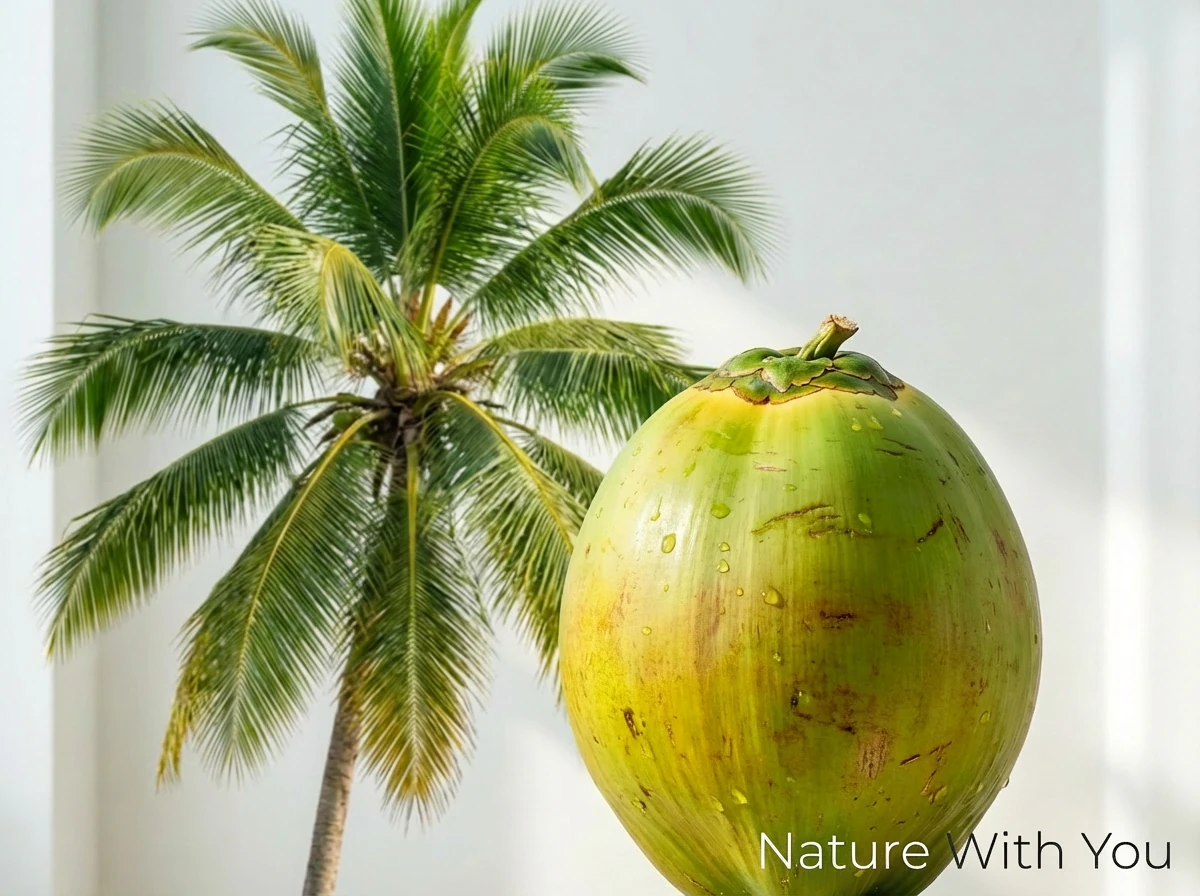
🥥 Coconut at a Glance
Coconut (Cocos nucifera), known as nariyal (नारियल) in Hindi, is nature’s most complete package — offering hydrating water, nutritious meat, creamy milk, and health-boosting oil all from a single fruit. Deeply woven into Indian culture, coconut is sacred in Hindu rituals, essential in South Indian and Kerala cuisine, and a cornerstone of Ayurvedic wellness. The coconut palm is rightly called the “Kalpavriksha” (wish-fulfilling tree) in Sanskrit, because every part — from husk to water — serves a purpose. Rich in medium-chain triglycerides (MCTs), electrolytes, and essential minerals, coconut supports energy, brain health, and immunity.
✨ Why It’s Special
- 🌴 Called “Tree of Life” (Kalpavriksha) — every single part of the coconut palm has a practical use, from fruit to fiber to timber
- 🧬 Unique MCT fats — coconut is one of the richest natural sources of medium-chain triglycerides, which are metabolized directly for quick energy
- 💧 Natural IV fluid — coconut water has been used as emergency intravenous hydration due to its near-perfect electrolyte balance
- 🛕 Sacred in Indian culture — breaking a coconut is an essential ritual in Hindu temples, weddings, and auspicious ceremonies across India
- 🧪 Lauric acid powerhouse — coconut oil contains ~50% lauric acid, the same beneficial antimicrobial fat found in human breast milk
💪 Health Benefits
- ✅ Rich in MCTs (Medium-Chain Triglycerides) — metabolized directly by the liver for quick, sustained energy and improved brain function
- ✅ Coconut water provides natural electrolytes (potassium, sodium, magnesium) — superior to many sports drinks for hydration
- ✅ Contains lauric acid with potent antimicrobial, antiviral, and antifungal properties — supports immune defense
- ✅ Supports heart health by raising beneficial HDL cholesterol levels and improving overall cholesterol ratio
- ✅ High in dietary fiber (9g/100g meat) — promotes digestive regularity, feeds gut bacteria, and enhances satiety
- ✅ Helps regulate blood sugar levels — MCTs improve insulin sensitivity and support metabolic health
- ✅ Promotes healthy skin and hair — both topical application and internal consumption nourish skin moisture and hair strength
- ✅ Aids weight management — MCTs increase fat oxidation and thermogenesis, promoting calorie burn
- ✅ Rich in manganese (75% RDI per 100g) — essential for bone health, metabolism, and antioxidant defense
- ✅ Supports thyroid function and energy production through healthy saturated fats and trace minerals
| Nutrient |
Amount |
| Calories |
354 kcal |
| Carbohydrates |
15.2 g |
| Natural Sugar |
6.2 g |
| Fiber |
9 g |
| Protein |
3.3 g |
| Fat |
33.5 g |
| Saturated Fat |
29.7 g (mostly MCTs) |
| Vitamin C |
3.3 mg |
| Potassium |
356 mg |
| Magnesium |
32 mg |
| Manganese |
1.5 mg (75% of RDI) |
| Iron |
2.4 mg |
Note: Coconut offers two distinct nutritional profiles. Mature coconut meat (above) is calorie-dense and fat-rich — ideal for cooking and oil extraction. Tender coconut water is the opposite: just 19 kcal per 100ml with 250mg potassium and 3.7g natural sugars, making it a perfect low-calorie hydration drink.
🔄 Quick Comparison: Coconut vs Avocado — Healthy Fats Face-Off
| Feature |
🥥 Coconut Meat (100g) |
🥑 Avocado (100g) |
| Calories |
354 kcal |
160 kcal |
| Total Fat |
33.5 g |
15 g |
| Dominant Fat Type |
Saturated (MCTs/lauric) |
Monounsaturated (oleic) |
| Fiber |
9 g |
6.7 g |
| Potassium |
356 mg |
485 mg |
| Sugar |
6.2 g |
0.7 g |
| Best For |
Quick energy, antimicrobial |
Heart health, keto |
| Availability (India) |
Widely available everywhere |
Urban supermarkets |
📅 Seasonal Availability
- 🌴 Year-round availability — coconut palms produce fruit continuously in tropical coastal climates
- 🌊 Best quality from coastal states like Kerala, Goa, Tamil Nadu, Karnataka, and Andhra Pradesh
- 🥥 Tender coconut (water-rich) peaks during hot summer months (March–June) when demand for hydration is highest
- 🌰 Mature coconut (meat-rich) available throughout the year for cooking, grating, and oil extraction
- 📦 Coconut products (milk, oil, desiccated, cream) available globally year-round in packaged form
🛒 How to Choose & Store Coconut
How to Choose
For Tender Coconut (Water-rich):
- 🟢 Light green or ivory-colored outer shell
- 💧 Shake to hear sloshing water inside — more water means fresher
- 🌱 Fresh-looking, unblemished outer husk
- ⚖️ Feels heavy for its size (indicates plenty of water)
For Mature Coconut (Meat-rich):
- 🟤 Brown, hard shell with three intact “eyes”
- 🔊 Shake to hear water sloshing — silence means it’s dried out or spoiled
- 👁️ Three eyes should be dry, firm, and crack-free
- ⚖️ Heavy weight indicates fresh, moist meat inside
Avoid:
- ❌ Moldy spots, cracks, or wet/leaking eyes (indicates spoilage)
- ❌ No sound when shaking (water has dried up — stale)
- ❌ Sour or fermented smell
- ❌ Very light weight (meat has dried out or deteriorated)
How to Store
- 🌡 Whole mature coconut: Room temperature in a cool, dry place for 2–4 months
- 🧊 Fresh coconut meat: Refrigerate in airtight container for 5–7 days
- ❄ Long-term storage: Freeze shredded/grated coconut for up to 6 months
- 💧 Coconut water: Consume fresh immediately; if stored, refrigerate and use within 1–2 days
- 🥛 Coconut milk (opened): Refrigerate and use within 3–4 days
- 🛢️ Coconut oil: Store in a cool, dry place — stays good for up to 2 years
🥄 How to Use / Consume
Fresh Consumption
- 💧 Drink tender coconut water directly — the ultimate natural hydration drink
- 🍴 Eat fresh tender coconut flesh (malai) as a light, refreshing snack
- 🥥 Grate mature coconut and add to chutneys, salads, and rice dishes
- 🍚 Use in traditional South Indian dishes — avial, thoran, kozhukattai, puttu
Beverages
- 🏃 Post-workout coconut water for electrolyte replenishment — better than commercial sports drinks
- 🥤 Blend coconut water or milk into tropical smoothies
- ☕ Coconut milk as a dairy-free coffee or tea creamer
- 🍹 Base for refreshing summer mocktails and coolers
Cooked & Desserts
- 🍛 Coconut milk as base for curries, gravies, and Thai-inspired soups
- 🍰 Nariyal barfi, coconut ladoo, and coconut halwa — classic Indian sweets
- 🍨 Dairy-free coconut milk ice cream and kulfi
- 🍳 Coconut oil for cooking at medium-high heat (high smoke point)
- 🦷 Oil pulling — swish coconut oil in mouth for 10–20 minutes for oral health (Ayurvedic practice)
Tips
- 🔨 Tap along the coconut’s equator with a heavy knife or hammer to crack it cleanly
- 🔪 Pierce the softest eye with a screwdriver to drain water first before cracking
- 🧊 Freeze whole coconut for 30 minutes before cracking — meat separates from shell more easily
- 💆 Apply virgin coconut oil directly to hair and skin for deep conditioning
⚠️ Precautions
- ❗ High in calories (354 kcal/100g meat) and saturated fats — consume in moderation for weight management
- ❗ Rare coconut allergies exist — if allergic to tree nuts, be cautious as cross-reactivity is possible
- ❗ Coconut water is high in potassium — limit intake if you have chronic kidney disease or hyperkalemia
- ❗ Overconsumption of coconut meat/oil may cause digestive upset, loose stools, or diarrhea due to high fat content
- ❗ Coconut oil is ~90% saturated fat — balance with other healthy fats like olive oil and avocado
- ❗ Not suitable for strict low-fat diets due to very high fat content in meat and oil
- ❗ Always consume coconut water fresh — spoiled or fermented coconut water can cause food poisoning
- ❗ Packaged coconut milk often contains additives and preservatives — check labels carefully
🎉 Fun Facts
- 🌴 The coconut palm is called the “Tree of Life” (Kalpavriksha in Sanskrit) — every part has a use, from roots to leaves
- 🥥 Coconuts can float in ocean water for months and still germinate on distant shores — nature’s perfect traveler
- 🌊 Coconut palms grow best within 25 km of coastal areas with saline-rich soil and humid air
- 💧 Coconut water has been used as emergency IV fluid in World War II and remote medical situations due to its sterile, isotonic nature
- 🇮🇳 India is the third-largest coconut producer globally after Indonesia and the Philippines — Kerala alone contributes ~45% of India’s production
- 🛡️ Coconut shells are harder than most hardwoods — used to make activated charcoal, crafts, and even buttons
- 🏝️ The word “coconut” comes from Spanish/Portuguese “coco” meaning “head” or “skull” — referring to the three eye-like marks
- 🧪 Lauric acid in coconut oil is the same beneficial fat found in human breast milk — providing antimicrobial protection
- 🌱 A single coconut takes 11–12 months to fully mature on the tree — one palm can produce 50–200 coconuts per year
- 📜 Coconuts have been cultivated in tropical Asia for over 4,000 years — mentioned in ancient Sanskrit texts as “Narikela”
🍽️ Popular Recipes to Try
- Nariyal Pani — fresh tender coconut water straight from the shell, the ultimate summer drink
- Coconut Chutney — South Indian staple made with fresh coconut, green chili, and tempered with mustard seeds
- Coconut Rice (Thengai Sadam) — fragrant rice cooked with grated coconut, curry leaves, and cashews
- Nariyal Barfi — rich, sweet coconut fudge made with desiccated coconut, sugar, and cardamom
- Kerala Fish Curry — tangy, coconut milk-based fish curry with kokum and spices
- Coconut Ladoo — soft, sweet balls made with fresh grated coconut and condensed milk
- Nariyal ki Kheer — creamy coconut rice pudding flavored with saffron and nuts
Frequently Asked Questions (FAQs)
Q: What’s the difference between coconut water and coconut milk?
A: Coconut water is the clear, naturally occurring liquid inside young green coconuts — low calorie (19 kcal/100ml), rich in electrolytes, and refreshing. Coconut milk is made by blending and straining mature coconut meat with water — creamy, high in fat (~230 kcal/cup), and used in cooking curries, desserts, and beverages.
Q: Are MCTs in coconut oil good for weight loss?
A: MCTs (medium-chain triglycerides) are metabolized differently from long-chain fats — they’re rapidly absorbed and converted to energy by the liver rather than stored as body fat. Studies show MCTs may increase satiety and boost metabolic rate. However, coconut oil is still calorie-dense (120 kcal per tablespoon), so moderation is essential.
Q: How much coconut should I eat daily?
A: Recommended amounts: fresh coconut meat — 30–50g per day; coconut water — 1–2 cups (especially post-workout or in summer); coconut oil — 1–2 tablespoons. Since coconut is high in saturated fats, balance it with other healthy fats and don’t exceed these amounts regularly.
Q: Is coconut keto-friendly?
A: Yes. Coconut meat and coconut oil are excellent for keto diets — high in healthy fats with low net carbs. Coconut water has moderate carbs (3.7g/100ml), so use it sparingly on strict keto. Unsweetened coconut milk and coconut cream are also keto-friendly staples.
Q: What’s the difference between tender coconut and mature coconut?
A: Tender (young) coconut has a green outer shell, abundant sweet water, and soft jelly-like flesh — ideal for drinking. Mature (old) coconut has a hard brown shell, less water, and thick firm white meat — used for grating, extracting milk, and producing oil. Both stages are nutritious but serve different culinary purposes.
Q: Does oil pulling with coconut oil really work?
A: Oil pulling is an ancient Ayurvedic practice (Gandusha/Kavala) where you swish coconut oil in your mouth for 10–20 minutes. Research suggests it can reduce harmful oral bacteria (Streptococcus mutans), decrease plaque, and improve gum health. It’s a beneficial complement to regular brushing and flossing, not a replacement.

Explore More: Fruits • Vegetables • Herbs & Spices • Natural Remedies • Seasonal Picks • Wellness Tips
📚 Sources
- USDA FoodData Central — Coconut meat, raw (NDB #12104) and Coconut water (NDB #12119)
- DebMandal, M. & Mandal, S. (2011). “Coconut (Cocos nucifera L.): In health promotion and disease prevention.” Asian Pacific Journal of Tropical Medicine, 4(3), 241–247.
- Dayrit, F.M. (2015). “The Properties of Lauric Acid and Their Significance in Coconut Oil.” Journal of the American Oil Chemists' Society, 92, 1–15.
← Back to Fruits