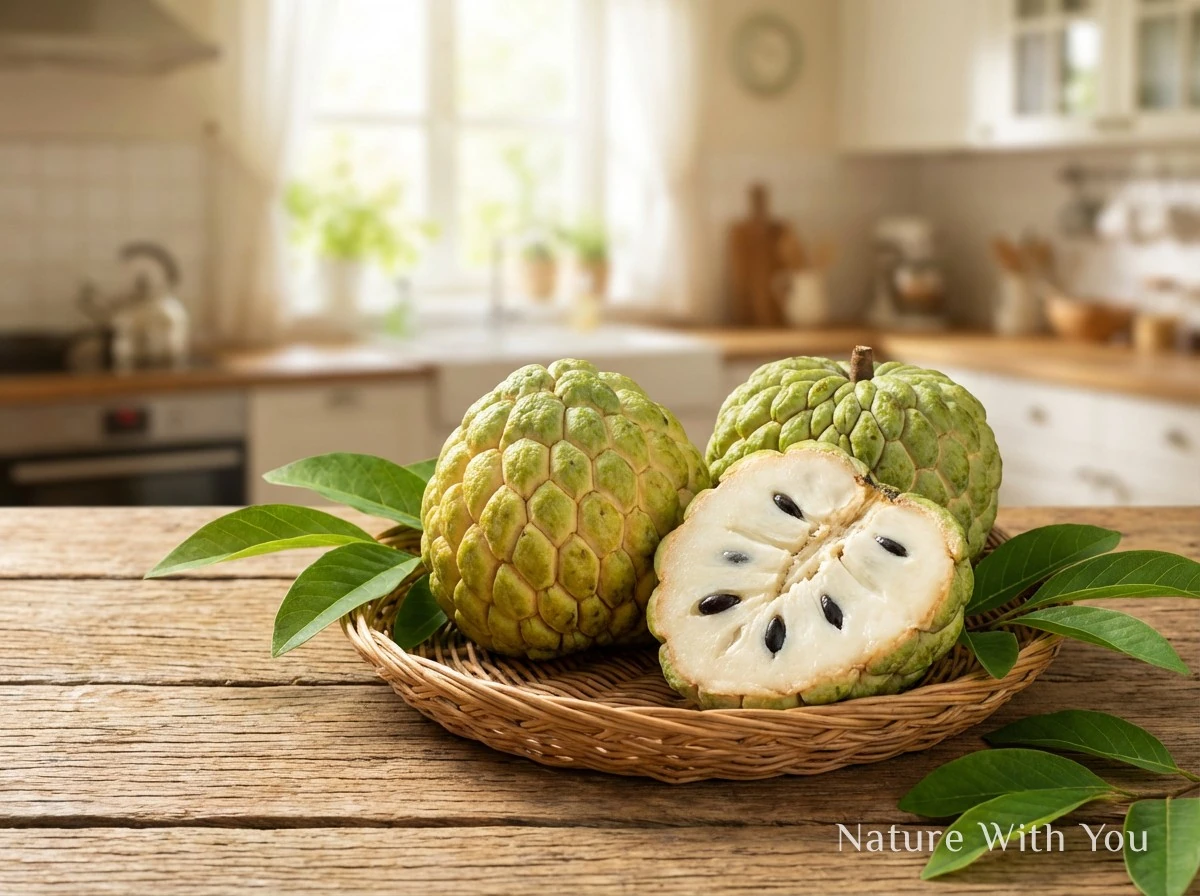
🫐 Custard Apple at a Glance
Custard apple (Sitaphal / Sharifa) is a creamy, sweet tropical fruit packed with antioxidants and essential nutrients. Known as “nature’s custard” for its velvety texture and naturally sweet pulp, it is one of India’s most beloved autumn fruits. Widely grown across Maharashtra, Gujarat, Madhya Pradesh, Andhra Pradesh, and Tamil Nadu, sitaphal supports immunity, digestion, and overall wellness. Its unique flavor makes it a favourite for milkshakes, ice cream, and fresh eating.
✨ Why It’s Special / Importance
- 🍮 Nature’s custard — the only fruit with a naturally creamy, custard-like texture and sweetness
- 🇮🇳 Deeply Indian — one of India’s most popular seasonal fruits, grown in nearly every state and central to autumn festivals
- 🤰 Pregnancy superfruit — rich in folate, vitamin C, iron, and calcium essential for mother and baby
- ⚡ Natural energy booster — high natural sugars and B vitamins provide quick, sustained energy
- 🧠 Rich in B6 and magnesium — supports nervous system health, mood regulation, and muscle function
💪 Health Benefits
- ✅ Strengthens immunity with high vitamin C and antioxidants
- ✅ Aids digestion with excellent dietary fiber (4.4g per 100g)
- ✅ Supports skin health and collagen production with powerful antioxidants
- ✅ Helps manage blood pressure with natural potassium (247 mg)
- ✅ Excellent for pregnant women — folate, iron, calcium, and vitamin C
- ✅ Supports brain and nerve health with vitamin B6 and magnesium
- ✅ Natural energy booster — high in healthy natural sugars and B vitamins
- ✅ May have anti-cancer properties due to acetogenin compounds
- ✅ Supports bone health with calcium and magnesium
- ✅ Promotes healthy hair and skin with vitamin C and iron
| Nutrient |
Amount |
| Calories |
94 kcal |
| Carbohydrates |
23.6 g |
| Natural Sugar |
~20 g |
| Fiber |
4.4 g |
| Protein |
2.1 g |
| Fat |
0.4 g |
| Vitamin C |
24 mg |
| Vitamin B6 |
0.2 mg |
| Potassium |
247 mg |
| Magnesium |
21 mg |
| Calcium |
30 mg |
| Iron |
0.6 mg |
Note: Custard apple is calorie-dense compared to most fruits due to its high natural sugar content. It also contains unique acetogenin compounds being studied for potential anti-cancer properties.
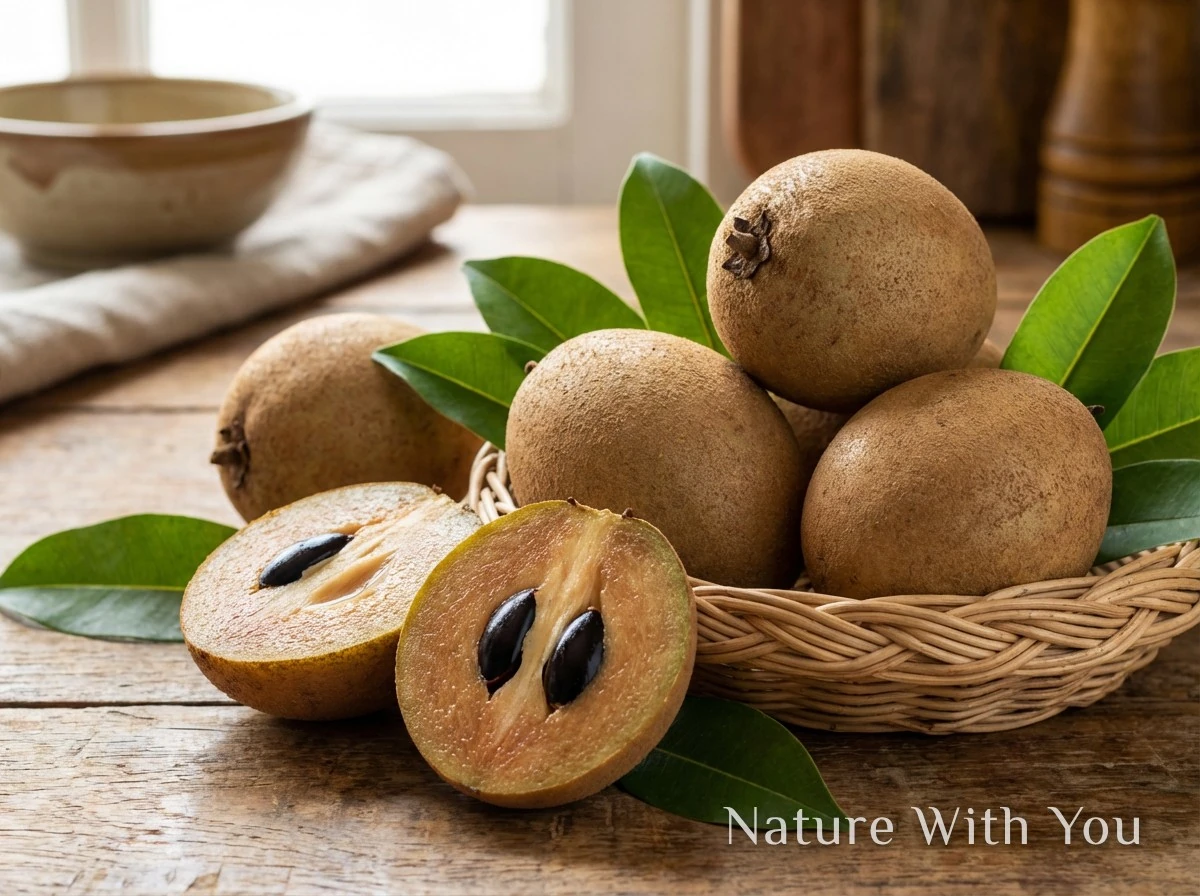
🔄 Quick Comparison: Custard Apple vs Sapota — Indian Sweet Fruits
| Feature |
🍮 Custard Apple (100g) |
🤎 Sapota (100g) |
| Calories |
94 kcal |
83 kcal |
| Fiber |
⭐ 4.4 g |
5.3 g ⭐ |
| Vitamin C |
⭐ 24 mg |
14.7 mg |
| Natural Sugar |
~20 g |
~18 g |
| Potassium |
247 mg |
⭐ 193 mg |
| Protein |
⭐ 2.1 g |
0.4 g |
| Texture |
Creamy, custard-like |
Grainy, caramel-like |
| Best For |
Energy & Pregnancy |
Fiber & Digestion |
| Availability (IN) |
Sep–Feb / Affordable |
Nov–Mar / Affordable |
📅 Seasonal Availability
Custard apples are seasonal autumn/winter fruits:
- 🍂 September to February (Peak season in India)
- 🌤️ Thrive in warm, semi-arid climates across central and southern India
- 🇮🇳 Major growing regions: Maharashtra, Gujarat, Madhya Pradesh, Andhra Pradesh, Tamil Nadu
- ❄️ Not available during extreme winter or peak summer months
- 🛒 Widely available and affordable in local markets during season
🛒 How to Choose & Store Custard Apple
How to Choose
- 💚 Light green with a bumpy, segmented surface
- 👌 Slightly soft when pressed (indicates ripeness)
- 👃 Sweet, fragrant aroma from the stem end
- ⚖️ Heavy for its size (more pulp inside)
- 🟡 Slight yellowing between segments indicates peak ripeness
Avoid:
- ❌ Fruits with black spots, cracks, or overly mushy texture
- ❌ Very hard, dark green fruits (underripe — will take days to ripen)
- ❌ Fruits with visible mold or insect damage
How to Store
- 🧊 Unripe fruits: Keep at room temperature for 3–5 days until they soften
- ❄️ Ripe fruits: Store in the refrigerator for 1–2 days maximum
- 🍽️ Cut fruit: Consume immediately or refrigerate for up to 6 hours
- 🍦 Pulp: Scoop out seedless pulp and freeze in airtight container for up to 2 months
- 💡 Tip: Place unripe sitaphal in a paper bag with a banana to speed ripening
🥄 How to Use / Consume
Fresh Consumption
- 🍈 Cut in half, scoop out the creamy pulp with a spoon
- 🍽️ Eat chilled for a refreshing dessert experience
- 🥗 Add pulp to fruit salads and creamy bowls
Beverages
- 🥤 Blend into milkshakes — sitaphal milkshake is a beloved Indian classic
- 🥛 Mix with cold milk and honey for a quick energy drink
- 🍹 Make sitaphal lassi or smoothie
Cooked & Desserts
- 🍨 Make sitaphal ice cream or kulfi — one of India’s most popular ice cream flavours
- 🧁 Use pulp in custards, puddings, and kheer
- 🍰 Add to cakes, mousse, or cheesecake fillings
- 🍯 Prepare sitaphal basundi or rabdi
Tips
- ⚠️ Always remove all black seeds carefully — they are toxic if crushed
- 🍌 Pair with banana for enhanced creaminess in smoothies
- 🥜 Eat with nuts or peanut butter to balance the high sugar content
- 🧊 Frozen pulp works perfectly for ice cream and milkshakes
⚠️ Precautions
- ❗ High natural sugar (~20g per 100g) — diabetics should limit intake and monitor blood sugar
- ❗ Seeds are toxic if crushed or chewed — never eat, blend, or crush the seeds
- ❗ Overeating may cause constipation or digestive discomfort in some people
- ❗ Not ideal for people on calorie-restricted diets due to high calorie content
- ❗ People allergic to Annona family fruits should avoid
- ❗ Seeds contain toxic alkaloids — keep away from children
- ❗ Unripe fruit can cause stomach irritation
- ❗ Consume ripe fruit within 1–2 days as it spoils quickly
🎉 Fun Facts
- 🍮 The name “custard apple” comes from its naturally creamy, custard-like texture
- 🌱 Also called Sitaphal (Sita’s fruit) in Hindi — legend says goddess Sita ate this fruit during exile
- 🇮🇳 Maharashtra is India’s largest producer of custard apples
- 🍨 Sitaphal ice cream is one of the most beloved Indian ice cream flavours, especially in Pune and Mumbai
- 🌍 Over 100 varieties of custard apple exist worldwide
- 🍈 Contains more vitamin C than many citrus fruits like sweet lime
- 🌳 The tree is drought-resistant and thrives in dry, semi-arid climates
- 👶 One of the best fruits for pregnant women due to folate and iron content
- 🔬 Contains acetogenins, unique compounds studied for anti-cancer potential
- 💚 In Ayurveda, considered a balya (strength-giving) and vrishya (vitality-boosting) fruit
🍽️ Popular Recipes to Try
- Sitaphal Milkshake (Classic Indian milkshake with cold milk and honey)
- Sitaphal Ice Cream (Beloved Pune/Mumbai style frozen dessert)
- Custard Apple Smoothie (Blended with banana and yogurt)
- Sitaphal Basundi (Traditional Indian milk dessert)
- Custard Apple Kulfi (Indian frozen dessert)
- Sitaphal Rabdi (Condensed milk dessert with custard apple pulp)
- Fresh Sitaphal (Simply scoop and enjoy chilled)
Frequently Asked Questions (FAQs)
Q: Can diabetics eat custard apple (sitaphal)?
A: Custard apple should be eaten cautiously by diabetics due to high natural sugar content (~20g per 100g). It has a medium glycemic index (around 54). Limit to half a small custard apple at a time, choose slightly firm fruits, pair with protein/nuts, and monitor blood sugar levels closely. Consult your doctor first.
Q: Is custard apple good for pregnant women?
A: Yes, custard apple is excellent during pregnancy! It’s rich in folate (prevents birth defects), vitamin C (boosts immunity and iron absorption), fiber (prevents constipation), magnesium (supports fetal development), and calcium. Limit to 1 small custard apple daily. Always wash thoroughly and discard all seeds completely.
Q: Why are custard apple seeds toxic?
A: Custard apple seeds contain toxic compounds (annonacin and other alkaloids) that can cause nausea, vomiting, and digestive issues if crushed or chewed. Never crush, blend, or eat the seeds. Remove all black seeds carefully before eating the pulp. If accidentally swallowed whole (not crushed), they’ll pass through harmlessly. Keep away from children.
Q: How do I know when custard apple is ripe?
A: A ripe custard apple is light green to yellowish, slightly soft when gently pressed (especially between the segments), and has a sweet aroma. The segments may separate slightly. Unripe sitaphal is hard and dark green. Let it ripen at room temperature for 3–5 days. Once ripe, refrigerate and eat within 1–2 days.
Q: Can custard apple cause constipation?
A: Despite containing good fiber (4.4g per 100g), custard apple may cause constipation in some people when eaten in excess, especially if not drinking enough water. The seeds can also cause digestive issues if accidentally consumed. Eat in moderation (1 fruit), stay hydrated, and remove all seeds completely.
Q: What’s the best way to eat custard apple?
A: Cut the custard apple in half or into quarters, scoop out the creamy pulp with a spoon, and carefully remove all black seeds. Eat fresh for maximum nutrients. You can also blend the seedless pulp into milkshakes, smoothies, ice cream, or desserts. Best eaten chilled for a refreshing treat.
Explore More: Fruits • Vegetables • Herbs & Spices • Natural Remedies • Seasonal Picks • Wellness Tips
📚 Sources
- USDA FoodData Central — Sugar-apples (sweetsop), raw (NDB 09316)
- Pinto, A.C.Q. et al. (2005). “Annona species — Botany and Horticulture.” Horticultural Reviews, 28, 83–98.
- Jamkhande, P.G. et al. (2014). “Phytochemistry and pharmacology of Annona squamosa.” Asian Pacific Journal of Tropical Biomedicine, 4(Suppl 1), S92–S98.
← Back to Fruits