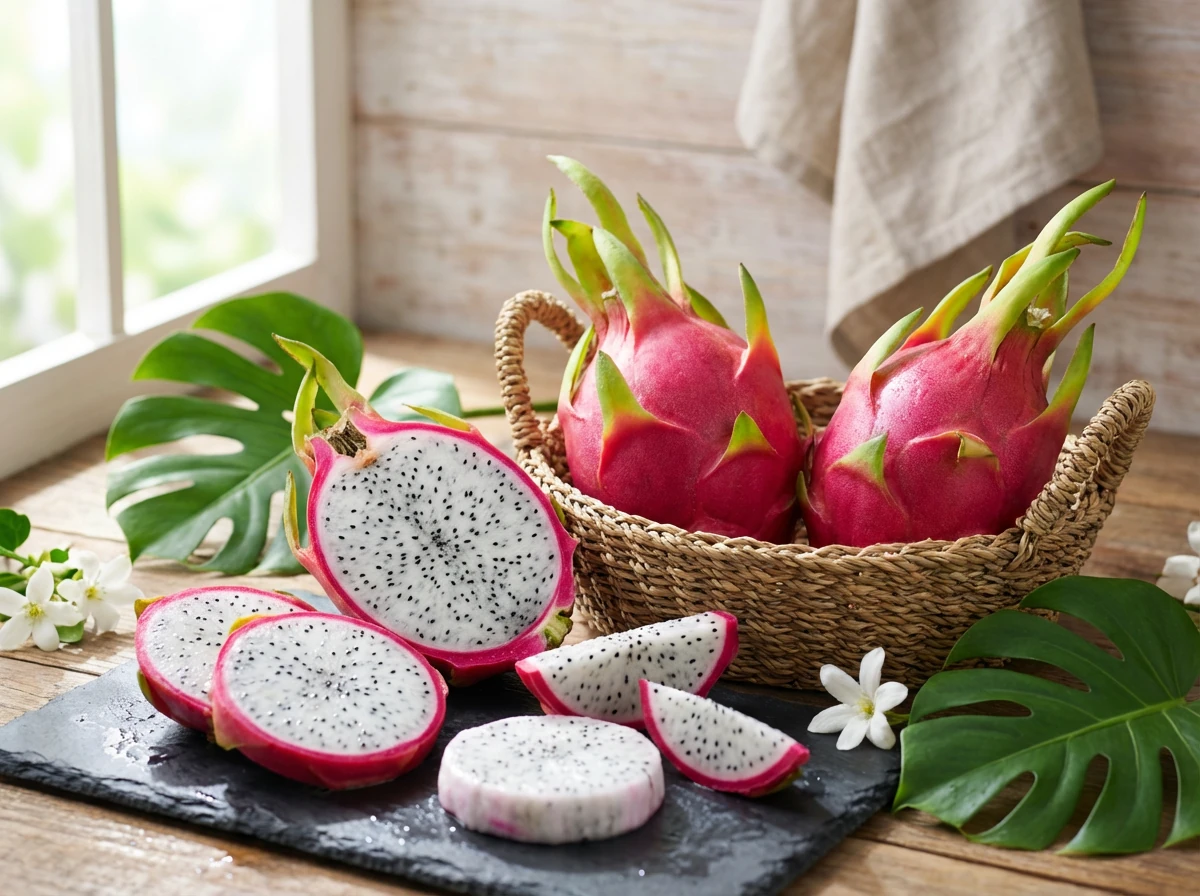
🐉 Dragon Fruit at a Glance
Dragon fruit (pitaya), also known as Hylocereus undatus, is an exotic cactus fruit with stunning pink or yellow skin and refreshing white or red flesh dotted with tiny black seeds. Originally from Central America, it is now cultivated widely across Southeast Asia and increasingly in India — particularly in Maharashtra, Gujarat, Karnataka, and Andhra Pradesh. Known in India as कमलम (Kamalam) or simply ड्रैगन फ्रूट, this tropical superfruit is prized for its mild, subtly sweet flavor, striking visual appeal, and impressive nutritional profile rich in antioxidants, vitamin C, and dietary fiber.
✨ Why It’s Special
- 🌵 Cactus-born superfruit — one of the few commercially popular fruits that grows on a climbing cactus, blooming only at night
- 🎨 Natural pigment powerhouse — red-fleshed varieties contain betacyanins, the same potent antioxidant pigment found in beets
- 🪶 Ultra-low calorie — at just 60 kcal per 100g, it is one of the lightest tropical fruits available
- 🇮🇳 Booming Indian cultivation — the Indian government promotes dragon fruit farming under the name “Kamalam,” with rapid expansion across western and southern states
- 🌸 Queen of the Night — its spectacular white flower blooms for a single night and must be pollinated before dawn
💪 Health Benefits
- ✅ Rich in antioxidants (betacyanins, flavonoids) — fight free radicals and reduce oxidative stress
- ✅ High in vitamin C (20.5 mg per 100g) — boosts immunity and supports collagen production for healthy skin
- ✅ Excellent source of dietary fiber (3 g per 100g) — promotes digestive health, regularity, and satiety
- ✅ Contains prebiotics — nourishes beneficial gut bacteria and supports a healthy microbiome
- ✅ May help regulate blood sugar — low glycemic index makes it suitable for mindful sugar management
- ✅ Supports heart health — beneficial plant compounds may help lower LDL cholesterol
- ✅ Promotes healthy, glowing skin — vitamin C and antioxidants combat premature aging
- ✅ Low in calories — ideal for weight management without sacrificing taste or nutrition
- ✅ Rich in iron and magnesium — supports oxygen transport, energy production, and bone health
- ✅ Omega-3 and omega-6 in seeds — small but meaningful amounts of essential fatty acids for brain and heart health
| Nutrient |
Amount |
| Calories |
60 kcal |
| Carbohydrates |
13 g |
| Natural Sugar |
8 g |
| Fiber |
3 g |
| Protein |
1.2 g |
| Fat |
0.4 g |
| Vitamin C |
20.5 mg |
| Iron |
0.7 mg |
| Magnesium |
10 mg |
| Calcium |
8.5 mg |
Note: Red-fleshed dragon fruit varieties contain betacyanins — powerful antioxidants with anti-inflammatory properties that give the flesh its vivid magenta color. USDA data reflects white-fleshed pitaya; red varieties may have slightly higher antioxidant values.
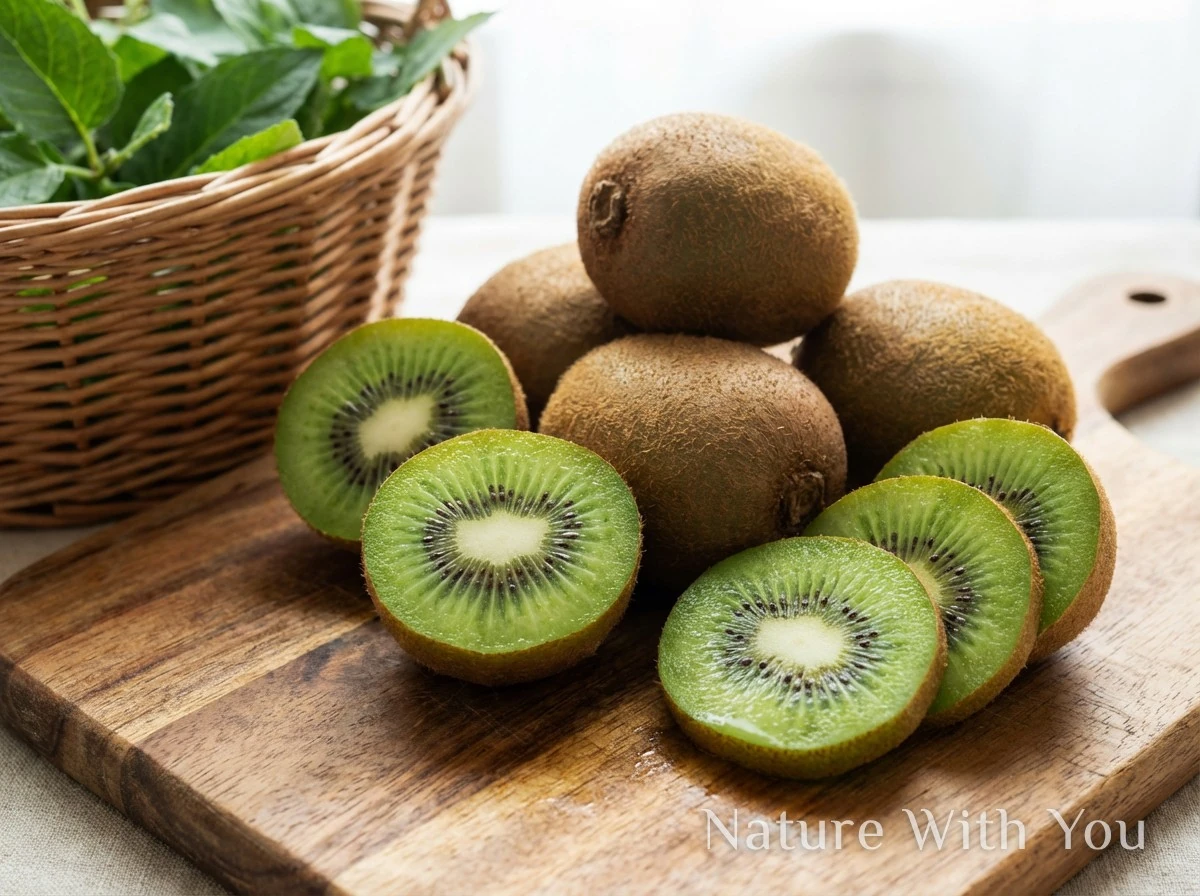
🔄 Quick Comparison: Dragon Fruit vs Kiwi — Exotic Showdown
| Feature |
Dragon Fruit (Pitaya) |
Kiwi |
| Calories (100g) |
60 kcal |
61 kcal |
| Vitamin C |
20.5 mg |
92.7 mg |
| Fiber |
3 g |
3 g |
| Key Antioxidant |
Betacyanins |
Polyphenols, Vitamin E |
| Unique Enzyme |
None |
Actinidin |
| Taste Profile |
Mild, subtly sweet |
Tangy-sweet |
| Best For |
Low-cal hydration, gut health |
Immunity, protein digestion |
| Indian Cultivation |
Maharashtra, Gujarat |
Himachal, Arunachal |
📅 Seasonal Availability
- 🌞 May to October — peak season in India and tropical regions
- 🌧 Thrives in monsoon — warm, humid climate accelerates fruit production
- 🌴 Growing Indian cultivation — Maharashtra, Gujarat, Karnataka, Andhra Pradesh, and Tamil Nadu lead production
- 📦 Imported year-round — Vietnamese and Thai varieties available in urban markets throughout the year
- 🛒 Increasingly accessible — found in supermarkets, online grocery platforms, and specialty fruit stores across Indian metros
🛒 How to Choose & Store Dragon Fruit
How to Choose
For Ripe Dragon Fruit:
- 🌺 Bright, vibrant pink or yellow skin (variety dependent)
- 👌 Yields slightly to gentle pressure (like a ripe kiwi)
- 🍃 Fresh, green-tipped scales (not dried or brown)
- 🚫 No major blemishes, cuts, or dark spots
- ⚖️ Heavy for its size (indicates juiciness)
Avoid:
- ❌ Rock-hard fruit (underripe)
- ❌ Overly soft, mushy texture
- ❌ Dried, brown, or wilted scales
- ❌ Dark spots, mold, or visible damage
- ❌ Dull, faded skin color
How to Store
- 🌡 Unripe fruit: Keep at room temperature for 2–3 days to ripen slightly
- 🧊 Ripe fruit: Refrigerate for 5–7 days in the crisper drawer
- ❄ Cut fruit: Store in airtight container in fridge for 1–2 days
- 🧊 Freezing: Scoop out flesh, freeze in portions for smoothies (lasts 3 months)
- 💡 Tip: Dragon fruit doesn’t ripen significantly after picking — choose wisely at the store
🥄 How to Use / Consume
Fresh Consumption
- 🥄 Cut in half and scoop flesh with a spoon — the simplest way
- 🔪 Peel and cube for fruit salads and platters
- 🥗 Add to green salads for a pop of color and mild sweetness
- 🍴 Eat fresh as a light, hydrating snack
- 🥣 Top yogurt bowls, oatmeal, or breakfast dishes
Beverages
- 🥤 Blend into smoothies and smoothie bowls for vibrant color
- 🧃 Make dragon fruit juice or agua fresca
- 🍹 Create colorful mocktails and cocktails
- 🫖 Add to infused water for a natural pink hue
- 🍵 Pair with coconut water for a tropical refresher
Cooked & Desserts
- 🍨 Make dragon fruit sorbet or ice cream
- 🍰 Use in desserts, tarts, puddings, and panna cotta
- 🥗 Prepare dragon fruit salsa with lime and chili
- 🎨 Use red variety as natural food coloring in batters and frostings
- 🥙 Thread onto fruit skewers for parties and gatherings
Tips
- 🧊 Chill before eating for the most refreshing experience
- 🍋 Squeeze lime or lemon juice to enhance the mild flavor
- 🌟 Use the vibrant pink skin as a natural serving bowl for an impressive presentation
⚠️ Precautions
- ❗ Red varieties may cause temporary pink, red, or purple urine or stool (pseudohematuria) — completely harmless but can be alarming
- ❗ Rare allergic reactions possible in sensitive individuals — discontinue if swelling, itching, or rash occurs
- ❗ Excessive consumption may cause digestive upset, bloating, or loose stools due to high fiber content
- ❗ Contains small edible seeds — safe for most people but may cause mild digestive sensitivity in some
- ❗ Wash thoroughly before cutting, as the outer skin may harbor bacteria
- ❗ Introduce gradually to babies after 8–10 months and monitor for any reactions
- ❗ Very low in protein and fat — should not be relied upon as a sole nutritional source
- ❗ Diabetics should monitor blood sugar response, as natural sugars (8 g per 100g) can still affect levels
🎉 Fun Facts
- 🐉 Named for its dragon-like appearance with scaly, flame-shaped outer skin
- 🌵 Grows on a climbing cactus (Hylocereus) that can reach over 10 meters in length
- 🌸 The flower is called “Queen of the Night” or “Moonflower” — it blooms for a single night and wilts by morning
- 🎨 Red dragon fruit gets its vivid color from betacyanins, the same pigment in beetroot
- 🌍 Also called “strawberry pear” in English-speaking regions and “Kamalam” in India
- 🇻🇳 Vietnam is the world’s largest dragon fruit producer and exporter
- 🌱 One dragon fruit cactus can continue producing fruit for 20–30 years
- 🍇 Three main commercial varieties exist: white flesh, red flesh, and yellow skin (the sweetest and rarest)
- 🔬 The tiny black seeds contain omega-3 and omega-6 fatty acids
- 🌙 Night-blooming flowers are pollinated by bats and moths in the wild — in farms, hand-pollination is common
🍽️ Popular Recipes to Try
- Dragon Fruit Smoothie Bowl — vibrant pink breakfast topped with granola and fresh berries
- Tropical Fruit Salad — dragon fruit cubes with pineapple, mango, and lime dressing
- Dragon Fruit Agua Fresca — refreshing Mexican-style blended drink
- Dragon Fruit Sorbet — light, dairy-free frozen dessert
- Dragon Fruit Yogurt Parfait — layered with honey, nuts, and chia seeds
- Dragon Fruit Salsa — sweet and tangy topping with jalapeño and cilantro
- Pink Dragon Fruit Smoothie — blended with banana and coconut milk
Frequently Asked Questions (FAQs)
Q: What’s the difference between white and red dragon fruit?
A: White-fleshed dragon fruit (most common) has a mild, subtly sweet flavor. Red-fleshed dragon fruit is slightly sweeter and contains betacyanins — powerful antioxidants that give it a vivid magenta color. Yellow dragon fruit (rarest) has white flesh and is the sweetest variety. All are nutritious; red varieties have the highest antioxidant content.
Q: Can you eat dragon fruit seeds?
A: Yes. Dragon fruit seeds are completely edible and nutritious. They contain omega-3 and omega-6 fatty acids, fiber, and small amounts of protein. The crunchy seeds add a texture similar to kiwi. There is no need to remove them.
Q: How do I know when dragon fruit is ripe?
A: Ripe dragon fruit yields slightly to gentle pressure, has vibrant colored skin, and fresh green-tipped scales. It should feel heavy for its size. Unlike bananas or avocados, dragon fruit does not ripen significantly after picking, so choose ripe ones at the store.
Q: Is dragon fruit safe during pregnancy?
A: Yes. Dragon fruit is considered safe and beneficial during pregnancy. It provides vitamin C for immunity, fiber for constipation relief, iron for blood health, and folate for fetal development. Eat in moderation as part of a balanced diet and always wash thoroughly before cutting.
Q: Can dragon fruit be grown in India?
A: Absolutely. Dragon fruit cultivation is expanding rapidly in India, especially in Maharashtra, Gujarat, Karnataka, Andhra Pradesh, and Tamil Nadu. The Indian government promotes it under the name “Kamalam.” The cactus thrives in warm climates with good drainage and can fruit within 12–18 months of planting.
Q: Why does my urine turn pink after eating dragon fruit?
A: Eating red-fleshed dragon fruit can cause betacyanin pigments to temporarily color urine or stool pink, red, or purple. This is completely harmless — similar to eating beets — and clears within 24–48 hours.
Explore More: Fruits • Vegetables • Herbs & Spices • Natural Remedies • Seasonal Picks • Wellness Tips
📚 Sources
- USDA FoodData Central — Pitaya (dragon fruit), raw. NDB Number: 09421.
- Luo, H. et al. (2014). “Nutrient composition and bioactive compounds of pitaya.” Food Chemistry, 153, 248–255.
- Joshi, M. & Prabhakar, B. (2020). “Dragon fruit cultivation in India: Prospects and challenges.” Indian Journal of Horticulture, 77(3), 412–419.
← Back to Fruits