


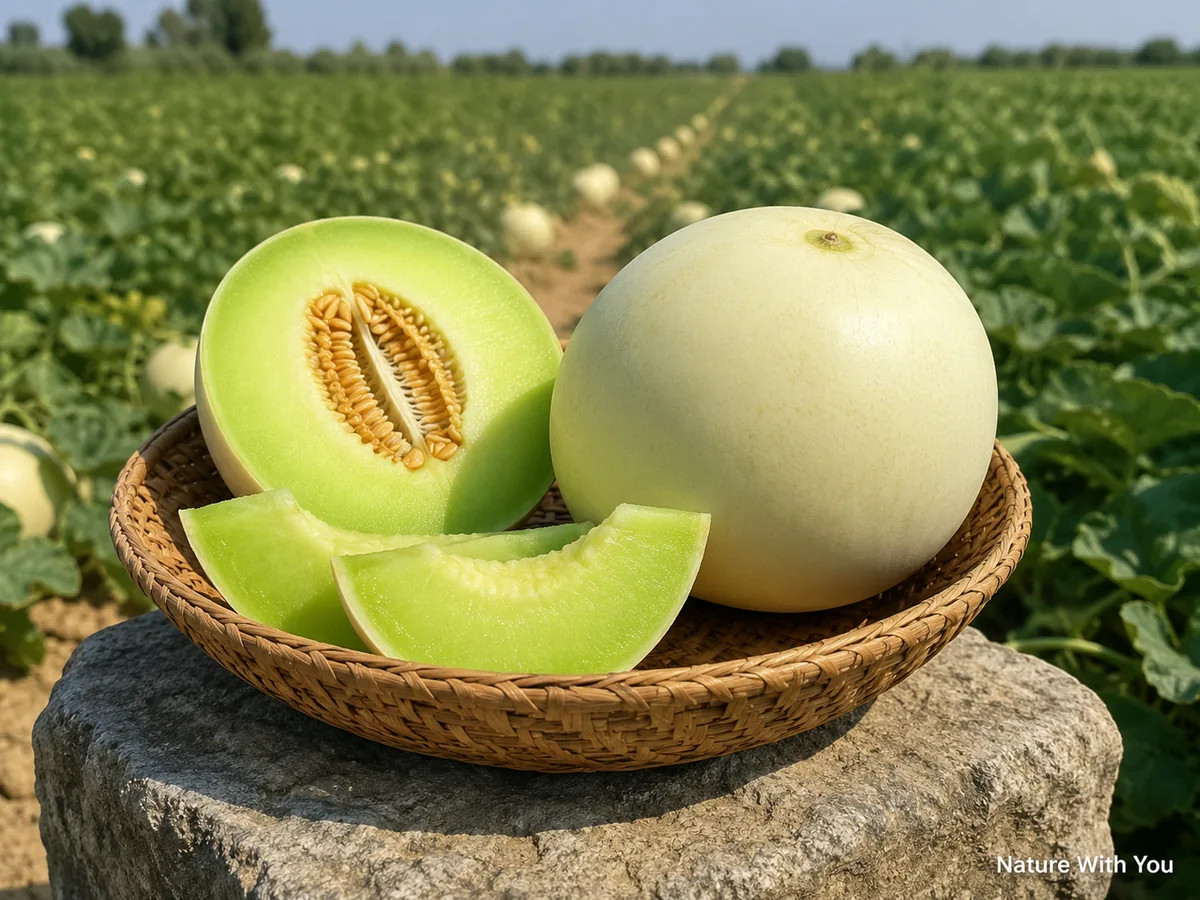
Honeydew Melon – The Sweet, Smooth Summer Melon
Discover Honeydew Melon, the sweet, smooth-skinned summer melon about 90% water, rich in vitamin C and potassium — perfect for gentle hydration, skin, and beating the heat.
Wed, Jun 10, 2026 · 6 min read🍈 Honeydew at a Glance
Honeydew Melon (Cucumis melo var. inodorus) is a smooth-skinned, pale-green melon with sweet, juicy flesh and a gentle aroma. Where the muskmelon (cantaloupe) is fragrant and orange inside, honeydew is creamy-white on the outside and pale green within — milder, sweeter, and less perfumed. At about 90% water and rich in vitamin C and potassium, it is a refreshing, low-fat summer fruit that hydrates the body and cools the system without overpowering sweetness.
✨ Why It’s Special
- 💧 About 90% water — gentle, lasting hydration for hot days
- 🍯 Naturally sweet and mild, with creamy pale-green flesh
- 🍊 Good source of vitamin C for immunity and skin
- 🫀 Useful potassium content supports healthy blood pressure
- 🪶 Very low in fat and calories — light and refreshing
- 🟢 Smooth, netting-free rind sets it apart from netted muskmelon
🏺 Traditional / Ayurvedic Uses
Rasa (Taste): Madhura (Sweet) Virya (Potency): Sheeta (Cool) Vipaka (Post-digestive): Madhura (Sweet) Dosha Effect: Pacifies Pitta and Vata; excess may increase Kapha due to sweetness and water
Classical Applications:
- Valued as a Trishna-nashak (thirst-quencher) and cooling summer fruit
- Used to pacify aggravated Pitta — heat, acidity, and burning sensations
- Considered Mutral (mild diuretic), supporting urinary and kidney health
- Best eaten on its own, not mixed with milk or heavy foods, per traditional advice
💪 Health Benefits
- ✅ Hydration: About 90% water replenishes fluids in summer heat
- ✅ Immunity: Vitamin C supports immune defence and collagen
- ✅ Skin Health: Vitamin C and high water content support fresh, supple skin
- ✅ Heart Health: Potassium supports healthy blood pressure
- ✅ Electrolyte Balance: Water and potassium help replace what sweating depletes
- ✅ Cooling Effect: Soothes Pitta-type heat and acidity
- ✅ Weight Management: Low in fat and calories, yet satisfyingly sweet
- ✅ Digestion: Light, watery, and easy to digest as a standalone snack
🥗 Nutritional Information (Per 100g Honeydew)
| Nutrient | Amount |
|---|---|
| Calories | 36 kcal |
| Carbohydrates | 9.1 g |
| Sugars | 8.1 g |
| Fiber | 0.8 g |
| Protein | 0.5 g |
| Fat | 0.1 g |
| Vitamin C | 18 mg |
| Vitamin A | 50 IU |
| Potassium | 228 mg |
| Water | 90 g |
Note: Honeydew’s pale-green flesh means it has far less beta-carotene (vitamin A) than orange-fleshed muskmelon — but it stays high in water, vitamin C, and natural sweetness, making it a light, hydrating choice.
🔄 Quick Comparison: Honeydew vs Muskmelon — Two Summer Melons
| Feature | Honeydew | Muskmelon (Kharbooja) |
|---|---|---|
| Rind | Smooth, pale, no netting | Netted, ridged |
| Flesh | Pale green, mild | Orange, fragrant |
| Aroma | Subtle, sweet | Strong, musky |
| Best For | Gentle hydration, vitamin C | Skin, eyes (beta-carotene) |
| Vitamin A | Low (~50 IU) | High (~3382 IU) |
| Water Content | ~90% | ~90% |
| Dosha Effect | Pacifies Pitta & Vata | Pacifies Pitta & Vata |
| Best Season | Summer | Summer |
📅 Seasonal Availability
Honeydew is a summer melon (April–July), ripening through the hot months alongside other melons. It is at its sweetest and juiciest at peak summer, exactly when its cooling, hydrating qualities are most welcome.
🛒 How to Choose & Store Honeydew
- 🟡 Choose one with a creamy-yellow rind (not greenish-white) — a sign of ripeness
- 👐 It should feel heavy for its size with a slight give at the blossom end
- 👃 Ripe honeydew has a faint sweet aroma and a slightly waxy, smooth skin
- ❄️ Refrigerate cut melon in a covered container and eat within a couple of days
- 🪟 Ripen a firm honeydew at room temperature before chilling
🥄 How to Use / Consume
- 🍈 Eat fresh, chilled slices or cubes as a cooling snack
- 🥤 Blend into juice, agua fresca, or a refreshing melon cooler
- 🥣 Add to fruit salads with mint, berries, or a squeeze of lime
- 🍧 Make sorbet, smoothies, or chilled melon soup
- 🥗 Pair cubes with cucumber and feta for a savory salad
- 🧊 Freeze cubes for a refreshing treat
⚠️ Precautions
- ❗ Traditional advice avoids combining melon with milk or right after a heavy meal
- ❗ Eat it as a standalone snack for best digestion
- ❗ Diabetics should keep portions moderate due to natural sugars
- ❗ Always wash the rind before cutting to avoid surface contamination
- ⚠️ Fresh, ripe honeydew in normal amounts is safe, hydrating, and wholesome
🎉 Fun Facts
- 🍈 Honeydew belongs to the same species as muskmelon — Cucumis melo — but a different variety group (inodorus, meaning “odorless”)
- 🟢 Its smooth, netting-free rind is the easiest way to tell it from a muskmelon
- 🍯 The name “honeydew” reflects its honey-sweet, dewy flesh
- 💧 At about 90% water, it is one of the most hydrating summer fruits
- 🌍 Melons have been cultivated for thousands of years across Asia and Africa
🍽️ Popular Recipes to Try
- 🥤 Honeydew Cooler: Blend with water, a little honey, and mint
- 🍧 Honeydew Sorbet: Freeze blended melon for a natural sorbet
- 🥣 Melon Trio Salad: Combine with watermelon, muskmelon, and a squeeze of lime
- 🧃 Honeydew Smoothie: Blend with yogurt for a creamy summer drink
- 🥗 Honeydew & Cucumber Salad: Toss cubes with cucumber, mint, and lime
Frequently Asked Questions (FAQs)
Q: Is honeydew the same as muskmelon? A: They are close cousins — both are Cucumis melo — but different varieties. Honeydew has a smooth, pale rind and sweet green flesh with a mild aroma, while muskmelon (cantaloupe/kharbooja) has a netted rind and fragrant orange flesh richer in beta-carotene.
Q: Is honeydew good for summer? A: Yes. At about 90% water with vitamin C and potassium, honeydew hydrates the body, replenishes electrolytes, and cools Pitta-type heat — making it an excellent fruit for hot summer days.
Q: How do I pick a ripe honeydew? A: Look for a creamy-yellow (not greenish) rind, a heavy feel for its size, a faint sweet aroma, and a slight give at the blossom end. A slightly waxy, smooth skin signals ripeness.
Q: Can diabetics eat honeydew? A: In moderation. Honeydew is low in fat and calories with water and some fiber, but it does contain natural sugars. Diabetics should keep portions modest and eat it as part of a balanced meal.
Q: Honeydew vs muskmelon — which is healthier? A: Both are excellent hydrators. Muskmelon offers more beta-carotene (vitamin A) for skin and eyes, while honeydew is milder, sweeter, and equally hydrating with good vitamin C. Enjoy both in season.
Related Items

Explore More: Fruits • Vegetables • Herbs • Natural Remedies • Seasonal Picks • Wellness Tips
📚 Sources
- USDA FoodData Central – Nutritional Information for Honeydew melon, raw
- Manchali S, et al. (2021). “Nutritional composition and health benefits of melon.” Foods
- Bhavaprakash Nighantu – Traditional classification of melon (Kharbooja)