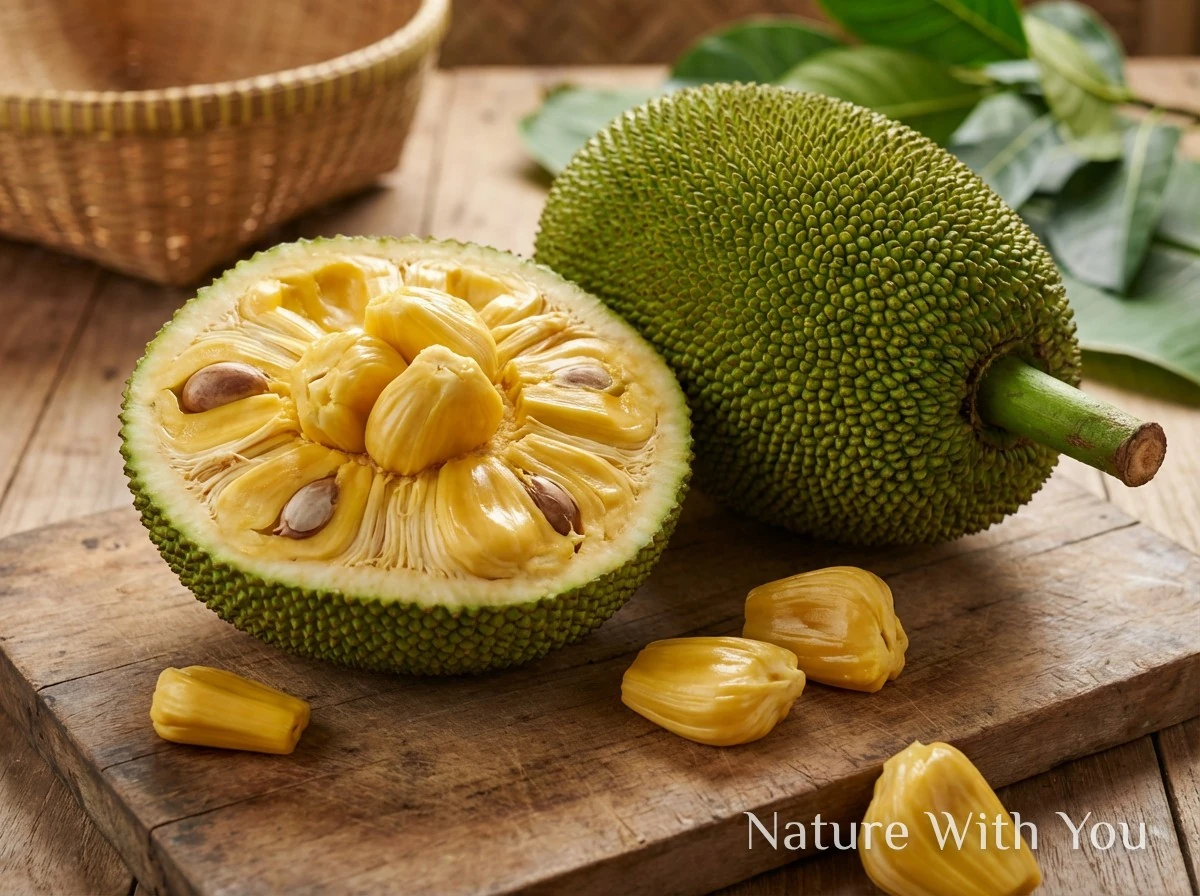
🍈 Jackfruit at a Glance
Jackfruit (Artocarpus heterophyllus), known as kathal (कटहल) in Hindi, chakka in Malayalam, and panasa in Kannada, is the world’s largest tree-borne fruit — a single fruit can weigh up to 55 kg. Native to the Western Ghats of India, jackfruit holds deep cultural significance in Kerala (where it’s practically a staple), Karnataka, and across South and Southeast Asia. Its remarkable dual nature makes it truly special: unripe (green) jackfruit has a fibrous, meat-like texture used in savory curries and now globally popular as a vegan meat substitute, while ripe jackfruit is intensely sweet and aromatic, enjoyed fresh or in desserts. Rich in fiber, vitamin C, potassium, and antioxidants, it’s a nutritional powerhouse.
✨ Why It’s Special
- 🏆 World’s largest tree fruit — a single jackfruit can weigh up to 55 kg (120 lbs) and grow over 90 cm long
- 🥩 Nature’s vegan meat — unripe jackfruit’s fibrous, shredded texture perfectly mimics pulled pork, making it a global sensation in plant-based cuisine
- 🌳 Ancient Indian heritage — native to the Western Ghats, cultivated for over 6,000 years, and mentioned in ancient Sanskrit texts as “Panasa”
- 🇧🇩 National fruit of Bangladesh and state fruit of Kerala — deeply woven into the cultural identity of these regions
- ♻️ Zero-waste fruit — every part is edible or useful: flesh, seeds, rind, leaves, and even the latex has traditional uses
💪 Health Benefits
- ✅ Boosts immunity with rich vitamin C content (13.7 mg/100g) — supports white blood cell production and wound healing
- ✅ Promotes digestive health through dietary fiber — prevents constipation and feeds beneficial gut bacteria
- ✅ Supports heart health with high potassium (448 mg/100g) — regulates blood pressure and reduces cardiovascular risk
- ✅ May help manage blood sugar levels — unripe jackfruit has a low glycemic index and contains compounds that improve insulin sensitivity
- ✅ Rich in antioxidants (carotenoids, flavonoids) — fights oxidative stress and reduces risk of chronic diseases
- ✅ Supports healthy skin and vision through vitamin A (110 IU) and beta-carotene in ripe fruit
- ✅ Aids weight management — relatively low calorie (95 kcal/100g) with good satiety from fiber and bulk
- ✅ Contains anti-inflammatory phytonutrients — jacalin and other lectins show potential anti-cancer and immune-modulating properties
- ✅ Jackfruit seeds are protein-rich — provide plant-based protein, iron, and B vitamins when cooked
- ✅ Natural energy booster — natural sugars (fructose, sucrose) in ripe fruit provide quick, sustained energy
| Nutrient |
Amount |
| Calories |
95 kcal |
| Carbohydrates |
23.2 g |
| Natural Sugar |
19.1 g |
| Fiber |
1.5 g |
| Protein |
1.7 g |
| Fat |
0.6 g |
| Vitamin C |
13.7 mg |
| Vitamin A |
110 IU |
| Potassium |
448 mg |
| Magnesium |
29 mg |
| Calcium |
24 mg |
| Iron |
0.2 mg |
Note: Values above are for ripe jackfruit. Unripe (raw) jackfruit has significantly lower sugar (~3–5g/100g), fewer calories (~50 kcal/100g), and more fiber — making it far more suitable for savory cooking and blood sugar management. Jackfruit seeds add another 6.6g protein per 100g when boiled.
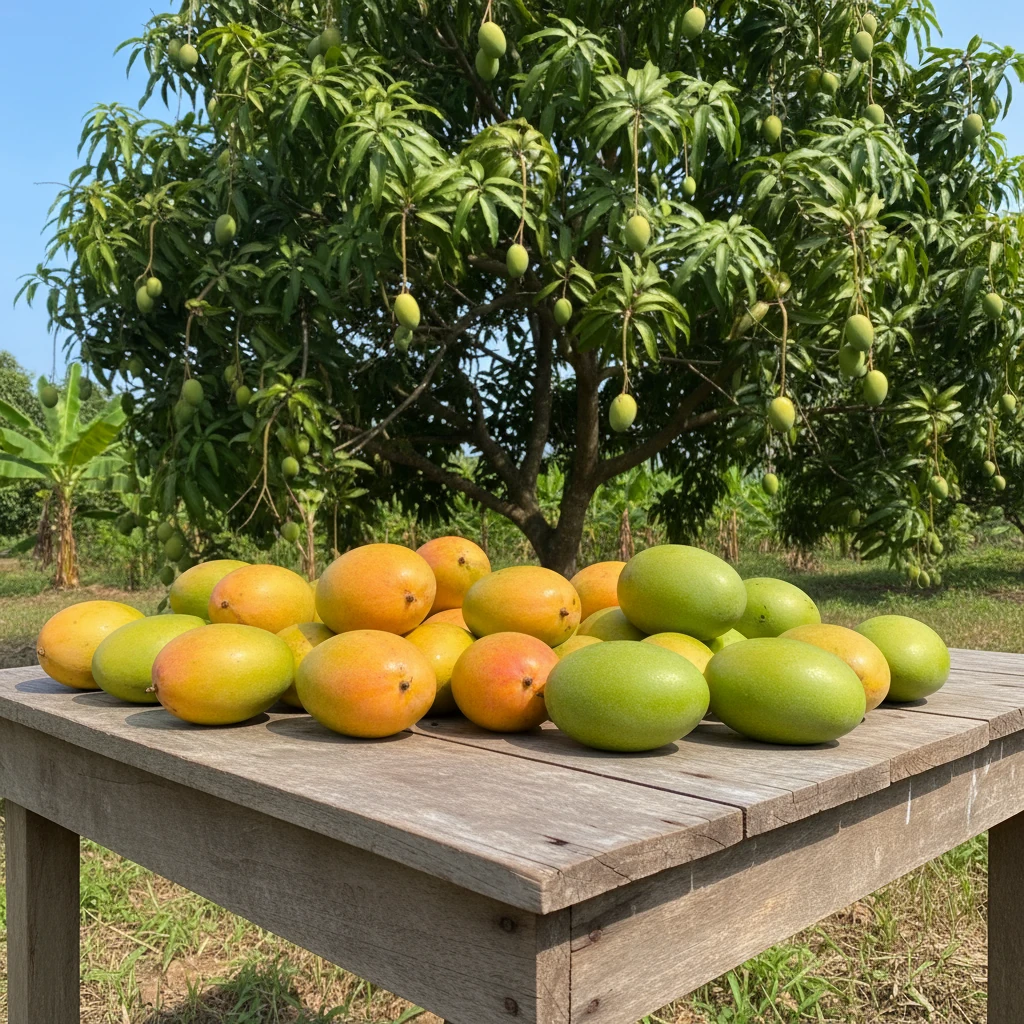
🔄 Quick Comparison: Jackfruit vs Mango — Tropical Giants
| Feature |
🍈 Jackfruit (100g ripe) |
🥭 Mango (100g ripe) |
| Calories |
95 kcal |
60 kcal |
| Carbohydrates |
23.2 g |
15 g |
| Sugar |
19.1 g |
13.7 g |
| Fiber |
1.5 g |
1.6 g |
| Potassium |
448 mg |
168 mg |
| Vitamin C |
13.7 mg |
36.4 mg |
| Unique Advantage |
Vegan meat substitute |
Highest in Vitamin A |
| Peak Season (India) |
March–August |
April–July |
📅 Seasonal Availability
- 🌞 March to August is peak season in India — coincides with summer and pre-monsoon months
- 🌴 Grows abundantly in Kerala, Karnataka, Tamil Nadu, Goa, Konkan, and Northeast India — thrives in warm, humid tropical climates
- 🌧 Main harvest extends through the monsoon season (June–August) in many regions
- 📦 Available year-round in canned and packaged form (canned young jackfruit, jackfruit chips, dried jackfruit) in stores globally
- 🌱 Increasingly grown commercially in Maharashtra, Odisha, and Assam as demand rises for vegan meat alternatives
🛒 How to Choose & Store Jackfruit
How to Choose
For Ripe (Sweet) Jackfruit:
- 💛 Yellow-green skin with a strong, distinctly sweet aroma
- 👃 Fruity fragrance near the stem — the stronger the smell, the riper the fruit
- 🔊 Hollow sound when tapped gently (indicates ripeness)
- 👌 Spikes soften slightly and yield to gentle finger pressure
For Unripe (Raw/Green) Jackfruit:
- 💚 Firm, dark green skin with no sweet aroma
- ⚪ White latex oozes when skin is scratched or cut
- 🔇 Solid, dense sound when tapped
- 💪 Hard, sharp spikes that don’t yield to pressure
Avoid:
- ❌ Fruits with black spots, mold, or cracked/split skin
- ❌ Overly soft, mushy, or leaking texture
- ❌ Strong fermented or sour smell (overripe/spoiled)
How to Store
- 🌡 Whole unripe fruit: Room temperature for 3–5 days to ripen naturally
- 🧊 Whole ripe fruit: Consume within 2–3 days at room temperature; refrigerate to extend 1–2 days more
- ❄ Cut fruit bulbs (arils): Refrigerate in airtight container for 3–5 days
- 🧊 Long-term storage: Freeze individual bulbs on a tray, then transfer to bags — lasts up to 2 months
- 📦 Cut unripe jackfruit: Store in cool, dry place; refrigerate after cutting and use within 2–3 days
🥄 How to Use / Consume
Fresh Consumption
- 🍈 Eat ripe golden bulbs (arils) directly as a sweet, aromatic snack
- 🥤 Blend ripe jackfruit into thick, tropical smoothies and milkshakes
- 🍨 Make jackfruit ice cream, kulfi, or frozen popsicles
- 🥧 Use in desserts like halwa, puddings, jams, and fruit salads
Beverages
- 🥤 Jackfruit milkshake — blend ripe bulbs with cold milk and a pinch of cardamom
- 🧃 Jackfruit smoothie bowl — topped with granola, coconut, and other tropical fruits
- 🍹 Jackfruit lassi — blend with yogurt, sugar, and ice
Cooked & Desserts
- 🍛 Kathal ki Sabzi — classic North Indian curry with raw jackfruit, spices, and gravy
- 🌮 Vegan pulled “pork” — shred cooked unripe jackfruit and toss with BBQ sauce for tacos, sandwiches, or burgers
- 🥘 Jackfruit Biryani — fragrant layered rice dish using raw jackfruit pieces
- 🍰 Chakka Pradhaman — Kerala-style jackfruit payasam with coconut milk and jaggery
- 🔥 Jackfruit Seeds — boil or roast seeds for a nutty, chestnut-like snack rich in protein
Tips
- 🧤 Generously oil your hands, knife, and cutting board before cutting — jackfruit latex is extremely sticky
- 🔪 Cut into quarters, remove the central core, then pull out individual bulbs and extract seeds
- 🧼 Clean latex residue with cooking oil first, then wash with soap and water
- 💡 Wearing disposable gloves makes preparation much easier and cleaner
⚠️ Precautions
- ❗ Ripe jackfruit is high in natural sugars (19.1g/100g) — diabetics should consume in moderation and prefer unripe varieties
- ❗ May cause allergic reactions in people sensitive to birch pollen or latex (cross-reactivity documented)
- ❗ Sticky latex during preparation can be difficult to clean — always oil hands and utensils beforehand
- ❗ Excessive consumption may cause bloating, gas, or digestive discomfort due to fiber and complex carbohydrates
- ❗ Contains moderate FODMAPs — may trigger symptoms in individuals with IBS or FODMAP sensitivity
- ❗ May interfere with blood clotting — consult your doctor if you’re on blood-thinning medications
- ❗ Jackfruit seeds must be cooked (boiled or roasted) before eating — raw seeds contain trypsin inhibitors that are harmful
- ❗ Overripe jackfruit ferments quickly — consume promptly and avoid fruit with an alcoholic or sour smell
🎉 Fun Facts
- 🏆 Jackfruit is the world’s largest tree-borne fruit — the heaviest recorded weighed over 55 kg (120 lbs)
- 🌳 A single mature jackfruit tree can produce 100–200 fruits per year, making it an incredibly productive food source
- 🇧🇩 Jackfruit is the national fruit of Bangladesh and was declared the state fruit of Kerala in 2018
- 🌱 Every part is usable — flesh, seeds, rind, leaves (used as plates), wood, and even latex all serve practical purposes
- 🥩 Called “vegetable meat” in many Asian cultures due to its remarkably fibrous, shredded texture when unripe
- 🌍 Jackfruit is gaining massive global popularity as a sustainable vegan protein source — featured in restaurants from New York to London
- 🎨 Jackfruit wood is termite-resistant and produces a beautiful golden color — prized for making furniture, Buddhist temples, and veenas (Indian musical instrument)
- 👃 The name “jackfruit” comes from Portuguese “jaca”, derived from the Malayalam word “chakka”
- 🔬 Contains unique lectins like jacalin — studied for potential anti-cancer, anti-HIV, and immune-boosting properties
- 📜 Mentioned in ancient Indian texts including Arthashastra and cultivated in India for over 6,000 years
🍽️ Popular Recipes to Try
- Kathal ki Sabzi — spiced North Indian curry with raw jackfruit in onion-tomato gravy
- Jackfruit Biryani — fragrant layered rice dish with unripe jackfruit, saffron, and aromatic spices
- Jackfruit Pulled “Pork” — shredded unripe jackfruit in smoky BBQ sauce, served in buns or tacos
- Echorer Dalna — Bengali-style young jackfruit curry with potatoes and mustard-poppy seed paste
- Jackfruit Chips (Chakka Varuthathu) — thin, crispy fried chips from Kerala — a beloved snack
- Chakka Pradhaman — rich Kerala payasam made with ripe jackfruit, coconut milk, and jaggery
- Panasa Payasa — Karnataka-style jackfruit pudding with jaggery and coconut milk
Frequently Asked Questions (FAQs)
Q: Is jackfruit good for weight loss?
A: Yes, jackfruit is relatively low in calories (95 kcal/100g ripe) and provides good satiety from its bulk and fiber. Unripe jackfruit is even better at ~50 kcal/100g with more fiber and less sugar. However, ripe jackfruit does contain natural sugars, so portion control (100–150g per serving) is advisable for weight loss goals.
Q: Can diabetics eat jackfruit?
A: In moderation, yes. Unripe (green) jackfruit is the better choice for diabetics — it has a low glycemic index, fewer sugars, and studies suggest it may improve insulin sensitivity. Ripe jackfruit contains more sugar (19.1g/100g), so diabetics should limit portions to 80–100g and monitor blood sugar levels. Always consult your doctor.
Q: How do you know when jackfruit is ripe?
A: A ripe jackfruit has a strong, sweet fruity aroma (especially near the stem), yellow-green skin, softened spikes that yield to gentle pressure, and produces a hollow sound when tapped. If the skin is uniformly green with no smell and hard spikes, it’s still unripe. Avoid fruit with sour or fermented odor.
Q: Can you eat jackfruit seeds?
A: Yes — jackfruit seeds are nutritious and delicious when cooked. Boil them for 20–30 minutes or roast them for a flavor similar to chestnuts. They’re rich in protein (6.6g/100g), fiber, and minerals. Never eat them raw — raw seeds contain trypsin inhibitors that interfere with digestion.
Q: Is jackfruit a good meat substitute?
A: Absolutely. Young, unripe jackfruit has a naturally fibrous, shredded texture that closely mimics pulled pork or chicken when cooked. It absorbs marinades and spices beautifully, making it perfect for BBQ sandwiches, tacos, curries, and stir-fries. It’s now a staple ingredient in vegan and plant-based restaurants worldwide.
Q: What’s the difference between ripe and unripe jackfruit?
A: Ripe jackfruit is sweet, intensely aromatic, golden-yellow, and eaten as a dessert fruit — high in natural sugars. Unripe (raw/green) jackfruit is neutral-tasting, starchy, pale-colored, and used as a savory vegetable or meat substitute — lower in sugar and calories. Both forms are nutritious but serve completely different culinary purposes.
Explore More: Fruits • Vegetables • Herbs & Spices • Natural Remedies • Seasonal Picks • Wellness Tips
📚 Sources
- USDA FoodData Central — Jackfruit, raw (NDB #09143) and Jackfruit seeds, raw (NDB #09144)
- Ranasinghe, R.A.S.N. et al. (2019). “Nutritional and Health Benefits of Jackfruit (Artocarpus heterophyllus Lam.).” International Journal of Food Science, 2019, Article ID 4327183.
- Swami, S.B. et al. (2012). “Jackfruit and Its Many Functional Components as Related to Human Health: A Review.” Comprehensive Reviews in Food Science and Food Safety, 11(6), 565–576.
← Back to Fruits