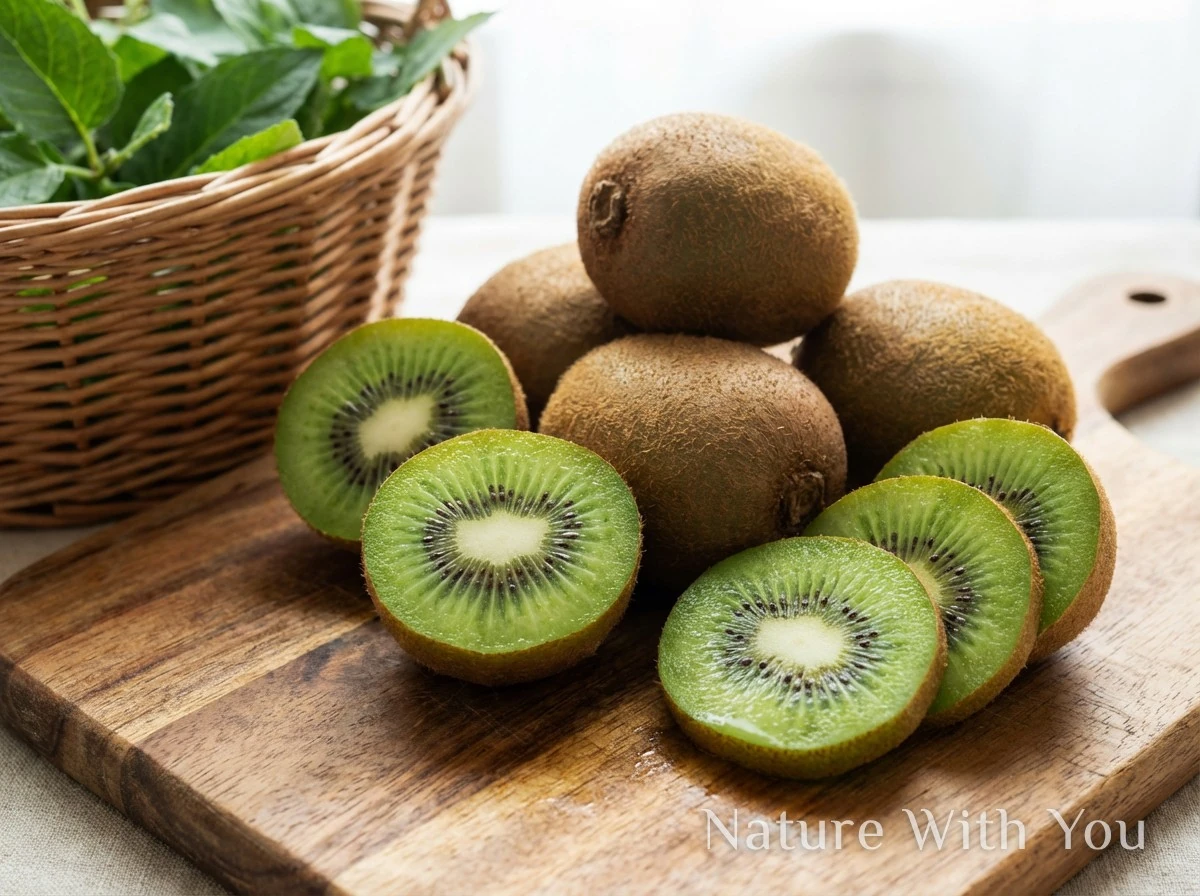
🥝 Kiwi at a Glance
Kiwi (Actinidia deliciosa), also known as kiwifruit or Chinese gooseberry, is a small, fuzzy brown fruit with vibrant green or golden flesh and tiny edible black seeds. Originally from southern China, it was popularized globally by New Zealand growers who named it after their national bird. Kiwi is an exceptional source of vitamin C — containing nearly twice as much as oranges per 100g — and is the only common fruit with the natural digestive enzyme actinidin. In India, kiwi is cultivated in the cooler hill regions of Himachal Pradesh, Arunachal Pradesh, Meghalaya, and Uttarakhand, and is widely available in urban markets year-round through imports.
✨ Why It’s Special
- 🏆 Vitamin C champion — one medium kiwi delivers over 150% of your daily vitamin C requirement, surpassing oranges weight-for-weight
- 🧬 Contains actinidin — a unique proteolytic enzyme found only in kiwi that breaks down protein and aids digestion
- 😴 Natural sleep aid — clinical studies show eating two kiwis one hour before bed improves sleep onset, duration, and quality
- 🍃 Edible skin — the fuzzy brown skin is completely edible and triples the fiber intake compared to peeled kiwi
- 🇮🇳 Indian hill fruit — successfully cultivated in Himachal Pradesh and northeast India, with growing domestic production
💪 Health Benefits
- ✅ Exceptionally high in Vitamin C (92.7 mg per 100g) — boosts immunity, collagen synthesis, and iron absorption
- ✅ Contains actinidin enzyme — aids protein digestion, reduces bloating, and supports overall gut health
- ✅ Rich in dietary fiber (3 g per 100g) — promotes digestive regularity and helps prevent constipation
- ✅ Supports heart health — potassium (312 mg) helps reduce blood pressure; fiber lowers LDL cholesterol
- ✅ Packed with antioxidants — vitamin E, polyphenols, and carotenoids fight oxidative stress and cellular damage
- ✅ May improve sleep quality — serotonin and antioxidant content linked to better sleep in clinical trials
- ✅ Supports eye health — lutein and zeaxanthin protect against age-related macular degeneration
- ✅ Anti-inflammatory properties — reduces markers of chronic inflammation and lowers disease risk
- ✅ Low glycemic index — suitable for blood sugar management and diabetic-friendly diets
- ✅ Promotes healthy, glowing skin — vitamin C drives collagen production for firm, youthful skin
| Nutrient |
Amount |
| Calories |
61 kcal |
| Carbohydrates |
14.7 g |
| Natural Sugar |
9.0 g |
| Fiber |
3.0 g |
| Protein |
1.1 g |
| Fat |
0.5 g |
| Vitamin C |
92.7 mg |
| Vitamin K |
40.3 mcg |
| Vitamin E |
1.5 mg |
| Potassium |
312 mg |
| Folate |
25 mcg |
| Copper |
0.1 mg |
Note: Kiwi is one of the most nutrient-dense fruits per calorie. A single medium kiwi (about 75g) provides over 155% of the daily recommended vitamin C — more than an entire orange. Gold kiwi varieties can contain up to 160 mg of vitamin C per 100g.
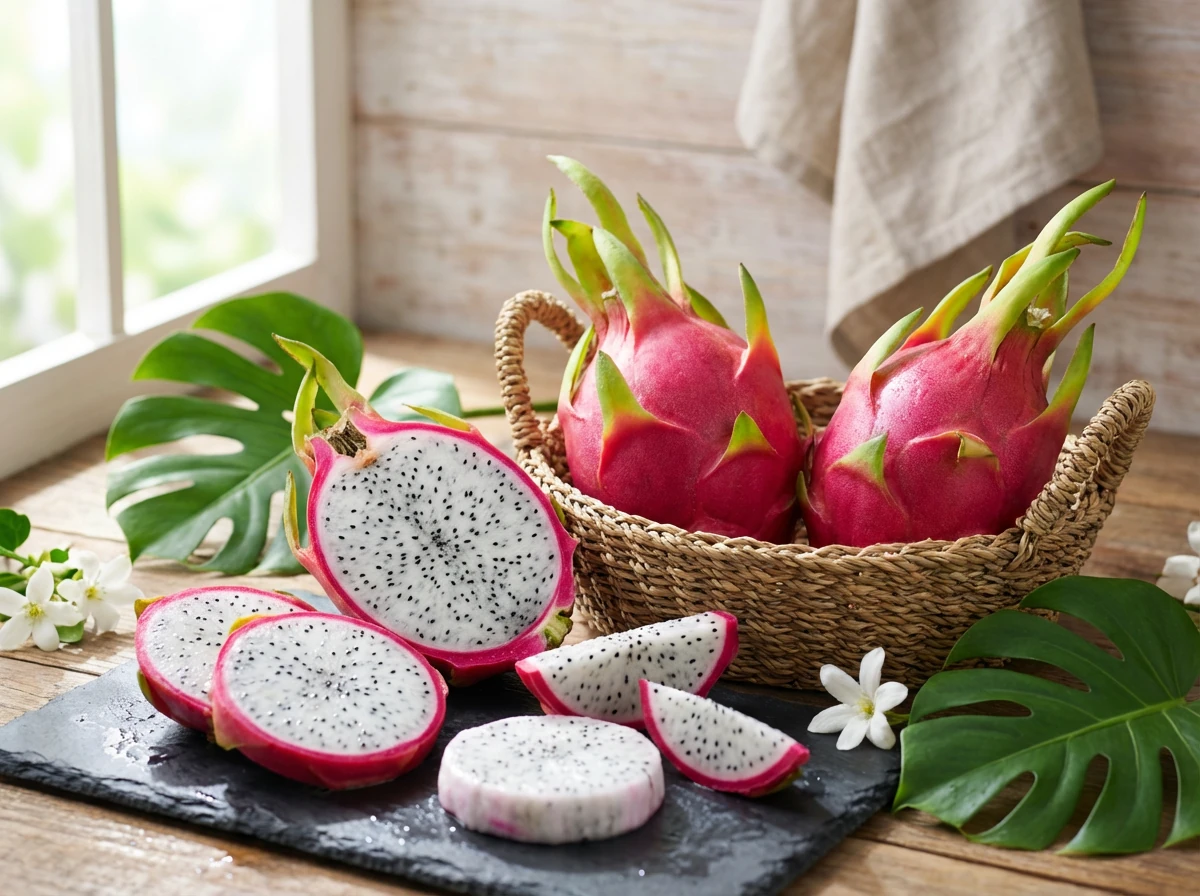
🔄 Quick Comparison: Kiwi vs Dragon Fruit — Exotic Showdown
| Feature |
Kiwi |
Dragon Fruit (Pitaya) |
| Calories (100g) |
61 kcal |
60 kcal |
| Vitamin C |
92.7 mg |
20.5 mg |
| Fiber |
3 g |
3 g |
| Key Antioxidant |
Polyphenols, Vitamin E |
Betacyanins |
| Unique Enzyme |
Actinidin |
None |
| Taste Profile |
Tangy-sweet, vibrant |
Mild, subtly sweet |
| Best For |
Immunity, protein digestion |
Low-cal hydration, gut health |
| Indian Cultivation |
Himachal, Arunachal |
Maharashtra, Gujarat |
📅 Seasonal Availability
- 🌍 Year-round availability — imported varieties (New Zealand, Italy, Chile) keep Indian markets stocked throughout the year
- 🍃 October to May — peak season for New Zealand kiwis, the world’s premium variety
- ☀️ May to November — peak for California, Italian, and Greek varieties
- 🏔 September to November — Indian-grown kiwi from Himachal Pradesh, Arunachal Pradesh, and Uttarakhand
- 🛒 Widely accessible — available in supermarkets, online grocery platforms, and fruit vendors across Indian metros
🛒 How to Choose & Store Kiwi
How to Choose
For Ripe Kiwi:
- 👌 Yields to gentle pressure (like a ripe peach) — not mushy
- 👃 Sweet, fragrant aroma at the stem end
- 🟤 Fuzzy brown skin without wrinkles, bruises, or soft spots
- 🚫 No mold, excessive moisture, or fermented smell
For Unripe Kiwi (to ripen at home):
- 💪 Firm texture with no give when pressed
- 🟢 Can be ripened at room temperature in 3–5 days
Avoid:
- ❌ Rock-hard or overly soft/mushy kiwis
- ❌ Wrinkled, shriveled skin or visible mold
- ❌ Strong fermented or alcoholic odor
- ❌ Damaged, leaking, or punctured fruit
How to Store
- 🌡 Unripe kiwi: Keep at room temperature for 3–5 days to ripen naturally
- 🍎 Speed ripening: Place in a paper bag with an apple or banana (ethylene gas accelerates the process)
- 🧊 Ripe kiwi: Refrigerate for up to 2–4 weeks in the crisper drawer
- ❄ Cut kiwi: Store in airtight container in fridge for 2–3 days; squeeze lemon to prevent browning
- 🧊 Freezing: Peel, slice, and freeze on a tray, then transfer to bags — lasts 10–12 months
🥄 How to Use / Consume
Fresh Consumption
- 🥄 Cut in half and scoop flesh with a spoon — quick and mess-free
- 🍴 Eat with the skin on for triple the fiber (wash thoroughly first)
- 🥗 Add slices to fruit salads, green salads, or grain bowls
- 🥣 Top yogurt, oatmeal, granola, or breakfast bowls
- 🧁 Use as a colorful garnish for desserts and cakes
Beverages
- 🥤 Blend into smoothies and green juices with spinach or banana
- 🍹 Make kiwi lemonade, mojitos, or refreshing mocktails
- 🫖 Add to infused water for a tangy, refreshing flavor
- 🍵 Pair with green tea for a double antioxidant boost
Cooked & Desserts
- 🥙 Make kiwi salsa as a fresh topping for grilled fish or chicken
- 🍰 Bake into tarts, pavlovas (a New Zealand classic), and cakes
- 🍦 Prepare kiwi sorbet, popsicles, or ice cream
- 🍯 Create kiwi jam, marmalade, or Indian-style chutney
- 🥩 Use as a natural meat tenderizer — actinidin enzyme breaks down protein fibers
Tips
- 🧊 Chill before eating for the most refreshing taste
- 🍋 Pair with citrus fruits, strawberries, or pineapple for flavor harmony
- 🥝 Try golden kiwis for a sweeter, less tart, tropical flavor experience
⚠️ Precautions
- ❗ Allergic reactions are relatively common — symptoms include mouth tingling, itching, swelling, or rash (oral allergy syndrome)
- ❗ Actinidin sensitivity — can cause mouth irritation, burning, or tingling in some individuals
- ❗ High in oxalates — those with a history of kidney stones should limit intake and consult a doctor
- ❗ Vitamin K interaction — may interact with blood-thinning medications (warfarin); consult your physician
- ❗ Excessive consumption can cause digestive upset, diarrhea, or acid reflux due to high acidity
- ❗ Latex-fruit syndrome — individuals allergic to latex have a higher risk of reacting to kiwi
- ❗ Common allergen for children — introduce gradually to babies and toddlers, watching for reactions
- ❗ Wash skin thoroughly if eating unpeeled, as the fuzz can trap dirt and residues
🎉 Fun Facts
- 🏆 Kiwi contains more vitamin C than oranges, weight for weight — nearly double the amount
- 🇨🇳 Originally from southern China, where it grew wild in the Yangtze River valley for centuries
- 🇳🇿 Renamed “kiwi” by New Zealand marketers in the 1950s after their national bird — it was previously called “Chinese gooseberry”
- 🌱 The fuzzy brown skin is completely edible and packed with extra fiber, folate, and vitamin E
- 🥝 Golden kiwis (SunGold variety) are sweeter, less fuzzy, and have smooth bronze skin
- 🌍 Italy actually produces more kiwis than New Zealand, making it the world’s second-largest producer after China
- 🔬 Actinidin enzyme is so effective at breaking down protein that kiwi juice is used commercially as a natural meat tenderizer
- 😴 A clinical study found that eating two kiwis one hour before bed significantly improved sleep quality in adults with sleep difficulties
- 🍇 A single mature kiwi vine can produce over 100 pounds of fruit per year
- 🌸 Kiwi vines are dioecious — you need both male and female plants for fruit production
🍽️ Popular Recipes to Try
- Kiwi Smoothie Bowl — blended with banana and topped with granola, coconut, and seeds
- Kiwi Pavlova — the classic New Zealand meringue dessert crowned with fresh kiwi slices
- Tropical Fruit Salad — kiwi with pineapple, mango, and a honey-lime dressing
- Kiwi Salsa — fresh topping with red onion, cilantro, and jalapeño for grilled fish
- Kiwi Yogurt Parfait — layered with Greek yogurt, honey, and crunchy granola
- Kiwi Sorbet — light, dairy-free frozen treat perfect for summer
- Green Detox Smoothie — kiwi blended with spinach, banana, and a splash of coconut water
Frequently Asked Questions (FAQs)
Q: Can you eat kiwi skin?
A: Yes. Kiwi skin is completely edible and highly nutritious — it contains extra fiber, folate, and vitamin E. The fuzzy texture may take some getting used to, but washing thoroughly removes most of the fuzz. Golden kiwis have smoother, less hairy skin. Remove the skin if you prefer a smoother texture.
Q: How do you ripen kiwis quickly?
A: Place unripe kiwis in a paper bag with an apple or banana. These fruits release ethylene gas that accelerates ripening. Leave at room temperature for 1–3 days, checking daily. Once the kiwi yields to gentle pressure, it is ripe. Refrigerate immediately to prevent over-ripening.
Q: What is the difference between green and gold kiwi?
A: Green kiwis (Hayward variety) are tart, tangy, and covered in brown fuzz. Golden kiwis (SunGold variety) are sweeter, have a tropical flavor, and feature smooth bronze skin with less fuzz. Both are nutritious, but golden kiwis have slightly more vitamin C and lower acidity.
Q: Can kiwi cause allergic reactions?
A: Yes, kiwi is a recognized common allergen. Symptoms can include mouth tingling, lip swelling, itching, hives, or in severe cases, anaphylaxis. People with latex allergy, birch pollen allergy, or other fruit allergies are at higher risk. Introduce kiwi cautiously to young children.
Q: Is kiwi good for sleep?
A: Research suggests that eating two kiwis about one hour before bedtime can improve sleep onset, duration, and quality. Kiwi contains serotonin and antioxidants that may help regulate sleep cycles. Multiple clinical studies have confirmed this benefit in adults with sleep difficulties.
Q: What are the benefits of actinidin in kiwi?
A: Actinidin is a proteolytic enzyme unique to kiwifruit that helps break down dietary protein, making kiwi especially beneficial after protein-rich meals. It aids overall gut health, reduces bloating, and can tenderize meat when used in marinades. Green kiwis contain significantly more actinidin than golden varieties.
Explore More: Fruits • Vegetables • Herbs & Spices • Natural Remedies • Seasonal Picks • Wellness Tips
📚 Sources
- USDA FoodData Central — Kiwifruit, green, raw. NDB Number: 09148.
- Richardson, D.P. et al. (2018). “The nutritional and health attributes of kiwifruit: a review.” European Journal of Nutrition, 57(8), 2659–2676.
- Lin, H.H. et al. (2011). “Effect of kiwifruit consumption on sleep quality in adults with sleep problems.” Asia Pacific Journal of Clinical Nutrition, 20(2), 169–174.
← Back to Fruits