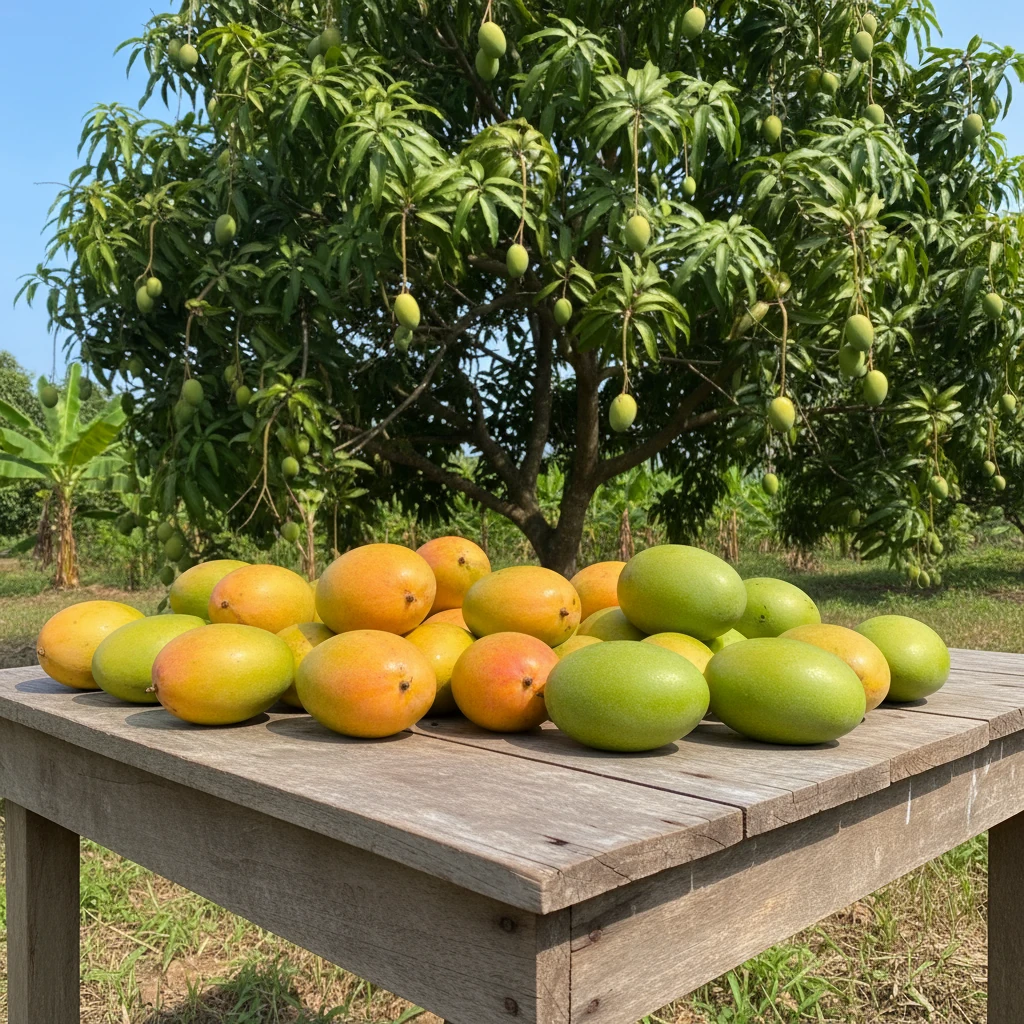
🥭 Mango at a Glance
Mango (Mangifera indica) is a beloved tropical fruit often called the “King of Fruits” for its rich, sweet flavor and impressive nutritional profile. Originating in South Asia over 5,000 years ago, mangoes are now cultivated across tropical regions worldwide. India remains the largest producer, growing over 1,500 varieties including prized cultivars like Alphonso (Hapus), Dasheri, Langra, Kesar, Totapuri, and Chausa. Known as “aam” in Hindi, the mango holds deep cultural significance in India, appearing in ancient texts, festivals, and daily cuisine throughout the summer months.
✨ Why It’s Special
- 👑 King of Fruits — Mango is one of the most widely consumed and culturally celebrated fruits in the world
- 🌿 Ancient heritage — Cultivated for over 5,000 years in the Indian subcontinent, with references in Vedic literature
- 🧬 Nutrient-dense — Packed with over 20 vitamins and minerals, including high levels of vitamin A, vitamin C, and folate
- 🍃 Versatile use — Enjoyed raw (green) in chutneys and pickles, ripe as a dessert fruit, and in beverages, desserts, and curries
- 🌍 Global impact — India produces nearly 50% of the world’s mangoes, making it a cornerstone of tropical agriculture
💪 Health Benefits
- ✅ Boosts immunity — One cup of mango provides about 67% of daily vitamin C, strengthening immune defenses
- ✅ Supports eye health — Rich in vitamin A and beta-carotene, essential for healthy vision and preventing age-related macular degeneration
- ✅ Improves digestion — Contains digestive enzymes (amylases) that break down complex starches, plus dietary fiber for gut health
- ✅ Rich in antioxidants — Contains mangiferin, quercetin, and beta-carotene that protect cells from oxidative stress
- ✅ Promotes healthy skin and hair — Vitamins A and C support collagen production, while beta-carotene protects skin from UV damage
- ✅ Supports heart health — Potassium and magnesium help regulate blood pressure; fiber helps manage cholesterol levels
- ✅ May aid weight management — Despite being sweet, mango’s fiber content promotes satiety and helps control appetite
- ✅ Anti-inflammatory properties — Polyphenols like mangiferin have demonstrated anti-inflammatory effects in studies
- ✅ Supports brain health — Vitamin B6 in mango supports neurotransmitter production and cognitive function
- ✅ Strengthens bones — Provides vitamin K, which plays a key role in calcium absorption and bone metabolism
| Nutrient |
Amount |
| Calories |
60 kcal |
| Carbohydrates |
15 g |
| Dietary Fiber |
1.6 g |
| Protein |
0.8 g |
| Vitamin C |
36.4 mg |
| Vitamin A |
54 µg RAE |
| Folate |
43 µg |
| Potassium |
168 mg |
| Magnesium |
10 mg |
| Iron |
0.16 mg |
Note: Mango is one of the richest fruit sources of beta-carotene (provitamin A), with ripe varieties like Alphonso providing significantly higher levels. It also contains unique antioxidants like mangiferin, rarely found in other fruits.
🔄 Quick Comparison: Mango vs Papaya — Sweet Power vs Enzyme Power
| Feature |
🥭 Mango |
🍈 Papaya |
| Calories (per 100g) |
60 kcal |
43 kcal |
| Vitamin C |
36.4 mg |
60.9 mg |
| Vitamin A |
54 µg |
47 µg |
| Fiber |
1.6 g |
1.7 g |
| Key Enzyme |
Amylases |
Papain |
| Best For |
Eye health, skin glow |
Digestion, detox |
| Glycemic Index |
~51 (Medium) |
~60 (Medium) |
| Availability |
Seasonal (Apr–Jul) |
Year-round |
📅 Seasonal Availability
- 🌞 Peak season in India — April to July, with early varieties arriving in March and late ones extending to August
- 🌍 Global availability — Available year-round in many countries due to imports from Mexico, Brazil, Peru, and Southeast Asia
- 📦 Off-season options — Frozen mango chunks, mango pulp, and dried mango are available throughout the year
- 🏷️ Variety timeline — Alphonso (April–May), Dasheri (May–June), Langra (June–July), Chausa (July–August)
- ❄️ Winter mangoes — Some varieties from southern India and imported mangoes may be available in winter months
🛒 How to Choose & Store Mango
How to Choose
- Look for mangoes that yield slightly to gentle pressure — too soft means overripe
- Smell near the stem: a sweet, fruity aroma indicates ripeness
- Don’t rely on color alone — some varieties like Langra remain green even when fully ripe
- Avoid mangoes with dark spots, shriveled skin, or a sour/fermented smell
- Choose firm mangoes if you plan to use them in a few days
How to Store
- Unripe mangoes: Keep at room temperature for 2–7 days to ripen; placing in a paper bag with a banana speeds up the process
- Ripe mangoes: Refrigerate for 3–5 days
- Cut mango: Store in an airtight container in the refrigerator for 2–3 days
- Long-term: Freeze mango cubes or puree for up to 6 months
- Avoid refrigerating unripe mangoes — cold stops the ripening process
🥄 How to Use / Consume
Fresh Consumption
- Slice and eat as a refreshing snack or dessert
- Cut into cubes for fruit salads and bowls
- Enjoy the classic “hedgehog” cut for easy eating
Beverages
- Blend into mango lassi, smoothies, or milkshakes
- Make fresh aam panna (raw mango drink) for summer hydration
- Prepare mango juice or add to cocktails and mocktails
Cooked & Desserts
- Use ripe mango in ice cream, kulfi, puddings, and cakes
- Make traditional aam ras (mango puree) served with puri
- Green mango makes excellent chutneys, pickles (aachar), and dal
- Add to curries, salsas, and stir-fries for a sweet-tangy twist
Tips
- Pair mango with lime juice and chili powder for a classic Indian snack
- Raw mango with salt and red chili is a popular street food in India
- Freeze mango chunks for a healthy, ice-cream-like treat
⚠️ Precautions
- ❗ Blood sugar: Mango has natural sugars — diabetics should limit portions to about half a cup and monitor glucose levels
- ❗ Allergic reactions: Mango peel contains urushiol (similar to poison ivy) — sensitive individuals should avoid touching the skin
- ❗ Calorie intake: Overconsumption can contribute to excess calorie and sugar intake, especially when eating multiple large mangoes
- ❗ Digestive issues: Eating too many green/raw mangoes may cause stomach ache, indigestion, or throat irritation
- ❗ Medication interaction: Mango may interact with blood thinners due to its vitamin K content — consult your doctor
- ❗ Carbide ripening: Avoid artificially ripened mangoes (often with calcium carbide); wash mangoes thoroughly before eating
- ❗ Moderation: Ayurveda recommends not drinking water or milk immediately after eating mango
- ❗ Latex allergy: People with latex allergies may cross-react with mango
🎉 Fun Facts
- 👑 Mango has been the national fruit of India since ancient times and is also the national fruit of Pakistan and the Philippines
- 🌍 India produces about 20 million tonnes of mangoes annually — nearly half the global supply
- 📜 The Mughal emperor Akbar reportedly planted an orchard of 100,000 mango trees called Lakhi Bagh near Darbhanga
- 🎨 Mango motifs (paisley pattern) originated from the shape of the mango and are used in Indian textiles worldwide
- 🧬 There are over 1,500 varieties of mango grown in India alone, each with distinct flavor, texture, and aroma
- 🌳 A mango tree can live and produce fruit for over 300 years
- 🍃 Mango leaves are tied at doorways during Indian weddings and festivals as a symbol of prosperity
- 🏆 The Alphonso mango from Ratnagiri, Maharashtra, is considered the world’s most premium mango variety
- 🪨 The oldest known mango tree, believed to be over 300 years old, still bears fruit in East Khandesh, India
- 🍦 Mango is the most popular ice cream flavor in India
🍽️ Popular Recipes to Try
- 🥤 Mango Lassi — Blend ripe mango with yogurt, sugar, and a pinch of cardamom for the classic Indian drink
- 🍨 Aam Ras Puri — Serve silky mango puree with deep-fried puri, a Gujarati delicacy
- 🥗 Mango Salsa — Dice mango with red onion, cilantro, jalapeño, and lime juice for a fresh topping
- 🍛 Raw Mango Dal — Add chopped green mango to lentil soup for a tangy twist
- 🫙 Mango Pickle (Aachar) — Traditional Indian pickle with raw mango, mustard oil, and spices
- 🍹 Aam Panna — A refreshing summer cooler made with raw mango pulp, roasted cumin, and mint
- 🍰 Mango Cheesecake — Creamy no-bake cheesecake topped with fresh mango puree
Frequently Asked Questions (FAQs)
Q: What’s the difference between Alphonso and other mango varieties?
A: Alphonso mangoes are considered premium due to their rich, creamy texture, intense sweetness, and low fiber content. Other popular Indian varieties include Dasheri (aromatic, sweet), Totapuri (tangy, used in pickles), Kesar (saffron-colored, sweet), and Langra (fibrous, sweet-sour). Each has unique flavor profiles and uses.
Q: Can diabetics eat mangoes?
A: Yes, in moderation. Despite being sweet, mangoes have a medium glycemic index (around 51). Limit portion to half a cup (82g) at a time, choose slightly firm mangoes over very ripe ones, and pair with protein or nuts to minimize blood sugar spikes. Monitor your levels closely.
Q: How do I know if a mango is ripe?
A: A ripe mango yields slightly to gentle pressure, emits a sweet fragrance near the stem, and may show some color change (though color varies by variety). Don’t rely on color alone — some varieties stay green when ripe. Avoid mangoes with dark spots, shriveled skin, or overly soft texture.
Q: Is mango good for pregnant women?
A: Yes, mangoes are excellent during pregnancy as they’re rich in vitamin A (for baby’s development), vitamin C (iron absorption), fiber (prevents constipation), and folate. However, eat in moderation due to natural sugar content and ensure mangoes are washed thoroughly to avoid contamination.
Q: Why do some people get rashes from eating mangoes?
A: Mango peel contains urushiol, the same compound found in poison ivy, which can cause allergic contact dermatitis in sensitive individuals. If you’re allergic, avoid touching the peel — have someone else peel it, or buy pre-cut mango. The flesh itself is usually safe.
Q: How should I store mangoes?
A: Unripe mangoes ripen at room temperature in 2–7 days. To speed ripening, place in a paper bag with an apple or banana. Once ripe, refrigerate for 3–5 days. Cut mango can be refrigerated in an airtight container for 2–3 days or frozen for up to 6 months.
Explore More: Fruits • Vegetables • Herbs & Spices • Natural Remedies • Seasonal Picks • Wellness Tips
📚 Sources
- USDA FoodData Central — Mango, raw. NDB Number: 169910. https://fdc.nal.usda.gov
- Lauricella, M. et al. (2017). “Multifaceted Health Benefits of Mangifera indica L. (Mango): The Inestimable Value of Orchards Recently Planted in Sicilian Rural Areas.” Nutrients, 9(5), 525.
- National Mango Board — Mango Nutrition. https://www.mango.org
← Back to Fruits