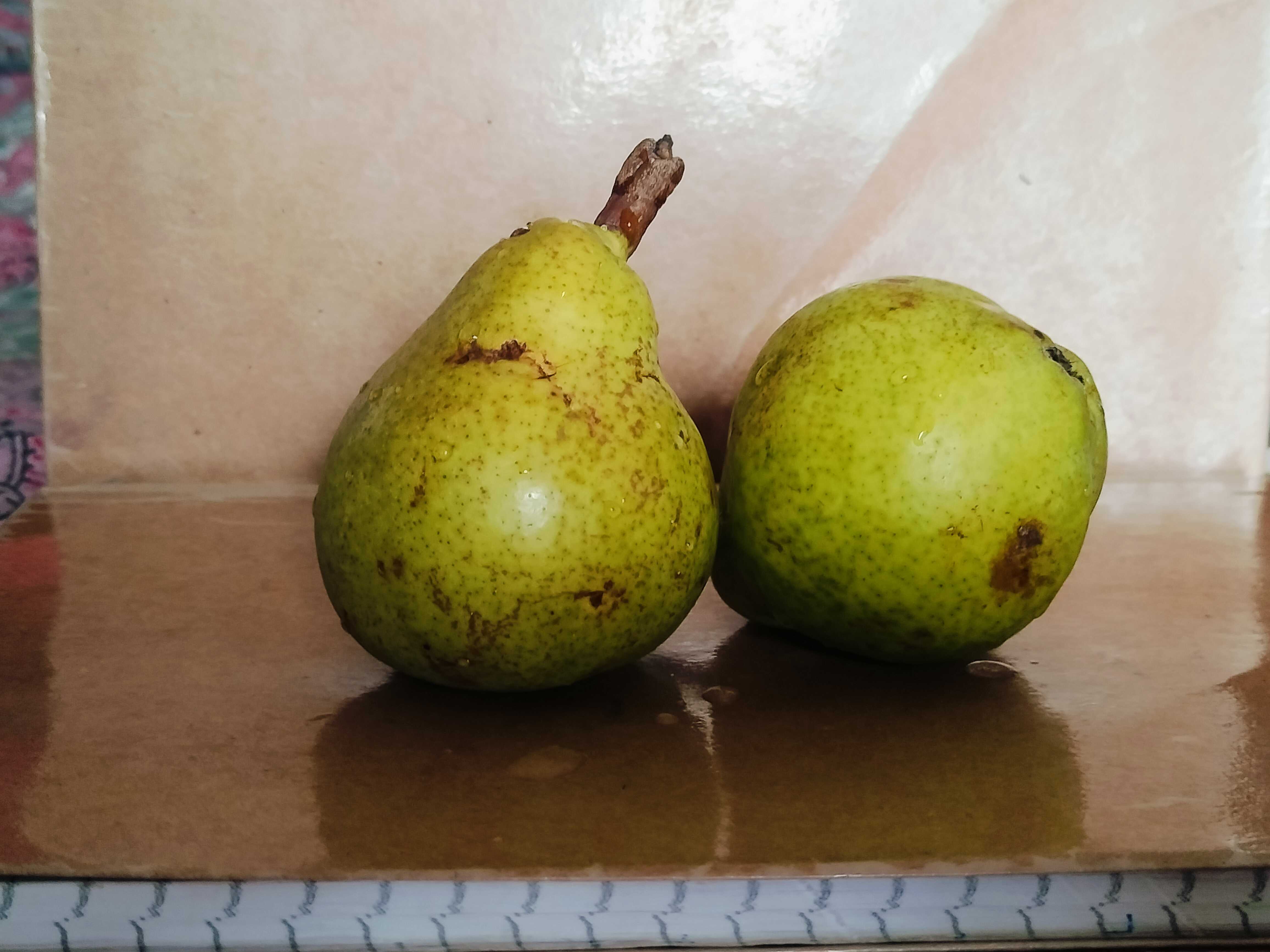
🍐 Pear at a Glance
Pear (Pyrus communis) is a sweet, bell-shaped fruit prized for its buttery texture, delicate flavor, and exceptionally high fiber content. One of the oldest cultivated fruits, pears have been enjoyed for over 3,000 years across Europe and Asia. With more fiber per serving than most common fruits, pears are a digestive health powerhouse. In India, pears — known as “nashpati” (नाशपाती) — are grown in the Himalayan regions of Himachal Pradesh, Jammu & Kashmir, and Uttarakhand. The fruit is widely available in Indian markets from late summer through autumn, and varieties like Patharnakh (a hard, crunchy Indian pear), Bartlett, and Kashmir Nakh are popular choices.
✨ Why It’s Special
- 🥇 One of the highest-fiber fruits available — a single medium pear provides about 22% of the daily recommended fiber intake
- 🌳 Remarkably long-lived trees — pear trees can bear fruit for over 100 years, making them a symbol of longevity
- 🧬 Contains arbutin, a unique compound with skin-brightening and anti-inflammatory properties
- 🇮🇳 India’s Patharnakh variety is a uniquely crunchy, stone-hard pear native to the Punjab and Himalayan foothills
- 🍐 One of few fruits that ripen off the tree — pears are picked mature but unripe, and develop their signature buttery texture at room temperature
💪 Health Benefits
- ✅ Excellent for digestive health — 5.5g fiber per medium pear (both soluble and insoluble) promotes regular bowel movements and prevents constipation
- ✅ Supports heart health — the fiber pectin binds to cholesterol in the gut, helping lower LDL levels and reduce cardiovascular risk
- ✅ Anti-inflammatory properties — flavonoids like quercetin and anthocyanins in pear skin help reduce chronic inflammation
- ✅ Aids weight management — high fiber and water content (84%) keep you full longer at just 57 calories per 100g
- ✅ Low glycemic index (~38) — makes pears a smart fruit choice for people managing blood sugar levels
- ✅ Supports gut microbiome — prebiotic fiber in pears feeds beneficial gut bacteria, improving overall digestive health
- ✅ Rich in copper — provides 16% of daily copper needs, essential for iron metabolism and nerve function
- ✅ May reduce type 2 diabetes risk — anthocyanins in red-skinned pears are linked to improved insulin sensitivity
- ✅ Promotes skin health — vitamin C and arbutin support collagen production and even skin tone
- ✅ Gentle on sensitive stomachs — pears are among the least allergenic fruits, often recommended as a first fruit for babies
| Nutrient |
Amount |
| Calories |
57 kcal |
| Total Carbs |
15.2 g |
| Dietary Fiber |
3.1 g |
| Sugars |
9.8 g |
| Protein |
0.4 g |
| Fat |
0.1 g |
| Vitamin C |
4.3 mg |
| Potassium |
116 mg |
| Copper |
0.082 mg |
| Vitamin K |
4.4 µg |
Note: Pear skin contains roughly 50% of the fruit’s total fiber and the highest concentration of beneficial antioxidants like arbutin and chlorogenic acid. Always eat pears with the skin on for maximum nutritional benefit.
🔄 Quick Comparison: Pear vs Apple — Fiber Champion vs Antioxidant King
| Feature |
Pear 🍐 |
Apple 🍎 |
| Calories (per 100g) |
57 kcal |
52 kcal |
| Fiber (per 100g) |
3.1 g |
2.4 g |
| Vitamin C (per 100g) |
4.3 mg |
4.6 mg |
| Potassium |
116 mg |
107 mg |
| Glycemic Index |
~38 (Low) |
~36 (Low) |
| Texture |
Soft, buttery when ripe |
Crisp, crunchy |
| Best Season (India) |
August–November |
August–December |
| Key Antioxidant |
Arbutin |
Quercetin |
📅 Seasonal Availability
- 🍂 Peak season in India: August to November — locally grown varieties like Patharnakh and Kashmir Nakh are most abundant
- 🏔️ Key growing regions: Himachal Pradesh, Jammu & Kashmir, Uttarakhand, and parts of Punjab
- 🌏 Imported pears from the USA, South Africa, and Chile are available from December through July
- 🌿 Patharnakh pears are uniquely Indian — available mid-July to September, especially in North Indian markets
- 📆 Year-round availability: Between domestic production and imports, pears can be found in most urban markets throughout the year
🛒 How to Choose & Store Pear
How to Choose
- Check the neck — gently press near the stem; if it yields slightly, the pear is ripe and ready to eat
- Pick pears that are free of bruises, dark spots, and cuts on the skin
- Color is not always reliable — many pear varieties don’t change color when ripe; the neck test is most accurate
- A mild, sweet fragrance near the base indicates good ripeness
- For cooking and baking, choose slightly firm pears that will hold their shape
How to Store
- Unripe pears: Keep at room temperature for 2–7 days until they ripen (neck yields to gentle pressure)
- Speed up ripening: Place pears in a paper bag with a banana or apple — the ethylene gas accelerates the process
- Ripe pears: Refrigerate immediately and consume within 3–5 days
- Cut pears: Toss with lemon juice to prevent browning; store in an airtight container in the refrigerator for 1–2 days
🥄 How to Use / Consume
Fresh Consumption
- 🍐 Eat ripe pears fresh — their buttery, juicy texture is best enjoyed at peak ripeness
- 🧀 Pair sliced pears with cheese (blue cheese, brie, or cheddar) for a classic combination
- 🥗 Add to salads with arugula, walnuts, and a honey vinaigrette
Beverages
- 🥤 Pear juice — fresh-pressed or blended with ginger and a squeeze of lemon
- 🧃 Pear smoothie — blend with yogurt, honey, and a pinch of cinnamon
- 🍵 Warm pear tea — simmer pear slices with cinnamon sticks and cloves
Cooked & Desserts
- 🍷 Poached pears in red wine — an elegant French dessert with warm spices
- 🥧 Pear tart or galette with almond cream filling
- 🍯 Baked pears with honey, walnuts, and cardamom — simple Indian-inspired dessert
- 🫕 Pear murabba — a traditional Indian sweet preserve made with sugar syrup and spices
Tips
- Bartlett pears are best for eating fresh and canning; Bosc pears hold shape well in baking
- Asian pears stay crisp even when ripe — ideal for salads and snacking
- Slightly underripe pears are better for cooking as they maintain their structure
⚠️ Precautions
- ❗ High in fructose and sorbitol — may trigger bloating, gas, or diarrhea in people with IBS or fructose intolerance
- ❗ Overripe pears spoil quickly — their high sugar and water content makes them prone to rapid decay and fermentation
- ❗ Pesticide residues — wash pears thoroughly or buy organic, especially if eating with the skin
- ❗ May cause oral allergy syndrome — people allergic to birch pollen may experience itching or tingling when eating raw pears
- ❗ Excess consumption can cause digestive discomfort — the high fiber content may lead to bloating if you’re not accustomed to high-fiber foods
- ❗ Seeds should not be consumed — like apple seeds, pear seeds contain trace amounts of amygdalin
- ❗ Diabetics should monitor portions — while low GI, a whole pear still contains about 17g of natural sugar
🎉 Fun Facts
- 🍐 Pears ripen from the inside out — that’s why checking the neck (near the stem) is the best way to test ripeness
- 🌳 Pear trees can live for over 100 years and still produce fruit — some ancient pear trees in Europe are 300+ years old
- 🌍 China produces about 70% of the world’s pears, making it by far the largest producer
- 📜 Pears have been cultivated since at least 1000 BC — ancient Greeks considered them a gift from the gods
- 🧪 Pear wood is prized for making musical instruments and fine furniture due to its close, even grain
- 🍼 Pears are one of the first fruits recommended for babies due to their low allergenicity and gentle digestibility
- 🇮🇳 The Patharnakh pear, native to India, is so hard when unripe that its name literally means “stone bite” in Punjabi
- 🧬 Pears belong to the rose family (Rosaceae) — they are botanical cousins of apples, cherries, and strawberries
- 🌸 The oldest known pear tree in America was planted in 1630 in Massachusetts and still bears fruit
- 📏 There are over 3,000 known pear varieties worldwide, though only about 30 are commonly sold in markets
🍽️ Popular Recipes to Try
- 🍷 Poached Pears in Red Wine — pears simmered in spiced red wine with cinnamon, star anise, and vanilla
- 🧀 Pear & Blue Cheese Salad — sliced pears with crumbled blue cheese, candied walnuts, and arugula
- 🥧 French Pear Tart — buttery pastry filled with almond cream and fanned pear slices
- 🍯 Baked Pears with Honey & Cardamom — halved pears baked with honey, ghee, and crushed cardamom
- 🫕 Pear Murabba — traditional Indian sweet preserve with pear chunks in sugar syrup and spices
- 🥤 Pear-Ginger Smoothie — fresh pear blended with ginger, banana, and a splash of almond milk
- 🥞 Pear & Oat Breakfast Bowl — diced pears with warm oats, chia seeds, and a drizzle of maple syrup
Frequently Asked Questions (FAQs)
Q: Should I eat the pear skin or peel it?
A: Eat the skin! Pear skin contains most of the fiber (about 50%) and beneficial antioxidants like quercetin and vitamin C. The skin is perfectly edible and adds nutritional value. Just wash thoroughly to remove pesticide residues. Peel only if you have digestive sensitivities.
Q: Why are my pears hard and not ripening?
A: Pears are unique — they ripen best OFF the tree. Store hard pears at room temperature in a paper bag for 2–7 days to speed ripening. Check daily by pressing gently near the stem — when it yields slightly, it’s ripe. Refrigerate ripe pears to slow further ripening.
Q: What’s the difference between Bartlett, Bosc, and Asian pears?
A: Bartlett pears are sweet, juicy, and best fresh or canned. Bosc pears are firmer, spicier, ideal for baking and poaching. Asian pears are crisp, apple-like, eaten fresh. Each has unique flavor and texture — experiment to find your favorite for different uses.
Q: Can diabetics eat pears?
A: Yes, pears are excellent for diabetics. They have a low glycemic index (around 38), high fiber content that slows sugar absorption, and beneficial compounds that improve insulin sensitivity. Eat one medium pear with skin for maximum fiber benefit and monitor blood sugar levels.
Q: Are canned pears as healthy as fresh?
A: Fresh pears are healthier, retaining more vitamins and fiber. Canned pears lose some nutrients during processing and often contain added sugars in syrup. If choosing canned, opt for pears in 100% juice or water (not heavy syrup) and rinse before eating to reduce sugar content.
Q: Can I eat pears if I have IBS or digestive issues?
A: Pears contain sorbitol and fructose, which may trigger IBS symptoms in some people (especially when eaten in large quantities or unripe). Start with small portions of ripe pears, chew thoroughly, and monitor symptoms. Asian pears may be better tolerated. Consult your doctor for personalized advice.
Explore More: Fruits • Vegetables • Herbs & Spices • Natural Remedies • Seasonal Picks • Wellness Tips
📚 Sources
- USDA FoodData Central — Pears, raw. U.S. Department of Agriculture. https://fdc.nal.usda.gov/
- Reiland, H. & Slavin, J. (2015). Systematic Review of Pears and Health. Nutrition Today, 50(6), 301–305.
- Li, X. et al. (2012). Composition, Biological Properties and Uses of Pear. Food Chemistry, 132(1), 134–144.
← Back to Fruits