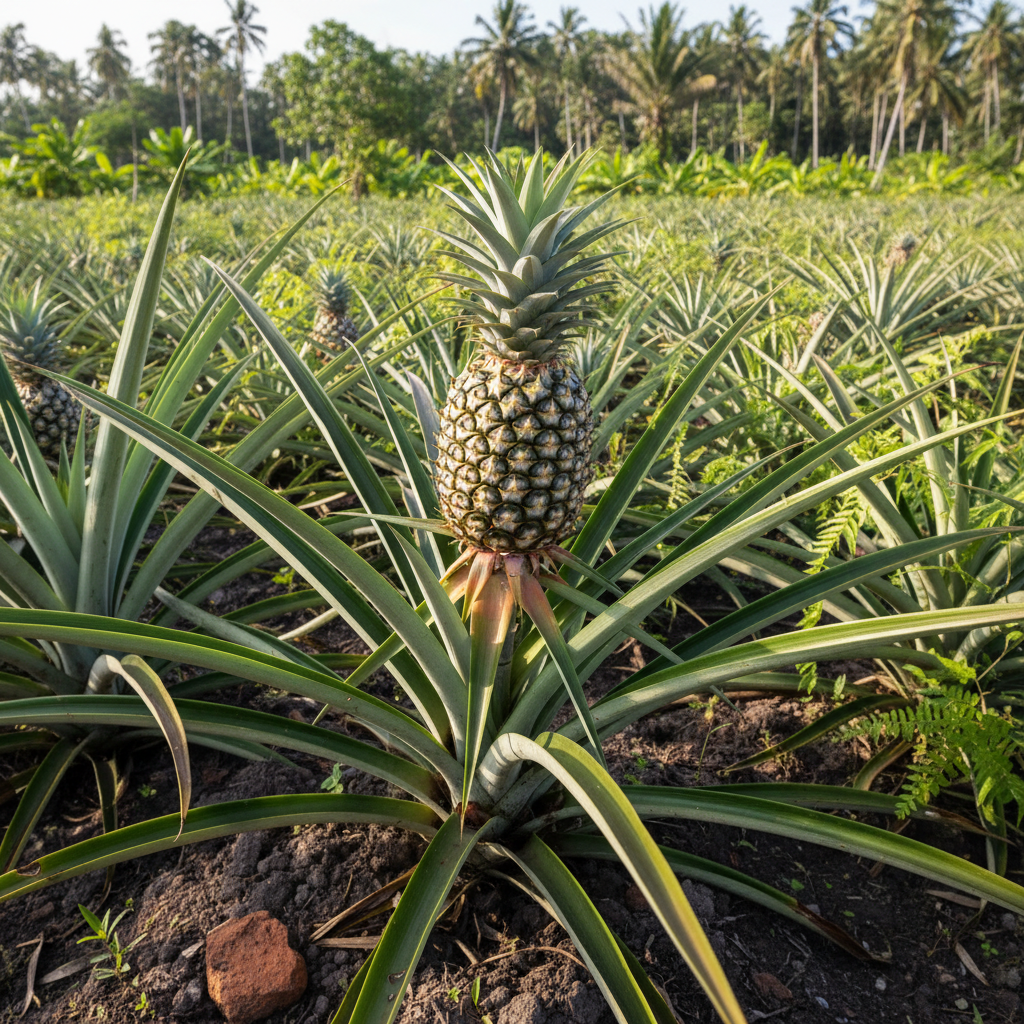
🍍 Pineapple at a Glance
Pineapple (Ananas comosus) is a vibrant tropical fruit known for its sweet-tart flavor, spiky crown, and remarkable enzyme content. Originally from South America, pineapple was spread worldwide by European explorers in the 16th century. Known as “ananas” in Hindi and most world languages, pineapple is cultivated extensively in India, particularly in Kerala, Karnataka, Assam, Meghalaya, and West Bengal. India ranks as the fifth-largest producer globally. The fruit is distinguished by its unique bromelain enzyme, making it both a delicious food and a natural digestive remedy used in traditional medicine.
✨ Why It’s Special
- 🧪 Bromelain powerhouse — The only significant dietary source of bromelain, a group of proteolytic enzymes with proven anti-inflammatory and digestive benefits
- 🍊 Vitamin C rich — Provides nearly 80% of the daily recommended intake per 100g, rivaling citrus fruits
- 🦴 Manganese leader — One of the richest fruit sources of manganese, essential for bone health and metabolism
- 🌍 Symbol of hospitality — In many cultures, pineapple represents welcome and generosity, displayed at entrances and celebrations
- 🍳 Incredibly versatile — Works equally well in sweet desserts, savory curries, grilled dishes, beverages, and as a natural meat tenderizer
💪 Health Benefits
- ✅ Strengthens immunity — High vitamin C content stimulates white blood cell production and protects against infections
- ✅ Aids digestion — Bromelain breaks down protein molecules, making heavy meals easier to digest and reducing bloating
- ✅ Reduces inflammation — Bromelain has clinically demonstrated anti-inflammatory properties, helpful for arthritis and post-surgery recovery
- ✅ Supports bone health — Rich in manganese (45% RDI per 100g), crucial for bone formation and connective tissue maintenance
- ✅ Promotes post-workout recovery — Bromelain helps reduce muscle soreness and inflammation after intense exercise
- ✅ Supports heart health — Fiber, potassium, and bromelain work together to reduce blood clotting risk and support healthy circulation
- ✅ Boosts skin health — Vitamin C promotes collagen synthesis, while bromelain helps with skin exfoliation and wound healing
- ✅ May help with sinusitis — Bromelain has been shown to reduce nasal swelling and improve breathing in sinus conditions
- ✅ Hydrating fruit — Contains about 86% water, making it excellent for hydration during hot weather
- ✅ Supports eye health — Beta-carotene and vitamin C help protect against age-related vision decline
| Nutrient |
Amount |
| Calories |
50 kcal |
| Carbohydrates |
13.1 g |
| Dietary Fiber |
1.4 g |
| Protein |
0.5 g |
| Vitamin C |
47.8 mg (53% RDI) |
| Manganese |
0.93 mg (45% RDI) |
| Vitamin B6 |
0.11 mg |
| Potassium |
109 mg |
| Copper |
0.11 mg |
| Folate |
18 µg |
Note: Pineapple is the only known significant dietary source of bromelain, a mixture of enzymes that is not reflected in standard nutrition tables but provides substantial anti-inflammatory and digestive benefits. Fresh pineapple retains active bromelain, while canning and heat processing destroys it.
🔄 Quick Comparison: Pineapple vs Papaya — Bromelain vs Papain
| Feature |
🍍 Pineapple |
🍈 Papaya |
| Calories (per 100g) |
50 kcal |
43 kcal |
| Vitamin C |
47.8 mg |
60.9 mg |
| Fiber |
1.4 g |
1.7 g |
| Key Enzyme |
Bromelain |
Papain |
| Manganese |
0.93 mg (45% RDI) |
0.04 mg |
| Best For |
Inflammation, joints |
Digestion, detox |
| Glycemic Index |
~66 (Medium) |
~60 (Medium) |
| Availability |
Year-round |
Year-round |
📅 Seasonal Availability
- 📅 Available year-round — Pineapple is cultivated and available throughout the year in India, with slight seasonal variations in price
- 🌞 Peak season in India — June to September, when fruits are sweetest and most affordable
- 🌾 Major Indian growing regions — Kerala (Vazhakulam pineapple is GI-tagged), Karnataka, Assam, Meghalaya, Tripura, and West Bengal
- 🌍 Global supply — Costa Rica, Philippines, Thailand, and Brazil are major exporters, ensuring consistent availability worldwide
- 🏪 Off-season options — Canned pineapple, frozen chunks, and pineapple juice are widely available, though fresh is preferred for bromelain content
🛒 How to Choose & Store Pineapple
How to Choose
- Look for golden-yellow color at the base — this indicates ripeness (green at the top is normal)
- The fruit should have a sweet, fragrant aroma at the base; avoid pineapples with fermented or vinegar-like smell
- Center leaves should pull out with a gentle tug when ripe
- The fruit should feel heavy for its size and give slightly to pressure
- Avoid pineapples with soft spots, mold, or dark eyes
How to Store
- Whole pineapple (uncut): Store at room temperature for 2–3 days, or refrigerate for up to 5–7 days
- Cut pineapple: Place in an airtight container in the refrigerator for 3–5 days
- Long-term storage: Freeze pineapple chunks in a single layer on a tray, then transfer to freezer bags for up to 3 months
- Tip: Storing whole pineapple upside down for 30 minutes before cutting helps distribute sugars evenly
- Unlike many fruits, pineapple does not ripen further after picking — choose a ripe one
🥄 How to Use / Consume
Fresh Consumption
- Cut into rings, spears, or chunks and eat as a refreshing snack
- Add to fruit salads, breakfast bowls, or yogurt parfaits
- Sprinkle with chaat masala and black salt for an Indian-style treat
Beverages
- Blend into tropical smoothies with coconut milk and banana
- Make pineapple juice, a refreshing summer cooler
- Prepare tepache — a traditional fermented pineapple drink
- Mix into cocktails, mocktails, and punches
Cooked & Desserts
- Grill pineapple rings for a caramelized, smoky flavor — perfect with burgers or as a side
- Use in South Indian and Keralan curries (pineapple pachadi, pineapple rasam)
- Make pineapple upside-down cake, tarts, or pineapple sheera
- Add to fried rice, pizza, and stir-fries for a sweet-savory combination
- Prepare pineapple jam, chutney, or preserve
Tips
- Eat fresh pineapple for maximum bromelain benefits — cooking destroys the enzyme
- Soak pineapple chunks in salted water for 5 minutes to reduce mouth tingling
- Use pineapple juice as a natural meat tenderizer in marinades
⚠️ Precautions
- ❗ Mouth irritation: Bromelain can cause tingling, burning, or soreness in the mouth and tongue — soaking in salt water helps reduce this effect
- ❗ Acidity: Pineapple’s natural acids can trigger acid reflux or heartburn in sensitive individuals
- ❗ Blood sugar: Pineapple has a medium glycemic index (~66) — diabetics should limit portions and avoid juice
- ❗ Allergic reactions: Some people experience allergic reactions including swelling, itching, or hives — discontinue if symptoms occur
- ❗ Medication interaction: Bromelain may enhance the effects of blood thinners and antibiotics — consult your doctor
- ❗ Dental health: The acid and bromelain content can erode tooth enamel — rinse mouth with water after eating
- ❗ Pregnancy: While small amounts are safe, excessive consumption is not recommended due to bromelain’s potential uterine-stimulating effects
- ❗ Unripe pineapple: Eating unripe pineapple can cause severe throat irritation, nausea, and diarrhea
🎉 Fun Facts
- 🌱 A pineapple plant produces only one fruit per growing cycle, taking 2–3 years from planting to first harvest
- 🏠 In colonial America, pineapples were so rare and expensive that they were rented out as table centerpieces for parties
- 🌍 The word “pineapple” comes from European explorers who thought it resembled a pine cone — most other languages use variations of “ananas”
- 🧬 Pineapple is actually a cluster of 100–200 individual fruitlets fused together around a central core
- 🍖 Bromelain in pineapple is so powerful that pineapple plantation workers often lose their fingerprints due to constant exposure
- 🇨🇷 Costa Rica is the world’s largest pineapple exporter, producing over 3 million tonnes annually
- 🌿 You can grow a new pineapple plant by twisting off the leafy crown and planting it in soil
- 🏛️ The pineapple became a symbol of wealth and hospitality in 18th-century Europe, carved into buildings and furniture
- 🇮🇳 Kerala’s Vazhakulam pineapple has a Geographical Indication (GI) tag, recognized for its unique sweetness
- 🧪 NASA research has shown that pineapple plants help improve indoor air quality
🍽️ Popular Recipes to Try
- 🍹 Pineapple Juice — Fresh-pressed pineapple juice with mint and a pinch of black salt for a cooling summer drink
- 🍛 Pineapple Pachadi — Traditional Kerala dish with pineapple, yogurt, coconut, and mustard seeds
- 🔥 Grilled Pineapple — Grill pineapple rings with honey and cinnamon for a smoky, caramelized treat
- 🍚 Pineapple Fried Rice — Thai-inspired rice dish served inside a hollowed pineapple shell
- 🍰 Pineapple Upside-Down Cake — Classic baked cake with caramelized pineapple rings and cherries
- 🥗 Pineapple Raita — Refreshing yogurt-based side dish with pineapple chunks, perfect with biryanis
- 🫙 Pineapple Chutney — Sweet and spicy chutney with pineapple, jaggery, and red chilies
Frequently Asked Questions (FAQs)
Q: Why does my mouth hurt or tingle after eating pineapple?
A: Pineapple contains bromelain, a proteolytic enzyme that breaks down proteins — including the proteins in your mouth’s soft tissue. This causes temporary tingling or irritation. To minimize this, eat pineapple with dairy (neutralizes enzymes), soak in salt water for 5 minutes, limit portion size, or choose canned pineapple (heat destroys bromelain).
Q: Is fresh pineapple better than canned?
A: Fresh pineapple is nutritionally superior, containing active bromelain enzyme and more vitamin C. Canned pineapple loses bromelain during processing but retains most vitamins and minerals. However, canned varieties often have added sugar. Choose fresh when possible, or opt for canned in 100% juice (not syrup).
Q: Can pineapple help with inflammation and arthritis?
A: Yes, bromelain in pineapple has powerful anti-inflammatory properties that may reduce arthritis pain, joint swelling, and post-exercise soreness. For therapeutic benefits, eat fresh pineapple on an empty stomach or consider bromelain supplements. Consult your doctor before using as a treatment.
Q: How do I know if a pineapple is ripe?
A: A ripe pineapple has golden-yellow color at the base, sweet fragrance, gives slightly when pressed, and the center leaves pull out easily. Avoid pineapples with soft spots, mold, or fermented smell. Color alone isn’t reliable — green pineapples can be ripe if they smell sweet.
Q: Can diabetics eat pineapple?
A: Yes, in moderation. Pineapple has a medium glycemic index (around 66) and natural sugars. Limit portion to 1/2 cup (80g) of fresh chunks, avoid juice and canned in syrup, and pair with protein to minimize blood sugar spikes. Monitor your glucose levels closely.
Q: Is it true that eating pineapple can induce labor?
A: This is largely a myth. While pineapple contains bromelain which may theoretically soften the cervix, you’d need to eat massive amounts (7–10 whole pineapples) to have any effect. Normal consumption is safe during pregnancy and provides beneficial nutrients. Always consult your doctor about labor induction.

Explore More: Fruits • Vegetables • Herbs & Spices • Natural Remedies • Seasonal Picks • Wellness Tips
📚 Sources
- USDA FoodData Central — Pineapple, raw, all varieties. NDB Number: 169124. https://fdc.nal.usda.gov
- Pavan, R. et al. (2012). “Properties and Therapeutic Application of Bromelain: A Review.” Biotechnology Research International, 2012, 976203.
- Hossain, M.F. et al. (2015). “Nutritional Value and Medicinal Benefits of Pineapple.” International Journal of Nutrition and Food Sciences, 4(1), 84–88.
← Back to Fruits