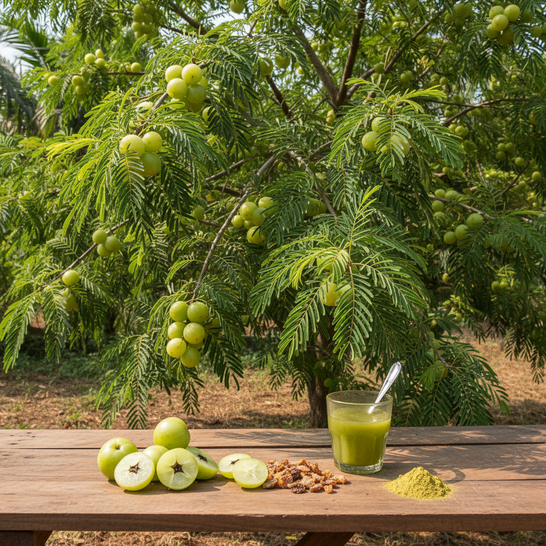
Discover Amla (Indian Gooseberry), a vitamin C-rich Ayurvedic superfruit that boosts immunity, supports digestion, and promotes radiant hair and skin. A key ingredient in Triphala and Chyawanprash.
Mon, Feb 9, 2026Amla (Phyllanthus emblica), also called Indian Gooseberry or Amalaki, is one of the most powerful rejuvenating fruits in Ayurveda. It contains exceptionally high levels of vitamin C along with gallic acid and ellagic acid – potent antioxidants that protect cells from oxidative damage. A key ingredient in Triphala and Chyawanprash, Amla strengthens immunity, improves digestion, detoxifies the body, and nourishes hair and skin.
Amla (Phyllanthus emblica), known as Amalaki in Sanskrit and Indian Gooseberry in English, is a small, green, sour fruit that grows on the Indian gooseberry tree. It has been used in traditional Ayurvedic medicine for centuries and is considered one of the most powerful Rasayana (rejuvenating) fruits. Amla’s extraordinary vitamin C content – nearly 20 times that of an orange – makes it one of nature’s most potent immunity boosters.
Rasa (Taste): Pancha Rasa – five tastes except Lavana (salty): sour, sweet, bitter, pungent, astringent Virya (Potency): Sheeta (Cool) Vipaka (Post-digestive): Madhura (Sweet) Dosha Effect: Balances all three doshas (Tridoshahara) – one of the rare herbs that does so
Classical Applications:
| Nutrient | Amount |
|---|---|
| Calories | 44 kcal |
| Carbohydrates | 10 g |
| Fiber | 4.3 g |
| Protein | 0.9 g |
| Vitamin C | 600 mg |
| Calcium | 25 mg |
| Iron | 0.9 mg |
| Phosphorus | 27 mg |
| Potassium | 198 mg |
| Carotene | 9 mcg |
Note: Amla’s vitamin C is remarkably heat-stable compared to other fruits, meaning it retains potency even after cooking or drying – a unique property among vitamin C sources.
| Feature | Amla | Giloy |
|---|---|---|
| Best For | Vitamin C boost, hair, skin | Chronic fever, detox, liver health |
| Dosha Effect | Tridoshahara (all three) | Tridoshahara (all three) |
| Key Compound | Gallic acid, Vitamin C | Giloin, Berberine |
| Taste | All five tastes (Pancha Rasa) | Bitter, Astringent |
| Potency | Cool | Hot |
| Immunity Type | Antioxidant-driven | Immunomodulatory |
| How to Use | Juice, Chyawanprash, raw | Kadha, juice, Guduchi Satva |
Q: Can I eat amla daily? A: Yes, eating 1-2 fresh amla fruits or drinking 20-30 ml of amla juice daily is safe and highly beneficial for immunity, digestion, and overall health.
Q: Is amla good for hair growth? A: Yes, amla is one of the best natural remedies for hair. Its high vitamin C content supports collagen production, strengthens hair follicles, and reduces premature graying. Use amla oil for scalp massage or consume amla regularly.
Q: What is Triphala and how is amla part of it? A: Triphala is a classical Ayurvedic formula combining three fruits – Amla (Amalaki), Haritaki, and Bibhitaki. Amla provides the cooling, rejuvenating, and vitamin C-rich component. Together, they support digestion, detoxification, and immunity.
Q: Can amla help with diabetes? A: Studies suggest amla may help regulate blood sugar due to its chromium content and antioxidant activity. However, it should complement (not replace) medical treatment. Consult your doctor before using amla medicinally for diabetes.
Q: Why does amla taste sweet after drinking water? A: Amla contains tannins that temporarily alter taste perception. After eating sour amla, water triggers a sweet taste sensation – this is normal and reflects amla’s unique five-taste (Pancha Rasa) profile.
Q: Is amla juice better than raw amla? A: Both are beneficial. Raw amla provides more fiber, while juice is easier to consume daily. For maximum benefit, rotate between fresh amla, juice, powder, and Chyawanprash.
Explore More: Fruits • Vegetables • Natural Remedies • Seasonal Picks • Wellness Tips