icons.svg
Aprajita – The Memory-Boosting Blue Flower
  • Aprajita – The Memory-Boosting Blue Flower

Discover Aprajita (Butterfly Pea flower), a vibrant Ayurvedic herb rich in anthocyanins that enhances memory, reduces stress, and makes the beautiful blue tea.

Mon, Feb 9, 2026

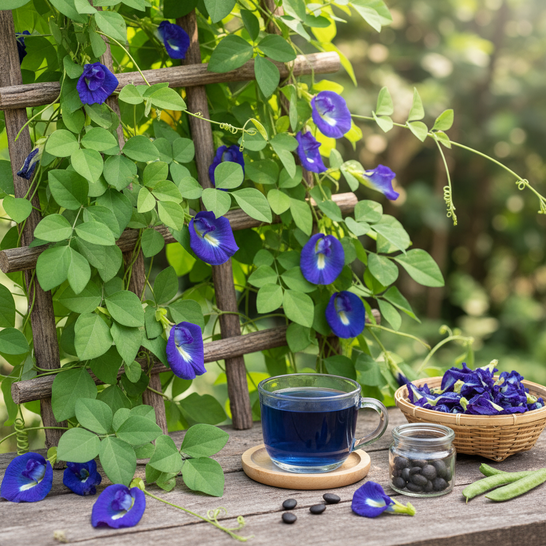
Aprajita (Clitoria ternatea), commonly known as Butterfly Pea, is a medicinal flowering plant widely used in Ayurveda and traditional Asian medicine. Its deep blue flowers are exceptionally rich in anthocyanins (particularly delphinidin) and flavonoids – powerful antioxidants that support memory, reduce anxiety, and protect brain cells. Popularly consumed as 'Blue Tea,' Aprajita is a natural nootropic trusted for centuries.

🌿 Aprajita at a Glance

Aprajita (Clitoria ternatea), commonly known as Butterfly Pea, is a flowering herb with deep cultural and medicinal importance across South and Southeast Asia. Its stunning blue flowers are rich in anthocyanins and flavonoids, making it a potent natural antioxidant. Often used in memory tonics, stress relief remedies, and as a natural food color, Aprajita has gained worldwide popularity as the key ingredient in “Blue Tea.”


✨ Why It’s Special / Importance

  • 🌸 Vibrant blue color changes with pH – turns purple with lemon juice, a natural chemistry marvel
  • 🧠 Called “memory booster” in Ayurveda – one of the Medhya Rasayana (brain tonics)
  • 🔬 Exceptionally rich in anthocyanins (delphinidin) – powerful brain-protective antioxidants
  • 🍵 Key ingredient in the globally trending “Blue Tea” – caffeine-free and calming
  • 🌍 Used in Thai, Malay, and South Asian cuisines for natural blue coloring

🏺 Traditional / Ayurvedic Uses

Rasa (Taste): Tikta (Bitter), Kashaya (Astringent) Virya (Potency): Sheeta (Cool) Vipaka (Post-digestive): Katu (Pungent) Dosha Effect: Balances Kapha and Pitta; generally neutral on Vata

Classical Applications:

  • Classified as Medhya Rasayana (brain rejuvenator) in Ayurveda alongside Brahmi and Sankhpuspi
  • Used in classical formulations for improving Smriti (memory) and Buddhi (intellect)
  • Applied externally as a hair tonic for preventing premature graying
  • Traditional remedy for eye conditions – flowers soaked in water used as eye wash
  • Combined with Ashwagandha for comprehensive stress and cognitive support

💪 Benefits / Health Effects

  • Memory Enhancement: Anthocyanins support neuronal communication and memory formation
  • Stress & Anxiety Relief: Calming properties reduce cortisol and promote relaxation
  • Sleep Support: Helps achieve restful, deeper sleep naturally
  • Antioxidant Rich: High anthocyanin content fights oxidative stress and cellular damage
  • Hair & Skin Health: Promotes healthy hair growth and improves skin elasticity
  • Eye Health: Traditionally used to support vision and eye wellness
  • Anti-inflammatory: Reduces inflammation in the body and brain
  • Blood Sugar Support: May help regulate blood glucose levels

🥗 Nutritional Information (Per 100g, Dried Flowers)

Nutrient Amount
Calories 40 kcal
Carbohydrates 7 g
Fiber 2 g
Protein 3 g
Vitamin C 30 mg
Calcium 25 mg
Iron 1.7 mg
Anthocyanins High
Flavonoids High

Note: The primary therapeutic value of Aprajita comes from its rich anthocyanin and flavonoid content rather than macronutrients. Even a few flowers brewed as tea deliver significant antioxidant benefits.


🔄 Quick Comparison: Aprajita vs Brahmi for Brain Health

Feature Aprajita Brahmi
Best For Memory, anxiety, blue tea Memory, focus, cognitive clarity
Dosha Effect Kapha & Pitta balance All three doshas
Key Compound Anthocyanins (Delphinidin) Bacosides (A and B)
Taste Bitter, Astringent Bitter, Astringent
Potency Cool Cool
Part Used Flowers, roots Whole plant (leaves)
How to Use Blue tea, powder Powder, ghrita, capsules

🥄 How to Use / Prepare

Culinary Uses:

  • 🍵 Brew 5-6 dried flowers in hot water for beautiful blue herbal tea
  • 🍚 Use as natural blue food coloring for rice, desserts, and drinks
  • 🍹 Add lemon to blue tea for a stunning purple color change – great for mocktails
  • 🍧 Infuse in coconut milk for naturally colored ice cream or pudding

Medicinal Preparations:

  • 🧠 For Memory: Drink 1-2 cups of blue tea daily for cognitive support
  • 😴 For Sleep: Brew a cup before bedtime for calming relaxation
  • 🌿 Ayurvedic Powder: Mix dried flower powder with honey for brain tonic
  • 💊 With Brahmi: Combine for enhanced memory and focus benefits

External Use:

  • Brew strong tea and use as a hair rinse to promote shine and prevent graying
  • Apply flower paste to skin for mild anti-aging benefits
  • Use cooled tea as an eye wash for soothing tired eyes (traditional use)

⚠️ Precautions / Warnings

  • ❗ Excess use may cause nausea in sensitive individuals
  • ❗ Not recommended for pregnant women without medical advice
  • ❗ May interact with anti-platelet and anti-coagulant medications
  • ❗ Avoid very large doses if you have low blood pressure
  • ⚠️ Start with 1 cup of blue tea daily and gradually increase as tolerated

🎉 Fun Facts / Trivia

  • 🌸 Aprajita flowers change color with pH – blue in neutral water, purple with lemon, green with baking soda
  • 🌍 Used in Thai and Malay cuisines for centuries to color rice blue (Nasi Kerabu)
  • 🧘 Called “memory booster” in Ayurveda and used by students before examinations
  • 🎨 Natural alternative to artificial blue food coloring – gaining popularity globally
  • 🦋 Named “Butterfly Pea” because the flower shape resembles a butterfly in flight
  • 📱 Blue Tea became a viral social media trend due to its dramatic color-changing properties
  • 🌱 The plant is nitrogen-fixing – it actually improves soil quality where it grows

Frequently Asked Questions (FAQs)

Q: What is Blue Tea and how do I make it? A: Blue Tea is an herbal infusion made from dried Aprajita (Butterfly Pea) flowers. Steep 5-6 flowers in hot water for 5-10 minutes. The tea is naturally blue, caffeine-free, and turns purple when you add lemon juice.

Q: Can I drink Blue Tea daily? A: Yes, 1-2 cups of Blue Tea daily is safe and beneficial for most adults. It provides antioxidants, supports memory, and promotes relaxation without caffeine.

Q: Is Aprajita the same as Sankhpuspi? A: No, though both are Medhya Rasayana (brain tonics) in Ayurveda. Aprajita (Clitoria ternatea) has blue flowers, while Sankhpuspi (Convolvulus pluricaulis) has white flowers. Both support memory but have different chemical profiles.

Q: Can Aprajita help with hair health? A: Yes, Aprajita is traditionally used as a hair tonic. The anthocyanins improve blood circulation to the scalp, strengthen hair follicles, and may help prevent premature graying. Use as a hair rinse or oil infusion.

Q: Why does the tea change color with lemon? A: Aprajita’s blue color comes from anthocyanins, which are pH-sensitive pigments. In neutral water they appear blue; adding acidic lemon juice shifts the pH, changing the color to purple or pink. This is natural chemistry, not any additive.


Explore More: FruitsVegetablesNatural RemediesSeasonal PicksWellness Tips


📚 Sources

  1. Charaka Samhita and Sushruta Samhita – Traditional Ayurvedic uses of Aparajita
  2. Mukherjee PK, et al. (2008). “The Ayurvedic medicine Clitoria ternatea – from traditional use to scientific assessment.” J Ethnopharmacol.
  3. Oguis GK, et al. (2019). “Butterfly Pea (Clitoria ternatea), a Cyclotide-Bearing Plant with Applications in Agriculture and Medicine.” Frontiers in Plant Science.
  4. USDA FoodData Central – Nutritional Reference Data

← Back to Herbs