


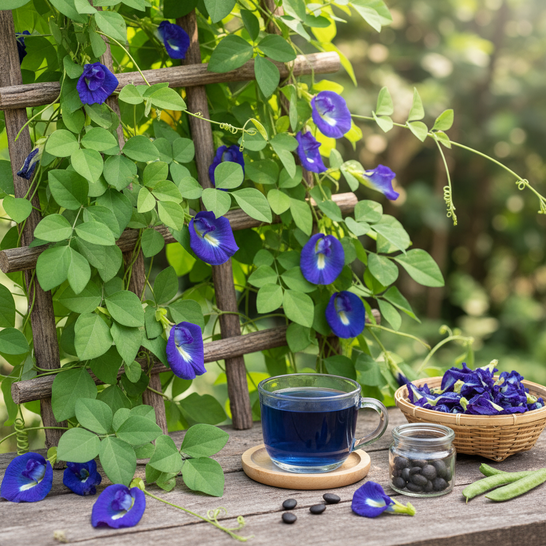
Aprajita – The Memory-Boosting Blue Flower
Discover Aprajita (Butterfly Pea flower), a vibrant Ayurvedic herb rich in anthocyanins that enhances memory, reduces stress, and makes the beautiful blue tea.
Mon, Feb 9, 2026Aprajita (Clitoria ternatea), commonly known as Butterfly Pea, is a medicinal flowering plant widely used in Ayurveda and traditional Asian medicine. Its deep blue flowers are exceptionally rich in anthocyanins (particularly delphinidin) and flavonoids – powerful antioxidants that support memory, reduce anxiety, and protect brain cells. Popularly consumed as 'Blue Tea,' Aprajita is a natural nootropic trusted for centuries.
🌿 Aprajita at a Glance
Aprajita (Clitoria ternatea), commonly known as Butterfly Pea, is a flowering herb with deep cultural and medicinal importance across South and Southeast Asia. Its stunning blue flowers are rich in anthocyanins and flavonoids, making it a potent natural antioxidant. Often used in memory tonics, stress relief remedies, and as a natural food color, Aprajita has gained worldwide popularity as the key ingredient in “Blue Tea.”
✨ Why It’s Special / Importance
- 🌸 Vibrant blue color changes with pH – turns purple with lemon juice, a natural chemistry marvel
- 🧠 Called “memory booster” in Ayurveda – one of the Medhya Rasayana (brain tonics)
- 🔬 Exceptionally rich in anthocyanins (delphinidin) – powerful brain-protective antioxidants
- 🍵 Key ingredient in the globally trending “Blue Tea” – caffeine-free and calming
- 🌍 Used in Thai, Malay, and South Asian cuisines for natural blue coloring
🏺 Traditional / Ayurvedic Uses
Rasa (Taste): Tikta (Bitter), Kashaya (Astringent) Virya (Potency): Sheeta (Cool) Vipaka (Post-digestive): Katu (Pungent) Dosha Effect: Balances Kapha and Pitta; generally neutral on Vata
Classical Applications:
- Classified as Medhya Rasayana (brain rejuvenator) in Ayurveda alongside Brahmi and Sankhpuspi
- Used in classical formulations for improving Smriti (memory) and Buddhi (intellect)
- Applied externally as a hair tonic for preventing premature graying
- Traditional remedy for eye conditions – flowers soaked in water used as eye wash
- Combined with Ashwagandha for comprehensive stress and cognitive support
💪 Benefits / Health Effects
- ✅ Memory Enhancement: Anthocyanins support neuronal communication and memory formation
- ✅ Stress & Anxiety Relief: Calming properties reduce cortisol and promote relaxation
- ✅ Sleep Support: Helps achieve restful, deeper sleep naturally
- ✅ Antioxidant Rich: High anthocyanin content fights oxidative stress and cellular damage
- ✅ Hair & Skin Health: Promotes healthy hair growth and improves skin elasticity
- ✅ Eye Health: Traditionally used to support vision and eye wellness
- ✅ Anti-inflammatory: Reduces inflammation in the body and brain
- ✅ Blood Sugar Support: May help regulate blood glucose levels
🥗 Nutritional Information (Per 100g, Dried Flowers)
| Nutrient | Amount |
|---|---|
| Calories | 40 kcal |
| Carbohydrates | 7 g |
| Fiber | 2 g |
| Protein | 3 g |
| Vitamin C | 30 mg |
| Calcium | 25 mg |
| Iron | 1.7 mg |
| Anthocyanins | High |
| Flavonoids | High |
Note: The primary therapeutic value of Aprajita comes from its rich anthocyanin and flavonoid content rather than macronutrients. Even a few flowers brewed as tea deliver significant antioxidant benefits.
🔄 Quick Comparison: Aprajita vs Brahmi for Brain Health
| Feature | Aprajita | Brahmi |
|---|---|---|
| Best For | Memory, anxiety, blue tea | Memory, focus, cognitive clarity |
| Dosha Effect | Kapha & Pitta balance | All three doshas |
| Key Compound | Anthocyanins (Delphinidin) | Bacosides (A and B) |
| Taste | Bitter, Astringent | Bitter, Astringent |
| Potency | Cool | Cool |
| Part Used | Flowers, roots | Whole plant (leaves) |
| How to Use | Blue tea, powder | Powder, ghrita, capsules |
🥄 How to Use / Prepare
Culinary Uses:
- 🍵 Brew 5-6 dried flowers in hot water for beautiful blue herbal tea
- 🍚 Use as natural blue food coloring for rice, desserts, and drinks
- 🍹 Add lemon to blue tea for a stunning purple color change – great for mocktails
- 🍧 Infuse in coconut milk for naturally colored ice cream or pudding
Medicinal Preparations:
- 🧠 For Memory: Drink 1-2 cups of blue tea daily for cognitive support
- 😴 For Sleep: Brew a cup before bedtime for calming relaxation
- 🌿 Ayurvedic Powder: Mix dried flower powder with honey for brain tonic
- 💊 With Brahmi: Combine for enhanced memory and focus benefits
External Use:
- Brew strong tea and use as a hair rinse to promote shine and prevent graying
- Apply flower paste to skin for mild anti-aging benefits
- Use cooled tea as an eye wash for soothing tired eyes (traditional use)
⚠️ Precautions / Warnings
- ❗ Excess use may cause nausea in sensitive individuals
- ❗ Not recommended for pregnant women without medical advice
- ❗ May interact with anti-platelet and anti-coagulant medications
- ❗ Avoid very large doses if you have low blood pressure
- ⚠️ Start with 1 cup of blue tea daily and gradually increase as tolerated
🎉 Fun Facts / Trivia
- 🌸 Aprajita flowers change color with pH – blue in neutral water, purple with lemon, green with baking soda
- 🌍 Used in Thai and Malay cuisines for centuries to color rice blue (Nasi Kerabu)
- 🧘 Called “memory booster” in Ayurveda and used by students before examinations
- 🎨 Natural alternative to artificial blue food coloring – gaining popularity globally
- 🦋 Named “Butterfly Pea” because the flower shape resembles a butterfly in flight
- 📱 Blue Tea became a viral social media trend due to its dramatic color-changing properties
- 🌱 The plant is nitrogen-fixing – it actually improves soil quality where it grows
Frequently Asked Questions (FAQs)
Q: What is Blue Tea and how do I make it? A: Blue Tea is an herbal infusion made from dried Aprajita (Butterfly Pea) flowers. Steep 5-6 flowers in hot water for 5-10 minutes. The tea is naturally blue, caffeine-free, and turns purple when you add lemon juice.
Q: Can I drink Blue Tea daily? A: Yes, 1-2 cups of Blue Tea daily is safe and beneficial for most adults. It provides antioxidants, supports memory, and promotes relaxation without caffeine.
Q: Is Aprajita the same as Sankhpuspi? A: No, though both are Medhya Rasayana (brain tonics) in Ayurveda. Aprajita (Clitoria ternatea) has blue flowers, while Sankhpuspi (Convolvulus pluricaulis) has white flowers. Both support memory but have different chemical profiles.
Q: Can Aprajita help with hair health? A: Yes, Aprajita is traditionally used as a hair tonic. The anthocyanins improve blood circulation to the scalp, strengthen hair follicles, and may help prevent premature graying. Use as a hair rinse or oil infusion.
Q: Why does the tea change color with lemon? A: Aprajita’s blue color comes from anthocyanins, which are pH-sensitive pigments. In neutral water they appear blue; adding acidic lemon juice shifts the pH, changing the color to purple or pink. This is natural chemistry, not any additive.
🔗 Related Items
- Brahmi – The Brain Tonic of Ayurveda
- Sankhpuspi – The Brain and Nerve Tonic Herb
- Tulsi – The Queen of Herbs
Explore More: Fruits • Vegetables • Natural Remedies • Seasonal Picks • Wellness Tips
📚 Sources
- Charaka Samhita and Sushruta Samhita – Traditional Ayurvedic uses of Aparajita
- Mukherjee PK, et al. (2008). “The Ayurvedic medicine Clitoria ternatea – from traditional use to scientific assessment.” J Ethnopharmacol.
- Oguis GK, et al. (2019). “Butterfly Pea (Clitoria ternatea), a Cyclotide-Bearing Plant with Applications in Agriculture and Medicine.” Frontiers in Plant Science.
- USDA FoodData Central – Nutritional Reference Data