icons.svg
Black Pepper – The King of Spices
  • Black Pepper – The King of Spices

Discover black pepper (kali mirch), the king of spices known for enhancing digestion, boosting immunity, and improving nutrient absorption. A staple in Ayurveda and kitchens worldwide.

Sun, Dec 28, 2025

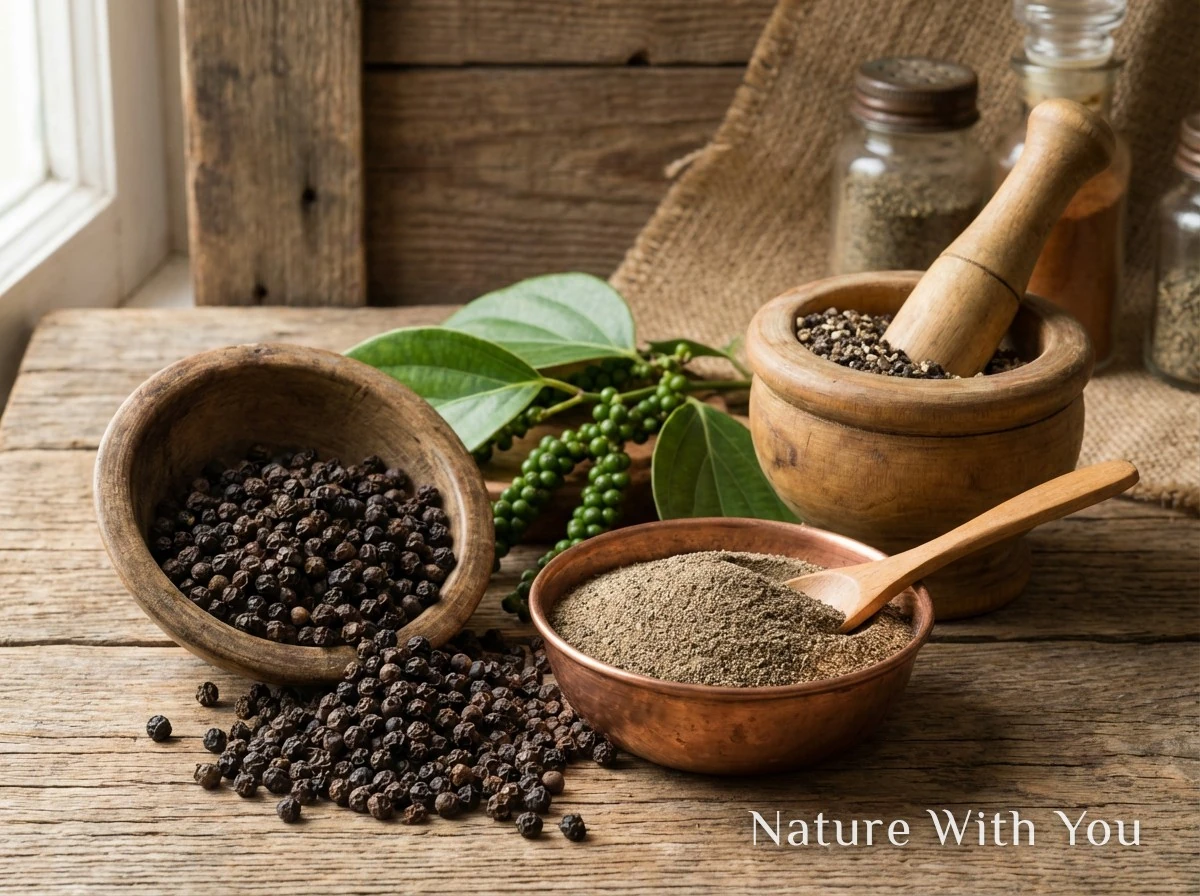
Black Pepper (Piper nigrum), known as Kali Mirch in Hindi, is called the 'King of Spices' for its unmatched culinary and medicinal importance. Native to South India, it contains piperine – a compound that boosts nutrient absorption by up to 2000%. Used in Ayurveda for thousands of years, black pepper supports digestion, respiratory health, and metabolism while adding bold flavor to dishes worldwide.

🌿 Black Pepper at a Glance

Black Pepper (Piper nigrum), known as Kali Mirch in India, is the world’s most traded spice and has been valued for centuries as “Black Gold.” Its active compound piperine gives it the characteristic pungent taste and remarkable health benefits.


✨ Why It’s Special / Importance

  • 👑 Called the “King of Spices” – most widely used spice globally
  • 🔬 Contains piperine – increases nutrient absorption by up to 2000%
  • 💰 Historically used as currency and called “Black Gold”
  • 🌿 Essential in Ayurveda’s Trikatu formula (three pungents)
  • 🇮🇳 Native to Kerala, India – the spice capital of the world

🏺 Traditional / Ayurvedic Uses

Rasa (Taste): Katu (Pungent) Virya (Potency): Ushna (Hot) Vipaka (Post-digestive): Katu (Pungent) Dosha Effect: Balances Kapha and Vata; may aggravate Pitta in excess

Classical Applications:

  • Part of Trikatu (with ginger and long pepper) for digestion
  • Used in Sitopaladi churna for respiratory health
  • Mentioned in Charaka Samhita for treating cough and cold
  • Applied externally for joint pain relief

💪 Benefits / Health Effects

  • Digestive Health: Stimulates digestive enzymes and bile secretion
  • Nutrient Absorption: Piperine enhances bioavailability of curcumin, vitamins, and minerals
  • Respiratory Support: Helps clear congestion and relieve cough
  • Metabolism Boost: Thermogenic effect aids weight management
  • Antioxidant Power: Fights free radicals and oxidative stress
  • Brain Health: May improve cognitive function and memory
  • Anti-inflammatory: Reduces inflammation in joints and tissues
  • Blood Sugar: May help regulate blood glucose levels

🥗 Nutritional Information (Per 100g)

Nutrient Amount
Calories 251 kcal
Carbohydrates 64 g
Fiber 25.3 g
Protein 10.4 g
Fat 3.3 g
Vitamin K 163.7 mcg
Iron 9.7 mg
Manganese 12.8 mg
Calcium 443 mg
Potassium 1329 mg

Note: Black pepper is used in small quantities; nutritional benefits come primarily from piperine’s absorption-enhancing properties.


🥄 How to Use / Prepare

Culinary Uses:

  • 🍳 Add freshly ground pepper to dishes just before serving
  • 🥗 Sprinkle on salads, soups, and stir-fries
  • 🍵 Combine with turmeric for enhanced absorption (golden milk)
  • 🍖 Use in marinades and rubs for meats and vegetables

Medicinal Preparations:

  • 🍯 For Cold/Cough: Mix ¼ tsp black pepper with honey
  • 🥛 For Digestion: Add a pinch to warm water or buttermilk
  • 🧈 Trikatu Churna: Equal parts black pepper, ginger, and long pepper
  • 💊 With Turmeric: Always combine for maximum curcumin absorption

External Use:

  • Mix with sesame oil for joint massage
  • Use in steam inhalation for congestion

⚠️ Precautions / Warnings

  • ❗ Excessive consumption may cause gastric irritation
  • ❗ May aggravate Pitta dosha – use moderately if you have acidity
  • ❗ Can interact with certain medications (consult doctor if on prescription drugs)
  • ❗ Avoid large amounts during pregnancy
  • ❗ May cause sneezing and eye irritation when inhaled directly
  • ⚠️ Start with small amounts if you have sensitive digestion

🎉 Fun Facts / Trivia

  • 🏛️ Ancient Romans paid taxes and ransoms in peppercorns
  • 💰 Called “Black Gold” – was worth its weight in gold during medieval times
  • 🌍 India produces 55% of the world’s black pepper
  • 🔬 Piperine can increase turmeric absorption by 2000%
  • 🏆 Kerala is known as the “Spice Garden of India” due to black pepper
  • 📜 Mentioned in ancient Egyptian texts – found in Ramses II’s mummy
  • 🌶️ White, green, and black pepper all come from the same plant
  • 🍽️ Most expensive spice in ancient Rome – only the wealthy could afford it

Frequently Asked Questions (FAQs)

Q: Can I take black pepper daily? A: Yes, moderate daily consumption (1-2 tsp) is safe and beneficial for most adults. It aids digestion and enhances nutrient absorption from food.

Q: Why combine black pepper with turmeric? A: Piperine in black pepper increases curcumin (turmeric’s active compound) absorption by 2000%. This combination maximizes turmeric’s anti-inflammatory and antioxidant benefits.

Q: Is black pepper good for weight loss? A: Yes, black pepper has thermogenic properties that boost metabolism. Piperine may also inhibit fat cell formation. However, it works best as part of a balanced diet.

Q: Can black pepper help with cough and cold? A: Yes, black pepper is a traditional remedy for respiratory issues. Mix ¼ tsp with honey or add to warm water for relief from cough and congestion.

Q: What’s the difference between black, white, and green pepper? A: All come from the same Piper nigrum plant. Black pepper is dried unripe berries, white pepper is ripe berries with skin removed, and green pepper is unripe berries preserved in brine.

Q: Is black pepper safe during pregnancy? A: In culinary amounts, yes. However, avoid large medicinal doses during pregnancy. Consult your healthcare provider for personalized advice.


Explore More: FruitsVegetablesNatural Remedies


📚 Sources

  1. Charaka Samhita and Sushruta Samhita – Traditional Ayurvedic uses
  2. Shoba G, et al. (1998). “Influence of piperine on the pharmacokinetics of curcumin.” Planta Med.
  3. USDA FoodData Central – Nutritional Information
  4. Butt MS, et al. (2013). “Black Pepper and Health Claims.” Critical Reviews in Food Science

← Back to Herbs