


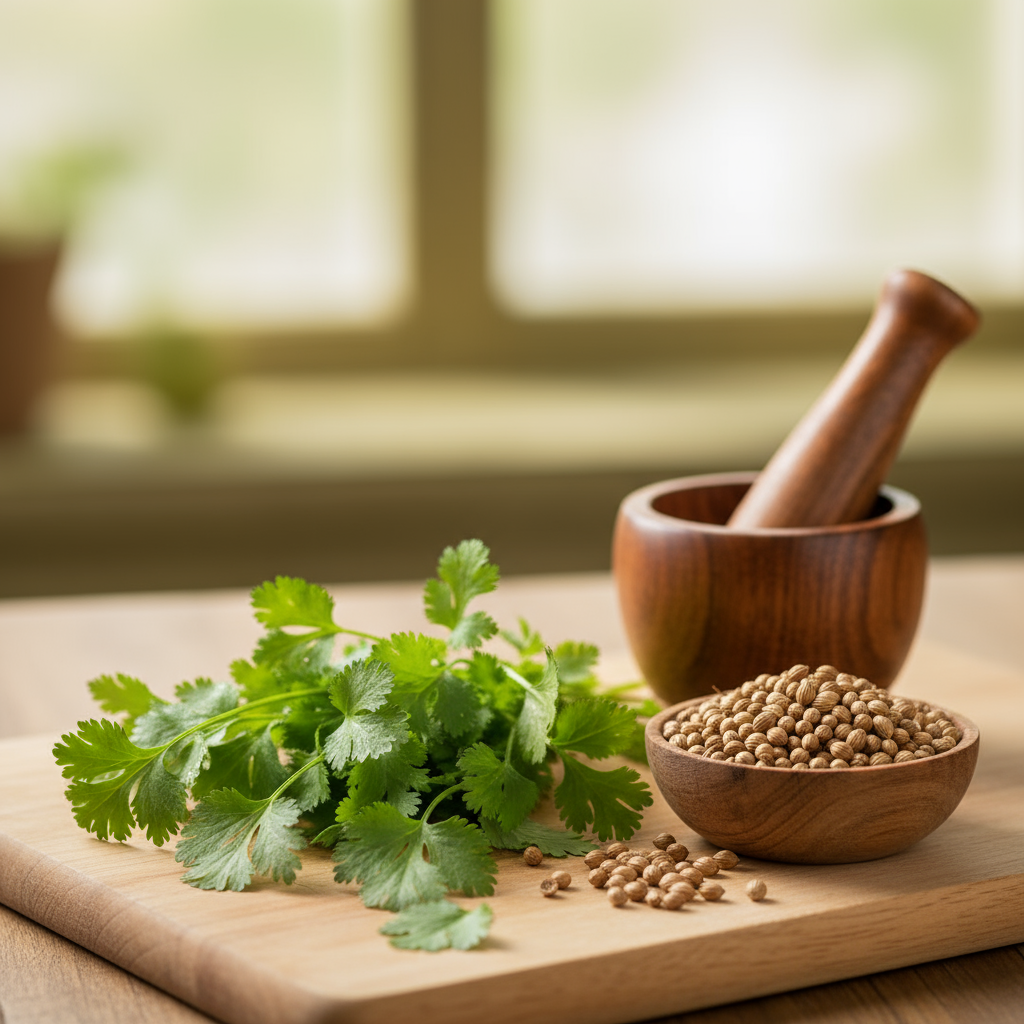
Coriander – The Cooling Digestive Herb
Discover Coriander (Dhaniya), a fragrant cooling herb and spice known for its digestive, detoxifying, and anti-inflammatory properties. Used in Ayurveda and kitchens for centuries.
Mon, Feb 9, 2026Coriander (Coriandrum sativum), known as Dhaniya or Cilantro, is a fragrant herb used in both culinary and medicinal traditions worldwide. Rich in essential oils like linalool and geraniol, coriander helps digestion, reduces inflammation, and promotes detoxification. Its cooling nature makes it especially beneficial in Ayurveda for balancing Pitta dosha and improving appetite.
🌿 Coriander at a Glance
Coriander (Coriandrum sativum), known as Dhaniya in Hindi and Cilantro in Western countries, is an aromatic herb from the Apiaceae family. Both its fresh leaves and dried seeds are widely used for flavor and healing. It adds fragrance to food and offers many health-promoting properties, including digestive support, detoxification, and blood sugar regulation.
✨ Why It’s Special / Importance
- 🌿 One of the oldest known spices in human history – used for over 5,000 years
- 🧬 Rich in linalool and geraniol – essential oils with anti-inflammatory and calming properties
- ❄️ Naturally cooling herb – ideal for balancing Pitta dosha in Ayurveda
- 🍽️ Both leaves and seeds are used – offering different flavors and medicinal profiles
- 📜 Ancient Egyptians used coriander seeds in burial rituals as a symbol of eternal love
🏺 Traditional / Ayurvedic Uses
Rasa (Taste): Kashaya (Astringent), Tikta (Bitter) Virya (Potency): Sheeta (Cool) Vipaka (Post-digestive): Madhura (Sweet) Dosha Effect: Balances Pitta and Kapha; neutral on Vata
Classical Applications:
- Used in Ayurvedic herbal blends to cool the body and stimulate appetite
- Coriander seed decoction recommended for urinary tract and digestive issues
- Combined with fennel and cumin (Dhanyaka-Shatapushpa-Jeeraka blend) for digestion
- Applied in traditional formulations for reducing burning sensation (Daha Shamana)
- Used as a gentle diuretic in classical Ayurvedic practice
💪 Benefits / Health Effects
- ✅ Digestive Aid: Relieves bloating, gas, and indigestion naturally
- ✅ Detoxification: Helps remove heavy metals and toxins from the body
- ✅ Antioxidant Rich: Protects cells from oxidative damage with quercetin and tocopherols
- ✅ Blood Sugar Control: May help regulate blood glucose levels
- ✅ Anti-inflammatory: Linalool reduces inflammation throughout the body
- ✅ Cooling Effect: Naturally cools the body, relieving heat-related discomfort
- ✅ Heart Health: May help lower bad cholesterol (LDL) and support cardiovascular wellness
- ✅ Antimicrobial: Contains compounds that fight foodborne bacteria
🥗 Nutritional Information (Per 100g, Raw Leaves)
| Nutrient | Amount |
|---|---|
| Calories | 23 kcal |
| Carbohydrates | 3.7 g |
| Fiber | 2.8 g |
| Protein | 2.1 g |
| Fat | 0.5 g |
| Iron | 1.8 mg |
| Potassium | 521 mg |
| Vitamin C | 27 mg |
| Calcium | 67 mg |
| Vitamin A | 337 mcg |
Note: Fresh coriander leaves are nutrient-dense per calorie. Coriander seeds have a different nutritional profile with higher essential oil content, offering more concentrated medicinal benefits.
🔄 Quick Comparison: Coriander vs Fennel – Cooling Digestive Herbs
| Feature | Coriander | Fennel |
|---|---|---|
| Best For | Detox, blood sugar, cooling | Bloating, gas, breath freshener |
| Dosha Effect | Pitta & Kapha balance | Pitta & Vata balance |
| Key Compound | Linalool, Geraniol | Anethole, Fenchone |
| Taste | Astringent, Bitter | Sweet, Bitter |
| Potency | Cool | Cool |
| Part Used | Leaves and seeds | Seeds and bulb |
| How to Use | Coriander water, chutney, garnish | Chew seeds, tea, CCF blend |
🥄 How to Use / Prepare
Culinary Uses:
- 🌿 Use fresh leaves in curries, salads, soups, and garnishes
- ☕ Boil seeds to make detoxifying coriander water (drink first thing in the morning)
- 🧂 Roast and grind seeds for aromatic seasoning
- 🥣 Mix coriander powder in buttermilk for digestive relief
Medicinal Preparations:
- 💧 Coriander Water: Soak 1 tsp seeds overnight, strain and drink on empty stomach for detox
- 🍵 Seed Tea: Boil seeds in water for 5 minutes for bloating and gas relief
- 🥛 With Buttermilk: Mix coriander powder in chaas for Pitta-balancing digestion
- 🌿 Fresh Juice: Blend leaves with water for blood sugar and detox support
External Use:
- Apply coriander leaf paste on skin rashes or insect bites for cooling relief
- Use coriander essential oil in aromatherapy for calming anxiety
- Rinse mouth with coriander water for freshening breath
⚠️ Precautions / Warnings
- ❗ Excess use may lower blood sugar too much – diabetics should monitor intake
- ❗ Those with pollen allergies may experience cross-reactivity with coriander
- ❗ Avoid storing fresh coriander leaves wet – they spoil quickly
- ❗ Large medicinal doses should be avoided during pregnancy
- ⚠️ Start with small amounts if you’ve never consumed coriander in medicinal quantities
🎉 Fun Facts / Trivia
- 📜 Ancient Egyptians used coriander seeds in burial rituals as a symbol of eternal love
- 🧴 Coriander essential oil is used in perfumes, soaps, and aromatherapy products
- 🌱 It is one of the oldest known spices in human history – dating back over 5,000 years
- 🧬 Some people perceive coriander as “soapy” due to a genetic trait affecting olfactory receptors
- 🍽️ Known by different names worldwide: Cilantro (Americas), Coriander (UK/India), Chinese parsley (Asia)
- 🌍 India is both the largest producer and consumer of coriander globally
- 🦠 Coriander has natural antibacterial properties – traditionally used to preserve food
Frequently Asked Questions (FAQs)
Q: What is the difference between coriander and cilantro? A: They come from the same plant (Coriandrum sativum). “Cilantro” typically refers to the fresh leaves and stems, while “coriander” refers to the dried seeds. In India and the UK, “coriander” is used for both.
Q: Can I drink coriander water daily? A: Yes, drinking coriander seed water on an empty stomach is a traditional Ayurvedic practice for detoxification and blood sugar management. Soak 1 tsp seeds overnight, strain, and drink in the morning.
Q: Is coriander good for weight loss? A: Coriander may support weight loss indirectly by improving digestion, boosting metabolism, and helping regulate blood sugar. Coriander water is a popular traditional remedy for metabolic support.
Q: Why do some people hate the taste of coriander? A: Research shows that about 4-14% of people have a genetic variation in olfactory receptor genes (OR6A2) that makes coriander taste like soap. This is a genetic trait, not a matter of preference.
Q: Can coriander help with blood sugar? A: Yes, studies suggest that coriander seeds and leaves may help lower blood sugar levels by stimulating insulin secretion. However, it should complement medical treatment, not replace it.
🔗 Related Items
Explore More: Fruits • Vegetables • Natural Remedies • Seasonal Picks • Wellness Tips
📚 Sources
- Charaka Samhita and Sushruta Samhita – Traditional Ayurvedic uses of Dhanyaka
- Laribi B, et al. (2015). “Coriander (Coriandrum sativum L.) and its bioactive constituents.” Fitoterapia.
- Rajeshwari CU, Andallu B (2011). “Oxidative stress in NIDDM patients: influence of coriander seeds.” Research J Pharmaceutical Sciences.
- USDA FoodData Central – Nutritional Information for Coriander