


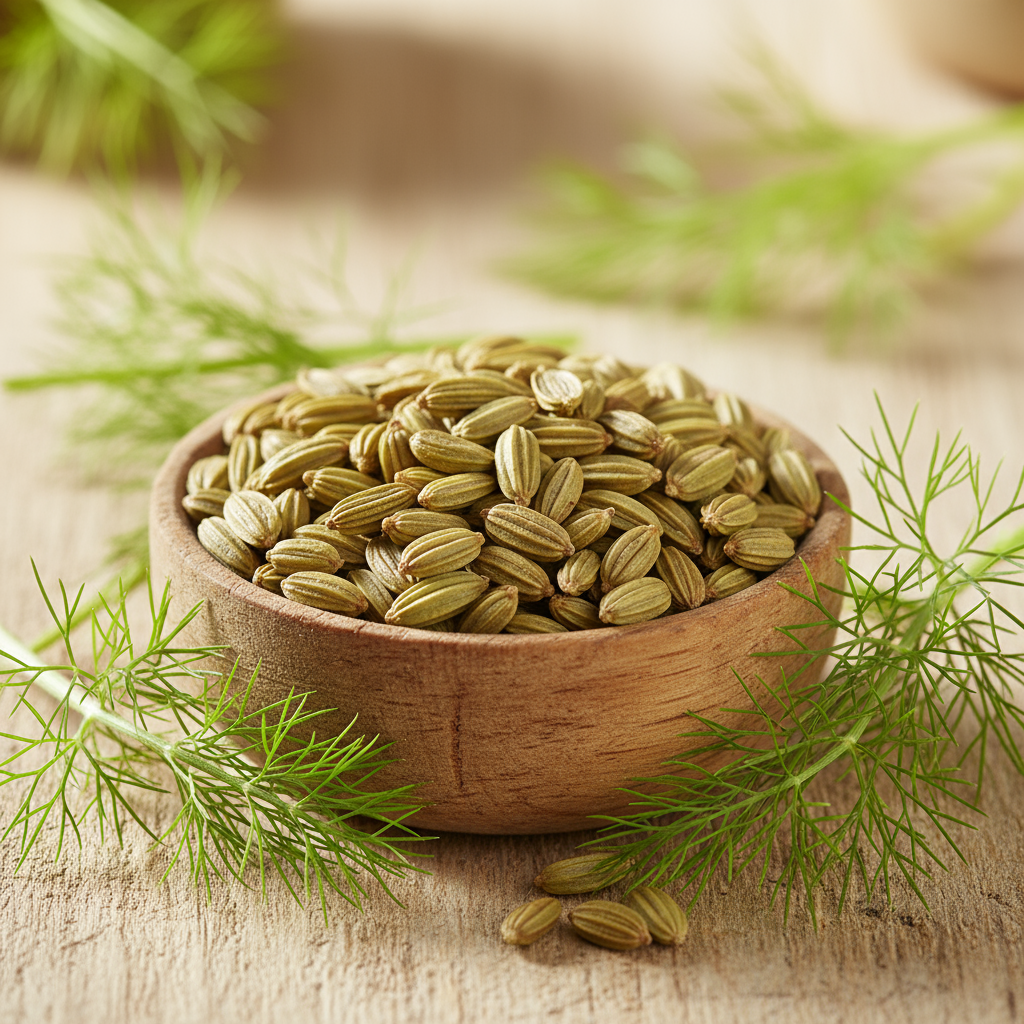
Fennel – The Sweet Digestive Soother
Discover Fennel (Saunf), a sweet aromatic herb known for its digestive, cooling, and detoxifying properties. A traditional after-meal mouth freshener used in Ayurveda for centuries.
Mon, Feb 9, 2026Fennel (Foeniculum vulgare), known as Saunf in Hindi, is a flavorful herb and spice with a sweet, licorice-like aroma. Its seeds contain anethole, fenchone, and estragole – bioactive compounds responsible for its digestive, cooling, and anti-inflammatory effects. Widely used in Ayurveda and as a traditional after-meal digestive, fennel relieves bloating, acidity, and menstrual discomfort while supporting gut and liver health.
🌿 Fennel at a Glance
Fennel (Foeniculum vulgare), known as Saunf in Hindi, is both a culinary and medicinal herb used since ancient times. Its seeds and bulbs have a sweet aroma and mild licorice-like flavor. A favorite after-meal mouth freshener across India, fennel is equally valued in Ayurveda for its digestive, cooling, and detoxifying properties.
✨ Why It’s Special / Importance
- 🍬 India’s most popular after-meal digestive – chewed by millions daily to aid digestion and freshen breath
- 🧬 Contains anethole, fenchone, and estragole – bioactive compounds with digestive and anti-inflammatory effects
- ❄️ Naturally cooling – one of the best herbs for balancing Pitta and reducing body heat
- 🥇 Exceptionally mineral-rich – one of the highest calcium and iron sources among seeds
- 🌿 Ancient Romans used fennel for strength and sharp eyesight
🏺 Traditional / Ayurvedic Uses
Rasa (Taste): Madhura (Sweet), Tikta (Bitter) Virya (Potency): Sheeta (Cool) Vipaka (Post-digestive): Madhura (Sweet) Dosha Effect: Balances Pitta and Vata; may increase Kapha in excess due to sweet taste
Classical Applications:
- Recommended to improve Agni (digestive fire) without increasing Pitta
- Combined with coriander and cumin in the classic digestive blend (CCF tea)
- Used in classical formulations for reducing Daha (burning sensation) and acidity
- Traditional remedy for nursing mothers to promote lactation and reduce infant colic
- Fennel water (Saunf ka paani) prescribed as a traditional summer coolant
💪 Benefits / Health Effects
- ✅ Digestive Health: Relieves bloating, gas, indigestion, and constipation
- ✅ Breath Freshener: Natural mouth freshener with antibacterial properties
- ✅ Natural Coolant: Reduces body heat and soothes acidity
- ✅ Liver Detox: Supports liver function and promotes detoxification
- ✅ Menstrual Relief: Anethole has mild estrogenic effects that ease cramps
- ✅ Eye Health: Traditionally used to improve vision (ancient Roman belief)
- ✅ Lactation Support: May help increase breast milk production in nursing mothers
- ✅ Antioxidant Protection: Rich in flavonoids and phenolic compounds
🥗 Nutritional Information (Per 100g, Seeds)
| Nutrient | Amount |
|---|---|
| Calories | 345 kcal |
| Carbohydrates | 52 g |
| Fiber | 40 g |
| Protein | 16 g |
| Fat | 14.9 g |
| Iron | 18.5 mg |
| Potassium | 1694 mg |
| Vitamin C | 21 mg |
| Calcium | 1196 mg |
| Magnesium | 385 mg |
Note: Fennel seeds are extraordinarily rich in minerals – just 1 tablespoon provides significant calcium and iron. They are typically consumed in small quantities (1-2 tsp) as a digestive aid.
🔄 Quick Comparison: Fennel vs Coriander – Digestive Herbs
| Feature | Fennel | Coriander |
|---|---|---|
| Best For | Bloating, gas, breath freshener | Detox, blood sugar, heavy metal removal |
| Dosha Effect | Pitta & Vata balance | Pitta & Kapha balance |
| Key Compound | Anethole, Fenchone | Linalool, Geraniol |
| Taste | Sweet, Bitter | Astringent, Bitter |
| Potency | Cool | Cool |
| Mineral Content | Very high (calcium, iron) | Moderate |
| How to Use | Chew seeds, tea, CCF blend | Water, chutney, powder |
🥄 How to Use / Prepare
Culinary Uses:
- 🌿 Chew a pinch of roasted fennel seeds after meals for digestion and fresh breath
- 🍛 Use fennel powder in curries, rice dishes, and sweets for aromatic flavor
- 🥗 Add fresh fennel bulb slices to salads and stir-fries
- 🍵 Brew fennel tea by steeping seeds in hot water for 5-10 minutes
Medicinal Preparations:
- ☕ Fennel Tea: Steep 1 tsp crushed seeds in hot water for bloating and gas relief
- 💧 Fennel Water: Soak seeds overnight, strain, and drink for cooling and detox
- 🥛 For Lactation: Boil fennel seeds in water and consume to support milk production
- 🌿 CCF Tea: Equal parts coriander, cumin, and fennel for comprehensive digestive support
External Use:
- Use fennel essential oil for aromatherapy to reduce stress and nausea
- Apply diluted fennel oil around eyes for soothing tired eyes (traditional use)
- Gargle with fennel water for sore throat and oral freshness
⚠️ Precautions / Warnings
- ❗ Excessive intake may lower blood sugar levels – diabetics should monitor
- ❗ Avoid in very large medicinal doses during pregnancy due to mild estrogenic effects
- ❗ Use in moderation if you have low blood pressure
- ❗ May interact with estrogen-sensitive conditions due to anethole content
- ⚠️ Normal culinary amounts are safe for everyone; caution applies only to therapeutic doses
🎉 Fun Facts / Trivia
- 🏛️ Ancient Romans used fennel for strength and sharp eyesight before battles
- 🌼 Fennel is related to the carrot family (Apiaceae) along with coriander and cumin
- 🌞 Fennel water is a traditional summer coolant in India, especially in Rajasthan
- 🍬 In India, sugar-coated fennel seeds (mukhwas) are served as an after-dinner digestive
- 🐍 In Greek mythology, Prometheus carried fire to humans in a fennel stalk
- 🌍 India, China, and Egypt are the top fennel producers globally
- 👶 Fennel tea has been used for centuries to soothe infant colic and gas
Frequently Asked Questions (FAQs)
Q: Can I eat fennel seeds daily? A: Yes, chewing 1/2 to 1 teaspoon of fennel seeds after meals is a safe and beneficial daily practice. It aids digestion, freshens breath, and provides essential minerals.
Q: Is fennel tea good for bloating? A: Yes, fennel tea is one of the most effective natural remedies for bloating and gas. The anethole and fenchone in fennel relax smooth muscles in the digestive tract, releasing trapped gas.
Q: Can fennel help with weight loss? A: Fennel may support weight management by improving digestion, reducing water retention, and curbing appetite. Fennel water and tea are popular traditional aids for metabolic health.
Q: Is fennel safe during pregnancy? A: In culinary amounts (chewing a few seeds or light seasoning), fennel is generally safe. However, large medicinal doses should be avoided during pregnancy due to mild estrogenic properties. Consult your healthcare provider.
Q: What is the difference between fennel seeds and anise? A: Despite similar licorice-like flavors, fennel (Foeniculum vulgare) and anise (Pimpinella anisum) are different plants from the same family. Fennel seeds are slightly sweeter and milder than anise.
🔗 Related Items
Explore More: Fruits • Vegetables • Natural Remedies • Seasonal Picks • Wellness Tips
📚 Sources
- Charaka Samhita and Sushruta Samhita – Traditional Ayurvedic uses of Shatapushpa (Fennel)
- Badgujar SB, et al. (2014). “Foeniculum vulgare Mill: A review of its botany, phytochemistry, pharmacology.” BioMed Research International.
- USDA FoodData Central – Nutritional Information for Fennel Seeds
- Rather MA, et al. (2016). “Foeniculum vulgare: A comprehensive review of its traditional use, phytochemistry, and pharmacology.” Arabian J Chemistry.