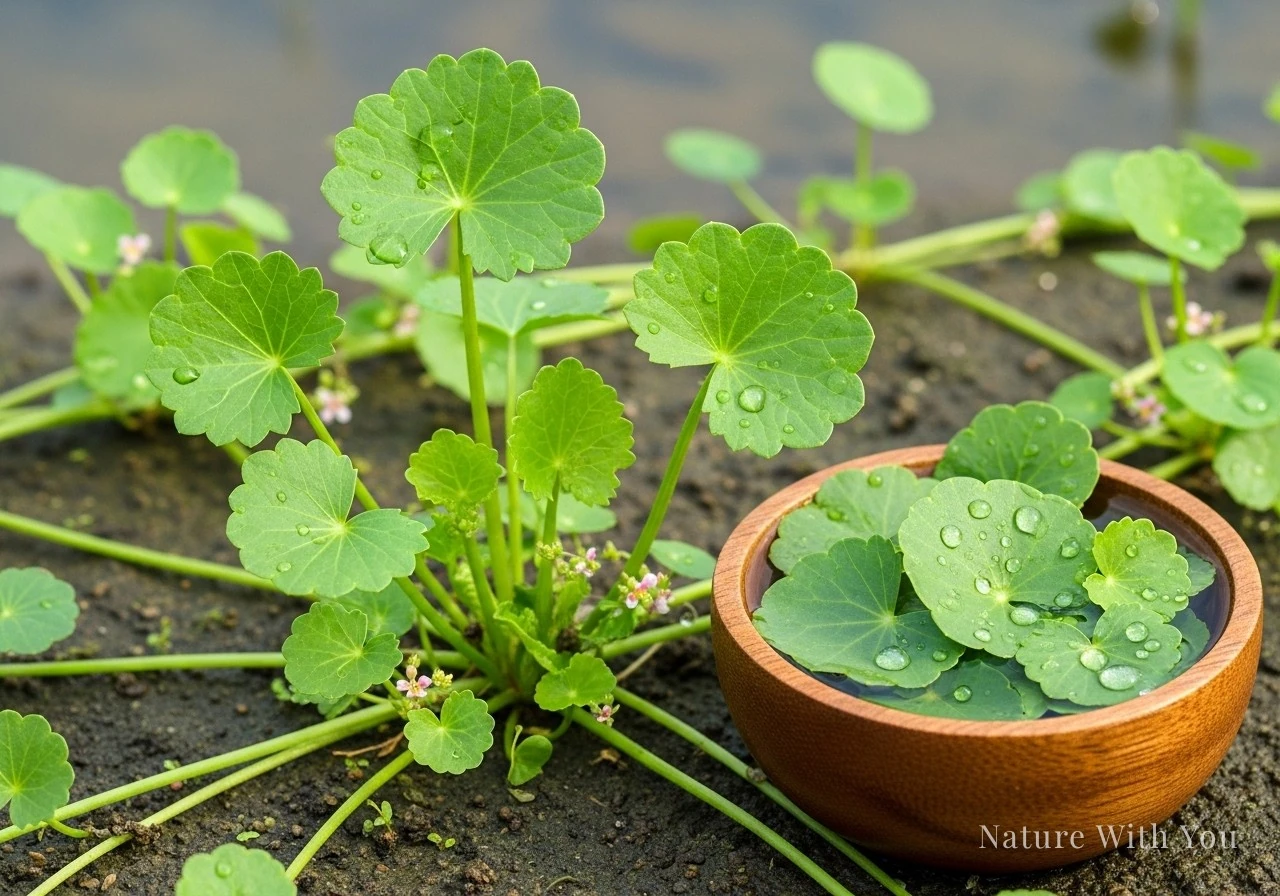
Discover Gotu Kola (Mandukparni), a powerful Ayurvedic Medhya Rasayana herb that enhances memory, heals skin, reduces anxiety, and supports brain health through asiaticoside and madecassoside.
Mon, Feb 9, 2026Gotu Kola (Centella asiatica), known as Mandukparni in Ayurveda, is a creeping perennial herb revered as one of the four Medhya Rasayana (brain rejuvenating) herbs. Its leaves contain asiaticoside, madecassoside, and madecassic acid – triterpenoid compounds that enhance memory, promote nerve regeneration, and accelerate wound healing. Used across Ayurveda, Traditional Chinese Medicine, and Southeast Asian folk medicine for centuries.
Gotu Kola (Centella asiatica), known as Mandukparni in Ayurveda, is a creeping perennial herb with small, round, fan-shaped leaves that grows in wetlands across tropical Asia. It is one of the four Medhya Rasayana (brain rejuvenating) herbs described in classical Ayurvedic texts. Prized for enhancing memory, improving cognitive function, healing wounds, and reducing anxiety, Gotu Kola has been used by scholars, monks, and healers for thousands of years.
Rasa (Taste): Tikta (Bitter), Kashaya (Astringent) Virya (Potency): Sheeta (Cool) Vipaka (Post-digestive): Madhura (Sweet) Dosha Effect: Balances all three doshas, especially Pitta and Kapha
Classical Applications:
| Nutrient | Amount |
|---|---|
| Calories | 35 kcal |
| Carbohydrates | 8 g |
| Fiber | 6 g |
| Protein | 3 g |
| Fat | 0.5 g |
| Vitamin C | 12 mg |
| Iron | 2.5 mg |
| Calcium | 170 mg |
| Magnesium | 25 mg |
| Vitamin A | 175 mcg |
Note: Gotu Kola’s therapeutic power comes from its triterpenoid saponins (asiaticoside, madecassoside, asiatic acid) rather than macronutrient content. Fresh leaves offer the highest concentration of active compounds.
| Feature | Gotu Kola | Brahmi |
|---|---|---|
| Best For | Wound healing, cognition, skin | Memory, learning, focus |
| Dosha Effect | All three, esp. Pitta & Kapha | All three, esp. Pitta & Vata |
| Key Compound | Asiaticoside, Madecassoside | Bacosides (A and B) |
| Taste | Bitter, Astringent | Bitter, Astringent |
| Potency | Cool | Cool |
| Unique Benefit | Accelerates wound healing (CICA) | Enhances synaptic communication |
| How to Use | Tea, salads, powder, cream | Powder, ghrita, capsules |
Q: Can I take Gotu Kola daily? A: Yes, moderate daily use (300-600 mg extract or 1/2 tsp powder) is safe for most adults. However, it is recommended to cycle usage – 6 weeks on, 2 weeks off – for best results and safety.
Q: Is Gotu Kola the same as Brahmi? A: No. While both are Medhya Rasayana herbs for brain health, Gotu Kola (Centella asiatica) and Brahmi (Bacopa monnieri) are different plants with different active compounds. They are often confused because in some South Indian traditions “Brahmi” refers to Gotu Kola. They work well together for comprehensive cognitive support.
Q: Can Gotu Kola help with anxiety? A: Yes, Gotu Kola is a recognized adaptogen that reduces cortisol and calms the nervous system. Studies show it may help manage generalized anxiety and improve stress resilience naturally.
Q: Does Gotu Kola really heal wounds faster? A: Yes, clinical research confirms that asiaticoside and madecassoside in Gotu Kola stimulate collagen production and accelerate tissue repair. It is one of the most studied herbs for wound healing.
Q: Is Gotu Kola safe for children? A: Gotu Kola in small amounts may be given to children above 6 years for memory support, especially as fresh leaves in food. For therapeutic dosing, consult an Ayurvedic practitioner.
Q: What is CICA in skincare products? A: CICA stands for Centella asiatica – the scientific name for Gotu Kola. CICA-based skincare products use Gotu Kola extract for its proven wound-healing, anti-aging, and skin-soothing properties.
Explore More: Fruits • Vegetables • Natural Remedies • Seasonal Picks • Wellness Tips