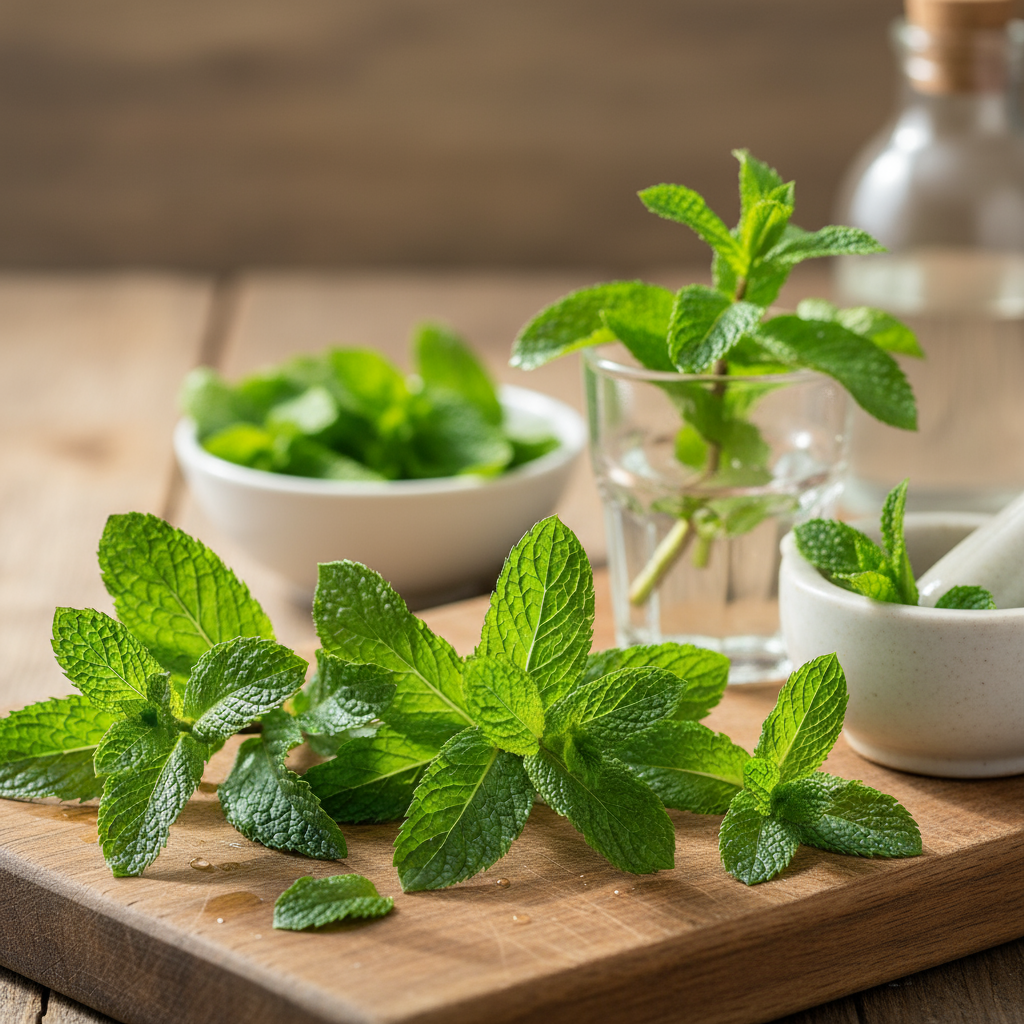
Discover Mint (Pudina), a refreshing cooling herb known for its digestive, breath-freshening, and anti-inflammatory properties. A natural coolant used in Ayurveda and kitchens worldwide.
Mon, Feb 9, 2026Mint (Mentha), known as Pudina in Hindi, is a fragrant herb with a cooling, refreshing flavor used in culinary dishes, herbal teas, and Ayurvedic remedies worldwide. Its leaves contain menthol, menthone, and rosmarinic acid – bioactive compounds that soothe digestion, relieve headaches, clear respiratory congestion, and freshen breath. Often combined with Coriander and Fennel for comprehensive digestive support.
Mint (Mentha), known as Pudina in Hindi, is one of the oldest and most versatile herbs in the world. Its cooling nature, refreshing aroma, and pleasant flavor make it a favorite in both food and traditional healing. With over 25 species, mint is widely used in Ayurveda for its digestive, cooling, and detoxifying properties. Every Indian kitchen considers Pudina an essential herb for chutneys, raitas, and summer drinks.
Rasa (Taste): Katu (Pungent) Virya (Potency): Sheeta (Cool) Vipaka (Post-digestive): Katu (Pungent) Dosha Effect: Balances Pitta and Kapha; may aggravate Vata in excess
Classical Applications:
| Nutrient | Amount |
|---|---|
| Calories | 44 kcal |
| Carbohydrates | 8 g |
| Fiber | 6.8 g |
| Protein | 3.3 g |
| Fat | 0.7 g |
| Iron | 11.9 mg |
| Potassium | 569 mg |
| Vitamin C | 31 mg |
| Calcium | 243 mg |
| Vitamin A | 212 mcg |
Note: Mint is surprisingly mineral-rich for a fresh herb – just a small handful provides significant iron and calcium. Its therapeutic power comes from menthol and essential oils rather than caloric content.
| Feature | Mint | Coriander |
|---|---|---|
| Best For | Bloating, headache, breath freshener | Detox, blood sugar, cooling |
| Dosha Effect | Pitta & Kapha balance | Pitta & Kapha balance |
| Key Compound | Menthol, Menthone | Linalool, Geraniol |
| Taste | Pungent | Astringent, Bitter |
| Potency | Cool | Cool |
| Unique Benefit | Analgesic (headache relief) | Heavy metal detox |
| How to Use | Tea, chutney, raita | Water, chutney, powder |
Q: Can I eat mint leaves daily? A: Yes, consuming a small handful of fresh mint leaves daily is safe and beneficial. It aids digestion, freshens breath, and provides essential minerals like iron and calcium.
Q: Is mint tea good for bloating? A: Yes, mint tea is one of the most effective natural remedies for bloating and gas. Menthol relaxes the smooth muscles of the digestive tract, helping release trapped gas and relieve discomfort.
Q: Can mint help with headaches? A: Yes, menthol in mint has analgesic properties. Applying peppermint oil to the temples or drinking mint tea may relieve tension headaches. It works by relaxing muscles and improving blood flow.
Q: Is mint safe during pregnancy? A: In small culinary amounts (a few leaves in food or light mint tea), mint is generally safe. However, large medicinal doses and concentrated mint oil should be avoided during pregnancy. Consult your healthcare provider.
Q: What is the difference between peppermint and spearmint? A: Peppermint (Mentha piperita) has a stronger, more intense menthol flavor and higher medicinal potency. Spearmint (Mentha spicata) is milder and sweeter, commonly used in cooking. Both offer digestive and cooling benefits.
Q: Can I grow mint at home? A: Yes, mint is one of the easiest herbs to grow. It thrives in moist soil with partial shade. Plant it in a pot to prevent it from spreading aggressively. Fresh home-grown mint is more flavorful and nutritious than store-bought.
Explore More: Fruits • Vegetables • Natural Remedies • Seasonal Picks • Wellness Tips