


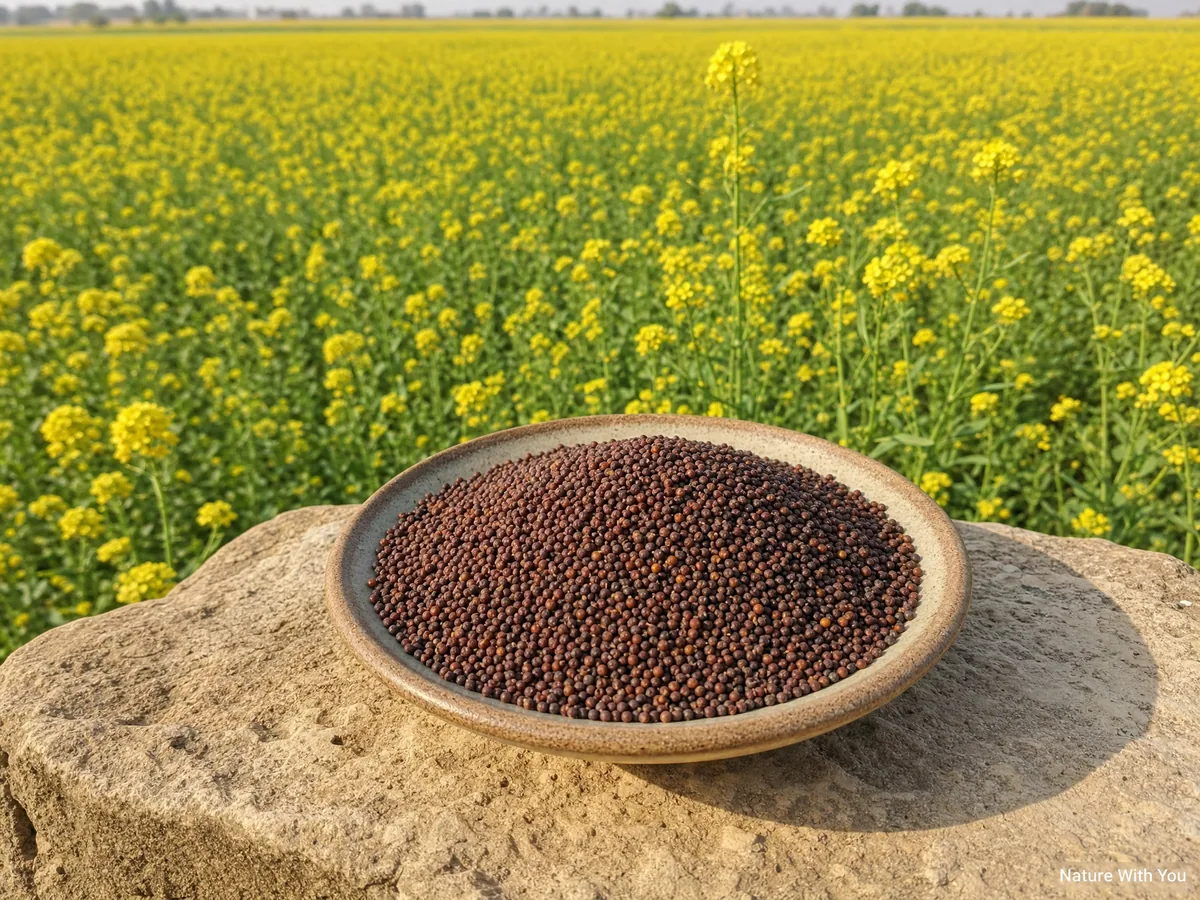
Mustard Seed (Sarson / Rai) – The Pungent Warming Seed
Discover Mustard Seed (Sarson / Rai), the pungent warming seed known in Ayurveda as Sarshapa — valued for kindling digestion, easing joint and muscle stiffness, and rich in selenium and omega-3.
Tue, Jun 9, 2026 · 5 min read🌿 Mustard Seed at a Glance
Mustard Seed (Brassica nigra / juncea / alba), known as Sarson or Rai in Hindi and Sarshapa in Sanskrit, is a tiny, round seed — yellow, brown, or black — with a sharp, pungent, warming bite. A staple of Indian tempering (tadka), pickles, and the famous mustard oil, it is rich in selenium, magnesium, and omega-3 (ALA) fats. Beyond the kitchen, mustard has long been used in traditional warming remedies for joint and muscle stiffness.
✨ Why It’s Special / Importance
- 🔥 A warming, pungent seed that kindles digestion and clears congestion
- 🌿 Rich in selenium, an antioxidant mineral supporting thyroid and immunity
- 🫀 Provides plant omega-3 (ALA) and magnesium for heart and nerves
- 💆 Mustard oil is a classic massage oil for warmth and stiff joints
- 🥒 Essential in tempering, pickles, and the cuisine of eastern and northern India
🏺 Traditional / Ayurvedic Uses
Rasa (Taste): Katu–Tikta (Pungent–Bitter) Virya (Potency): Ushna (Strongly Warming) Vipaka (Post-digestive): Katu (Pungent) Dosha Effect: Pacifies Kapha and Vata; increases Pitta (use sparingly in heat conditions)
Classical Applications:
- Known as Sarshapa, a strongly warming spice that clears Kapha and kindles Agni
- Mustard oil (Sarshapa taila) used in Abhyanga (massage) for warmth and joint stiffness
- Warming poultices traditionally applied for muscle aches and congestion
- Used to stimulate appetite and counter cold, damp, sluggish conditions
💪 Benefits / Health Effects
- ✅ Digestion: Pungent warmth kindles appetite and aids digestion
- ✅ Joint & Muscle Comfort: Mustard oil massage traditionally eases stiffness
- ✅ Thyroid & Immunity: Selenium supports thyroid function and immune defence
- ✅ Heart & Nerves: Omega-3 (ALA) and magnesium support heart and nervous system
- ✅ Respiratory Relief: Warming nature helps clear congestion and Kapha
- ✅ Antioxidant Power: Contains glucosinolates and antioxidants
- ✅ Skin & Circulation: External use promotes warmth and circulation
- ✅ Metabolism: Warming spice that supports a brisk metabolism
🥗 Nutritional Information (Per 100g Mustard Seeds)
| Nutrient | Amount |
|---|---|
| Calories | 508 kcal |
| Carbohydrates | 28 g |
| Fiber | 12 g |
| Protein | 26 g |
| Fat | 36 g |
| Calcium | 266 mg |
| Magnesium | 370 mg |
| Selenium | 208 µg |
Note: Mustard seeds are used in small amounts (a pinch to a teaspoon for tempering), so these per-100g figures are for reference. Their fat is mostly heart-friendly unsaturated fat, including omega-3 ALA.
🔄 Quick Comparison: Mustard Seed vs Cumin – Tempering Spices
| Feature | Mustard Seed (Sarson/Rai) | Cumin (Jeera) |
|---|---|---|
| Best For | Pungent warmth, pickles, oil | Digestion, iron, jeera water |
| Potency | Strongly warming (Ushna) | Warming (Ushna) |
| Taste | Sharp, pungent | Earthy, warm, nutty |
| Dosha Effect | Pacifies Kapha & Vata, raises Pitta | Pacifies Kapha & Vata |
| Key Nutrient | Selenium, omega-3 | Iron, antioxidants |
| Classic Use | Tadka, pickles, mustard oil | Tadka, jeera water |
🥄 How to Use / Prepare
Culinary Tips:
- 🍳 Tadka: Crackle mustard seeds in hot oil to start South and West Indian dishes
- 🥒 Pickles: Ground mustard (rai) is essential in Indian achaar
- 🐟 Bengali Cooking: Mustard paste (kasundi/shorshe) flavours fish and vegetable curries
- 🥗 Dressings: Use mustard powder in salad dressings and marinades
- 🍲 Sarson ka Saag: Cook mustard greens into the iconic Punjabi dish
- 🫙 Tempering Greens & Dals: Adds a sharp, warming note to dals and stir-fries
Traditional Home Remedies:
- 💆 Mustard Oil Massage: Warm mustard oil massaged into joints and muscles eases stiffness
- 🦶 Warming Foot Soak: A traditional mustard foot soak warms cold feet and relaxes muscles
- 🌬️ For Congestion: Mustard’s warming nature is traditionally used to clear Kapha and congestion
⚠️ Precautions / Warnings
- ❗ Strongly heating — may aggravate Pitta (acidity, heat, skin issues) if overused
- ❗ Mustard oil and seeds can irritate the skin; always dilute and patch-test for external use
- ❗ Some people are allergic to mustard — discontinue if reactions occur
- ❗ Use culinary amounts; large medicinal doses need professional guidance
- ⚠️ Mustard as a normal cooking spice is safe and flavourful
🎉 Fun Facts / Trivia
- 🌱 Mustard belongs to the Brassica family, alongside cabbage, broccoli, and turnip
- 🟡 Yellow, brown, and black mustard seeds vary in pungency — black is the sharpest
- 💥 Mustard’s heat is released only when the seeds are crushed and meet water
- 🇮🇳 Mustard oil is the traditional cooking and massage oil of eastern and northern India
- 🌼 Fields of yellow mustard flowers (sarson) are an iconic sight of the Indian winter
Frequently Asked Questions (FAQs)
Q: What are the benefits of mustard seeds? A: Mustard seeds kindle digestion, support thyroid and immunity through selenium, and provide omega-3 (ALA) and magnesium for the heart and nerves. Externally, mustard oil is a traditional warming massage remedy for stiff joints and muscles.
Q: Why does mustard taste so sharp? A: Mustard’s pungency comes from compounds released only when the seeds are crushed and mixed with water, which activates an enzyme that produces the sharp, hot flavour. Cooking mellows it.
Q: Is mustard oil good for massage? A: Yes, traditionally. Warm mustard oil (Sarshapa taila) is a classic Ayurvedic massage oil used to bring warmth and ease stiffness in joints and muscles, especially in cold weather. Always patch-test, as it can irritate sensitive skin.
Q: Mustard vs cumin — how do they differ? A: Both are warming tempering spices, but mustard is sharper and more pungent (great in pickles and oil), while cumin is earthy and rich in iron (great for digestion and jeera water). They serve different roles in Indian cooking.
Q: Who should use mustard cautiously? A: Those with high Pitta, acidity, or heat-related skin conditions should use mustard sparingly because of its strong heating nature. People allergic to mustard should avoid it, and external use should always be diluted and patch-tested.
🔗 Related Items
- Cumin – The Digestive Seed
- Black Pepper – The King of Spices
- Fenugreek (Methi) – The Seed & Leaf Powerhouse
Explore More: Fruits • Vegetables • Herbs • Natural Remedies • Seasonal Picks • Wellness Tips
📚 Sources
- USDA FoodData Central – Nutritional Information for Mustard seed, ground/whole
- Tian Y, Deng F. (2020). “Phytochemistry and pharmacological activities of mustard (Brassica).” Journal of Food Biochemistry
- Bhavaprakash Nighantu – Traditional classification of Sarshapa (Mustard)