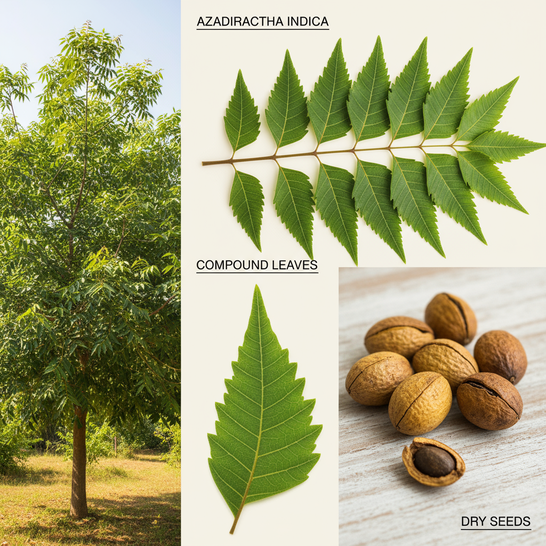
Discover Neem (Azadirachta indica), the Ayurvedic 'Village Pharmacy' known for purifying blood, healing skin disorders, boosting immunity, and fighting infections naturally.
Mon, Feb 9, 2026Neem (Azadirachta indica), often called the 'Village Pharmacy' in India, is one of the most important medicinal trees in Ayurveda. Every part of the tree – leaves, bark, seeds, flowers, and oil – possesses therapeutic value. Its leaves contain azadirachtin, nimbin, and nimbidin – over 130 bioactive compounds that purify blood, fight infections, heal skin disorders, and boost immunity. Combined with [Tulsi](/en/herbs/tulsi/) for immunity or [Turmeric](/en/herbs/turmeric/) for skin health.
Neem (Azadirachta indica), known as the Village Pharmacy of India, is a fast-growing evergreen tree native to the Indian subcontinent. Called Sarva Roga Nivarini (cure of all ailments) in Ayurveda, neem has been used for medicinal, agricultural, and hygiene purposes for thousands of years. Every part of the tree – leaves, bark, seeds, flowers, fruit, and oil – possesses remarkable therapeutic value. It is perhaps the most versatile medicinal tree on the planet.
Rasa (Taste): Tikta (Bitter), Kashaya (Astringent) Virya (Potency): Sheeta (Cool) Vipaka (Post-digestive): Katu (Pungent) Dosha Effect: Balances Pitta and Kapha; may aggravate Vata in excess
Classical Applications:
| Nutrient | Amount |
|---|---|
| Calories | 40 kcal |
| Carbohydrates | 8 g |
| Fiber | 2 g |
| Protein | 3 g |
| Fat | 0.5 g |
| Vitamin C | 25 mg |
| Iron | 1.6 mg |
| Calcium | 170 mg |
| Phosphorus | 18 mg |
| Carotene | 1342 mcg |
Note: Neem’s medicinal power comes from its vast array of bioactive compounds (azadirachtin, nimbin, nimbidin, quercetin) rather than macronutrient content. Neem leaves are extremely bitter and are consumed in small therapeutic quantities.
| Feature | Neem | Aloe Vera |
|---|---|---|
| Best For | Acne, infections, blood purification | Burns, moisturizing, sunburn |
| Dosha Effect | Pitta & Kapha balance | Pitta & Kapha balance |
| Key Compound | Azadirachtin, Nimbin | Acemannan |
| Taste | Bitter, Astringent | Bitter |
| Potency | Cool | Cool |
| Skin Action | Antibacterial, antifungal | Soothing, hydrating, healing |
| How to Use | Paste, oil, leaf juice | Gel topically, juice internally |
Q: Can I eat neem leaves daily? A: Yes, eating 4-5 tender neem leaves on an empty stomach is a traditional Ayurvedic practice for blood purification and immunity. Due to its extreme bitterness and potency, do not exceed small therapeutic amounts without guidance.
Q: Is neem good for acne and skin problems? A: Yes, neem is one of Ayurveda’s most trusted remedies for skin health. Its antibacterial and antifungal properties fight acne-causing bacteria, while nimbidin reduces inflammation. Apply neem paste or use neem-based face wash for best results.
Q: Can neem oil be consumed internally? A: No, neem oil should NEVER be consumed internally. It is for external use only – for skin, hair, and as an insect repellent. For internal benefits, use neem leaf juice, powder, or capsules instead.
Q: Is neem safe for children? A: Neem in small external amounts (neem water bath, neem paste for skin) is generally safe. Internal consumption is not recommended for children under 12 without professional guidance due to neem’s potency.
Q: How does neem help with oral health? A: Neem has powerful antibacterial properties that fight cavity-causing bacteria, reduce plaque, and treat gum disease. The traditional practice of chewing neem twigs (Datun) cleans teeth, strengthens gums, and freshens breath naturally.
Q: Can neem help with diabetes? A: Studies suggest neem leaf extract may help lower blood sugar levels by improving insulin sensitivity. However, it should complement – not replace – medical treatment. Diabetics should monitor blood sugar closely when using neem.
Explore More: Fruits • Vegetables • Natural Remedies • Seasonal Picks • Wellness Tips