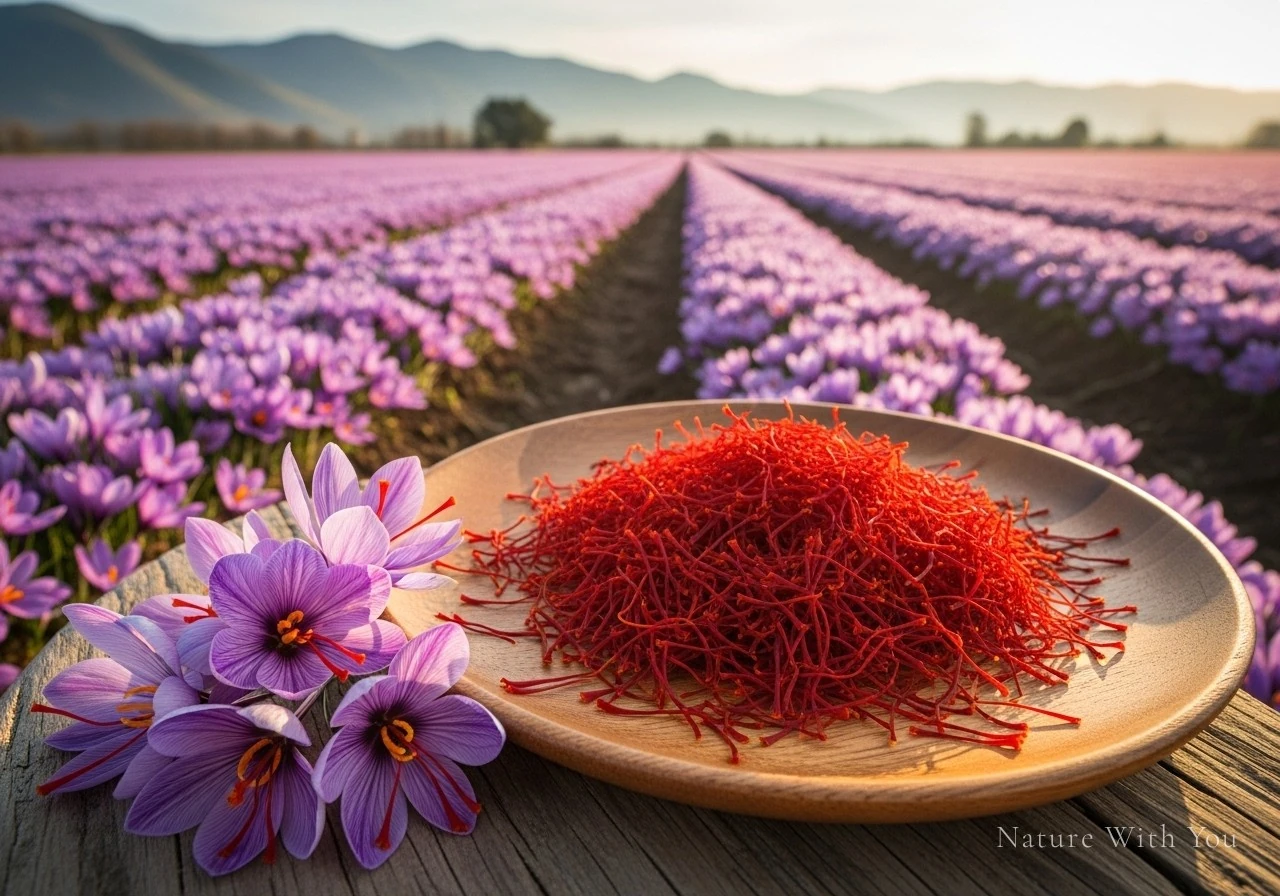
Discover Saffron (Kesar), the world's most precious spice known for brightening skin, boosting mood, enhancing memory, and supporting heart health through its active compounds crocin and safranal.
Mon, Feb 9, 2026Saffron (Crocus sativus), known as Kesar in Hindi, is the world's most precious and expensive spice, harvested from the delicate stigmas of the crocus flower. Each flower produces only three stigmas, requiring about 75,000 flowers for just one pound of saffron. Its threads contain crocin, safranal, and picrocrocin – bioactive compounds that brighten skin, enhance mood, improve memory, and support cardiovascular health. Revered in Ayurveda as a Rasayana (rejuvenator) and beauty elixir.
Saffron (Crocus sativus), known as Kesar in Hindi, is the world’s most precious and expensive spice, derived from the delicate stigmas of the crocus flower. Known for its vivid golden-red threads, intoxicating aroma, and exquisite flavor, saffron has been treasured for centuries in culinary, medicinal, and spiritual practices. In Ayurveda, it is revered as a Varnya (complexion enhancer) and Medhya (brain tonic) herb of the highest order.
Rasa (Taste): Tikta (Bitter), Katu (Pungent) Virya (Potency): Ushna (Hot) Vipaka (Post-digestive): Katu (Pungent) Dosha Effect: Balances Vata and Kapha; may increase Pitta in excess
Classical Applications:
| Nutrient | Amount |
|---|---|
| Calories | 310 kcal |
| Carbohydrates | 65 g |
| Fiber | 3.9 g |
| Protein | 11 g |
| Fat | 5.9 g |
| Iron | 11.1 mg |
| Vitamin C | 80 mg |
| Calcium | 111 mg |
| Magnesium | 264 mg |
| Potassium | 1724 mg |
Note: Saffron is consumed in extremely small quantities (a pinch or 2-3 strands per serving), so its per-serving nutritional impact is minimal. Its therapeutic value comes from crocin, safranal, and picrocrocin – potent bioactive compounds concentrated in the stigmas.
| Feature | Saffron | Turmeric |
|---|---|---|
| Best For | Skin glow, mood, beauty | Inflammation, immunity, joints |
| Dosha Effect | Vata & Kapha balance | Kapha & Vata balance |
| Key Compound | Crocin, Safranal | Curcumin, Curcuminoids |
| Taste | Bitter, Pungent | Bitter, Pungent |
| Potency | Hot | Hot |
| Price | World’s most expensive spice | Affordable, widely available |
| How to Use | Kesar Doodh (2-3 strands) | Golden milk, curries (1/2 tsp) |
Q: How much saffron should I consume daily? A: A pinch of saffron (2-3 strands or about 20-30 mg) per day is the standard recommended amount. This is sufficient for therapeutic benefits without risk. Do not exceed 1.5 grams per day.
Q: Is saffron milk (Kesar Doodh) safe during pregnancy? A: In small amounts (1-2 strands in milk), saffron is traditionally consumed during pregnancy for mood and complexion. However, large doses should be avoided. Always consult your healthcare provider before use during pregnancy.
Q: Can saffron really improve mood? A: Yes, clinical studies show that safranal and crocin in saffron have antidepressant properties comparable to some conventional medications. Regular consumption of saffron in small amounts may help manage mild to moderate depression and anxiety.
Q: How can I identify genuine saffron? A: Genuine saffron threads are deep red with an orange tip, have a strong aromatic smell, and turn water yellow (not red) when soaked. They taste slightly bitter and sweet. If saffron turns water red immediately, it may be dyed or adulterated.
Q: Is saffron good for skin brightening? A: Yes, saffron has been used in Ayurveda for centuries as a Varnya (complexion enhancer). Crocin and crocetin reduce pigmentation and promote natural glow. Kumkumadi Tailam, the legendary Ayurvedic facial oil, uses saffron as its star ingredient.
Q: Why is saffron so expensive? A: Saffron is hand-harvested from the stigmas of Crocus sativus flowers. Each flower produces only three stigmas, and it takes approximately 75,000 flowers to yield one pound of saffron. This labor-intensive process, combined with limited growing seasons, makes it the world’s most expensive spice.
Explore More: Fruits • Vegetables • Natural Remedies • Seasonal Picks • Wellness Tips