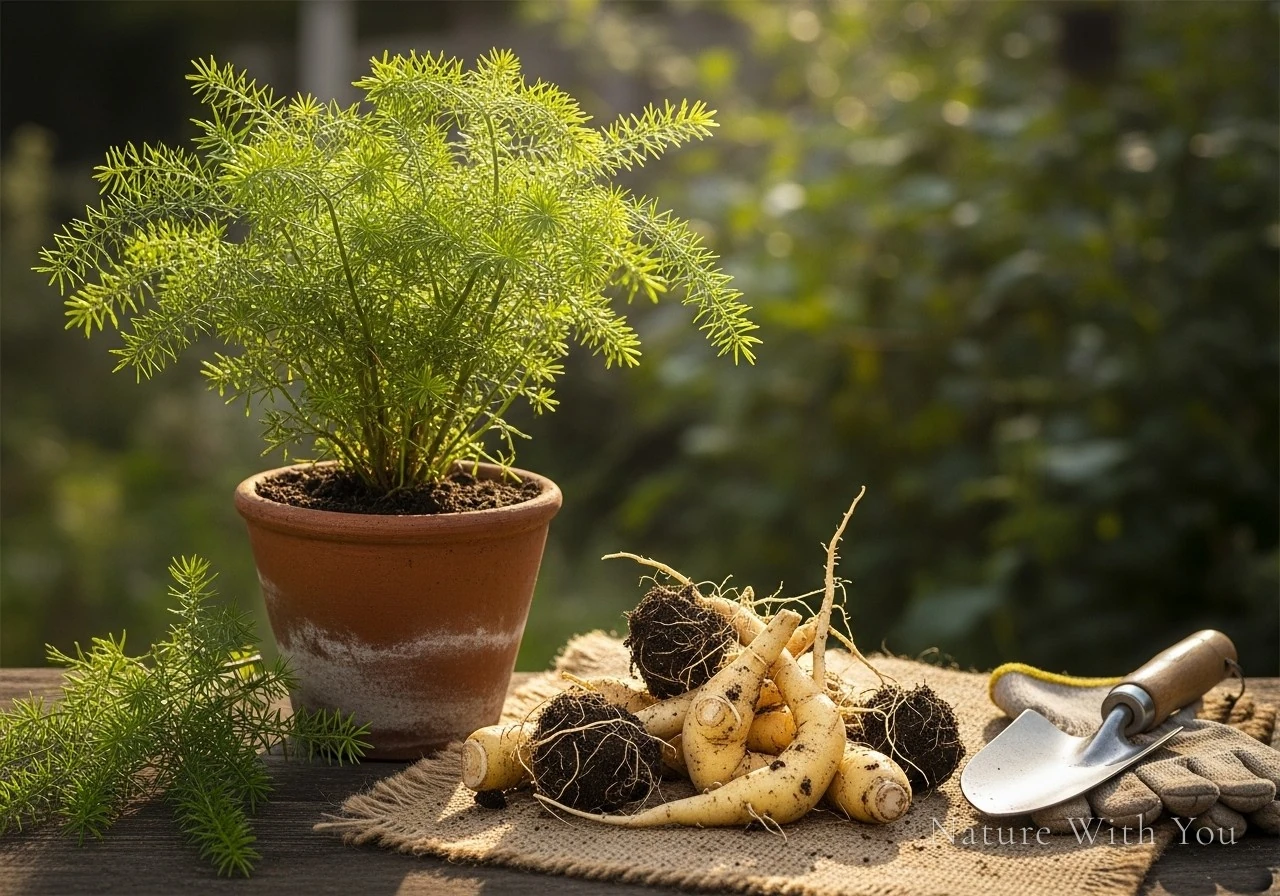
Discover Shatavari (Asparagus racemosus), the Ayurvedic 'Queen of Herbs' for women's health – known for balancing hormones, enhancing fertility, supporting lactation, and boosting immunity through shatavarin and racemofuran.
Mon, Feb 9, 2026Shatavari (Asparagus racemosus), called the 'Queen of Herbs' in Ayurveda, has been used for centuries to support women's health across all life stages. Its tuberous roots contain shatavarin (steroidal saponins) and racemofuran – bioactive compounds that balance hormones, enhance fertility, support lactation, and strengthen immunity. A powerful Rasayana (rejuvenator) and adaptogen, Shatavari is often combined with Ashwagandha for comprehensive hormonal and vitality support.
Shatavari (Asparagus racemosus), known as the Queen of Herbs in Ayurveda, is a climbing plant with tuberous roots that has been used for centuries to support women’s health across all life stages – from menstruation to menopause. The name “Shatavari” translates to “She who has 100 husbands” in Sanskrit, symbolizing its legendary ability to enhance vitality, fertility, and reproductive strength. It is classified as both a Rasayana (rejuvenator) and Stanya Janana (lactation promoter) in classical Ayurvedic texts.
Rasa (Taste): Madhura (Sweet), Tikta (Bitter) Virya (Potency): Sheeta (Cool) Vipaka (Post-digestive): Madhura (Sweet) Dosha Effect: Balances Pitta and Vata; may increase Kapha in excess due to sweet, heavy nature
Classical Applications:
| Nutrient | Amount |
|---|---|
| Calories | 260 kcal |
| Carbohydrates | 55 g |
| Fiber | 20 g |
| Protein | 3 g |
| Fat | 0.5 g |
| Iron | 2.5 mg |
| Calcium | 50 mg |
| Vitamin C | 4 mg |
| Zinc | 0.9 mg |
| Phosphorus | 25 mg |
Note: Shatavari’s therapeutic value comes from its steroidal saponins (shatavarin I-IV), racemofuran, and polysaccharides rather than macronutrient content. The tuberous roots are the primary medicinal part.
| Feature | Shatavari | Ashwagandha |
|---|---|---|
| Best For | Women’s health, hormones, lactation | Stress, strength, men’s health |
| Dosha Effect | Pitta & Vata balance | Vata & Kapha balance |
| Key Compound | Shatavarin (saponins) | Withanolides (Withaferin A) |
| Taste | Sweet, Bitter | Bitter, Astringent |
| Potency | Cool | Hot |
| Primary Action | Nourishing, hormone-balancing | Energizing, muscle-building |
| How to Use | Powder in milk, ghrita | Powder in milk, capsules |
Q: Can Shatavari be taken daily? A: Yes, daily consumption of 3-6 grams of Shatavari powder (or equivalent capsules) is safe for most adults. It works best with consistent use over 4-8 weeks for hormonal and reproductive benefits.
Q: Is Shatavari only for women? A: While Shatavari is primarily known for women’s health, it benefits men too. It supports digestion, reduces acidity, boosts immunity, and acts as an adaptogen for stress relief in both genders.
Q: Can Shatavari help with PCOS? A: Shatavari may support hormonal balance in PCOS by regulating estrogen and reducing inflammation. However, it should complement – not replace – medical treatment. Consult your healthcare provider for a comprehensive approach.
Q: Is Shatavari safe during breastfeeding? A: Yes, Shatavari is one of Ayurveda’s most trusted galactagogues (lactation enhancers). It has been used safely for centuries to improve breast milk production. Consult your doctor for appropriate dosing.
Q: What is the best way to take Shatavari? A: The most traditional and effective method is mixing Shatavari powder in warm milk with a touch of honey or ghee. The fat helps absorb its active saponins. Capsules are a convenient alternative.
Q: Can Shatavari help with menopause symptoms? A: Yes, Shatavari’s phytoestrogens may help ease menopause symptoms like hot flashes, mood swings, and vaginal dryness. It provides gentle hormonal support without the risks of synthetic hormone therapy.
Explore More: Fruits • Vegetables • Natural Remedies • Seasonal Picks • Wellness Tips