


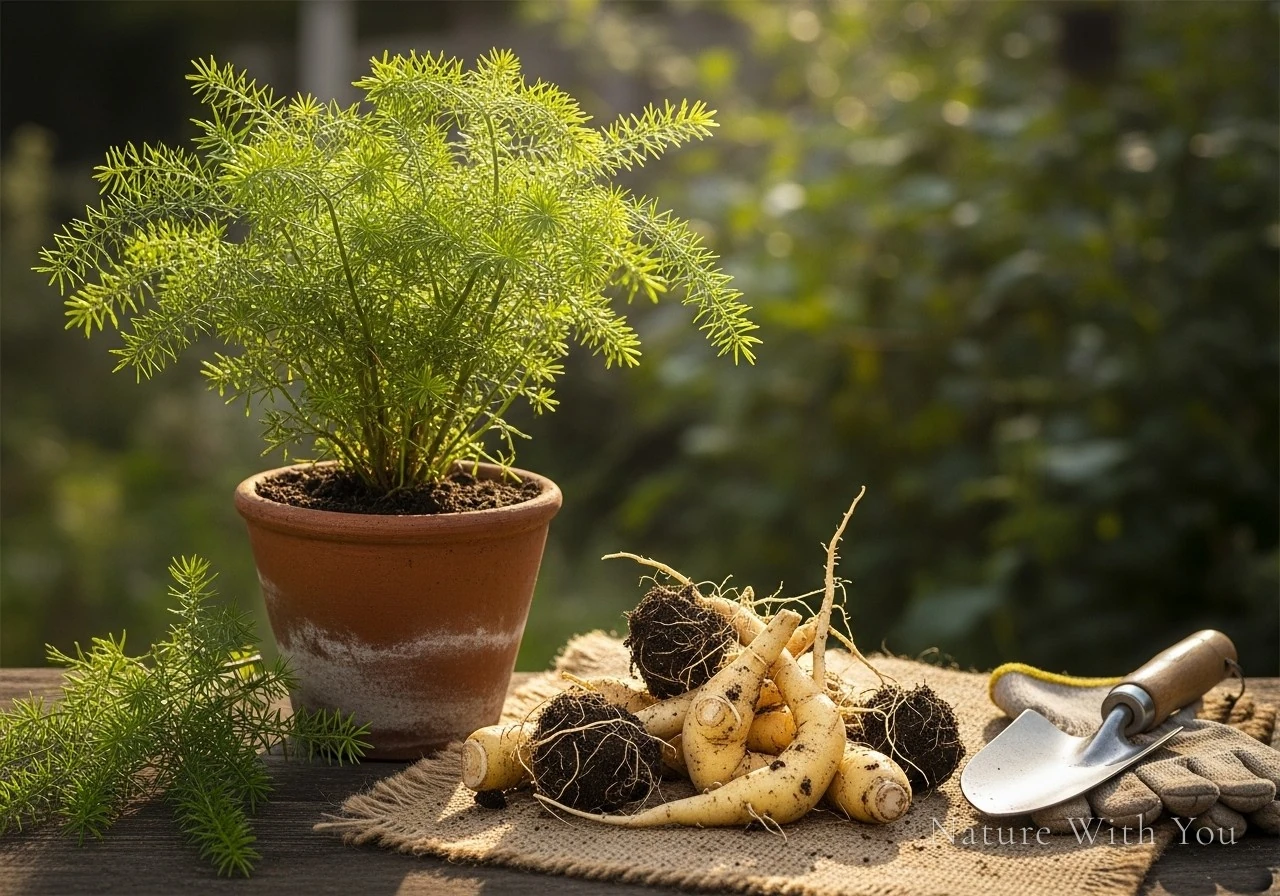
Shatavari – The Queen of Herbs for Women
Discover Shatavari (Asparagus racemosus), the Ayurvedic 'Queen of Herbs' for women's health – known for balancing hormones, enhancing fertility, supporting lactation, and boosting immunity through shatavarin and racemofuran.
Mon, Feb 9, 2026Shatavari (Asparagus racemosus), called the 'Queen of Herbs' in Ayurveda, has been used for centuries to support women's health across all life stages. Its tuberous roots contain shatavarin (steroidal saponins) and racemofuran – bioactive compounds that balance hormones, enhance fertility, support lactation, and strengthen immunity. A powerful Rasayana (rejuvenator) and adaptogen, Shatavari is often combined with Ashwagandha for comprehensive hormonal and vitality support.
🌿 Shatavari at a Glance
Shatavari (Asparagus racemosus), known as the Queen of Herbs in Ayurveda, is a climbing plant with tuberous roots that has been used for centuries to support women’s health across all life stages – from menstruation to menopause. The name “Shatavari” translates to “She who has 100 husbands” in Sanskrit, symbolizing its legendary ability to enhance vitality, fertility, and reproductive strength. It is classified as both a Rasayana (rejuvenator) and Stanya Janana (lactation promoter) in classical Ayurvedic texts.
✨ Why It’s Special / Importance
- 👑 Called the “Queen of Herbs” in Ayurveda – the foremost herb for women’s reproductive health
- 🔬 Contains shatavarin (steroidal saponins) and racemofuran – compounds that balance female hormones naturally
- 🤱 India’s most trusted traditional galactagogue – enhances breast milk production in nursing mothers
- 🌿 A powerful Rasayana (rejuvenator) and adaptogen that supports vitality across all life stages
- 💪 Often paired with Ashwagandha – Shatavari for women’s vitality, Ashwagandha for men’s strength
🏺 Traditional / Ayurvedic Uses
Rasa (Taste): Madhura (Sweet), Tikta (Bitter) Virya (Potency): Sheeta (Cool) Vipaka (Post-digestive): Madhura (Sweet) Dosha Effect: Balances Pitta and Vata; may increase Kapha in excess due to sweet, heavy nature
Classical Applications:
- Classified as Stanya Janana (lactation promoter) and Rasayana (rejuvenator) in Charaka Samhita
- Used in Shatavari Ghrita – classical ghee preparation for female reproductive health
- Combined with Ashwagandha for balanced hormonal support in both men and women
- Prescribed in Ayurveda for Pitta-related acidity, ulcers, and burning sensation
- Recommended during menstruation, pregnancy recovery, and menopause transition
💪 Benefits / Health Effects
- ✅ Hormonal Balance: Shatavarin helps regulate estrogen levels and ease hormonal fluctuations
- ✅ Fertility Support: Nourishes the female reproductive system and enhances fertility
- ✅ Lactation Enhancement: India’s premier traditional galactagogue – improves breast milk quality and quantity
- ✅ Menstrual Relief: Reduces cramps, PMS symptoms, and irregular cycles
- ✅ Menopause Support: Eases hot flashes, mood swings, and vaginal dryness naturally
- ✅ Immunity Boost: Strengthens the immune system and enhances overall vitality
- ✅ Digestive Health: Soothes acidity, ulcers, and inflammatory gut conditions
- ✅ Adaptogenic: Reduces stress, fights fatigue, and promotes energy and endurance
🥗 Nutritional Information (Per 100g, Dried Root Powder)
| Nutrient | Amount |
|---|---|
| Calories | 260 kcal |
| Carbohydrates | 55 g |
| Fiber | 20 g |
| Protein | 3 g |
| Fat | 0.5 g |
| Iron | 2.5 mg |
| Calcium | 50 mg |
| Vitamin C | 4 mg |
| Zinc | 0.9 mg |
| Phosphorus | 25 mg |
Note: Shatavari’s therapeutic value comes from its steroidal saponins (shatavarin I-IV), racemofuran, and polysaccharides rather than macronutrient content. The tuberous roots are the primary medicinal part.
🔄 Quick Comparison: Shatavari vs Ashwagandha – Adaptogens
| Feature | Shatavari | Ashwagandha |
|---|---|---|
| Best For | Women’s health, hormones, lactation | Stress, strength, men’s health |
| Dosha Effect | Pitta & Vata balance | Vata & Kapha balance |
| Key Compound | Shatavarin (saponins) | Withanolides (Withaferin A) |
| Taste | Sweet, Bitter | Bitter, Astringent |
| Potency | Cool | Hot |
| Primary Action | Nourishing, hormone-balancing | Energizing, muscle-building |
| How to Use | Powder in milk, ghrita | Powder in milk, capsules |
🥄 How to Use / Prepare
Culinary Uses:
- 🥛 Mix Shatavari powder in warm milk with honey – the traditional women’s wellness tonic
- 🍵 Brew as herbal tea for general wellness and digestive comfort
- 🥤 Add to smoothies, ladoos, and energy balls for nutritional support
- 🧈 Prepare Shatavari Ghrita (ghee infusion) for deep nourishment
Medicinal Preparations:
- 🥛 Shatavari Milk: Mix 1/2-1 tsp powder in warm milk with honey – daily reproductive tonic
- 🧈 Shatavari Ghrita: Classical ghee preparation for fertility and hormonal balance
- 💊 Capsules/Tablets: Standardized extracts (500 mg, 1-2 times daily) for consistent dosing
- 🌿 With Ashwagandha: Combine for comprehensive hormonal balance and stress relief
External Use:
- Apply Shatavari paste mixed with milk cream for skin nourishment and hydration
- Use Shatavari-infused oil for breast massage during lactation (traditional practice)
⚠️ Precautions / Warnings
- ❗ May worsen Kapha-related conditions (congestion, weight gain) due to its sweet, heavy nature
- ❗ Pregnant women should consult a doctor before use (safe for postpartum and lactation)
- ❗ May interact with estrogen-sensitive conditions – consult doctor if you have fibroids or endometriosis
- ❗ People with asparagus allergy should avoid Shatavari
- ❗ May cause mild digestive upset in some individuals initially
- ⚠️ Standard dose is 1/2-1 tsp powder (3-6 g) per day – start low and increase gradually
🎉 Fun Facts / Trivia
- 👰 The name “Shatavari” means “She who has 100 husbands” – symbolizing vitality and reproductive strength
- 🧘 Considered the female counterpart to Ashwagandha – together they form Ayurveda’s power couple for vitality
- 🌱 The Shatavari plant can produce 100+ tuberous roots from a single plant – reflecting abundance
- 🤱 Has been India’s most trusted traditional remedy for increasing breast milk for over 3,000 years
- 🌍 Wild Shatavari grows across India, Sri Lanka, the Himalayas, and parts of Africa and Australia
- 📜 Mentioned as a Rasayana in Charaka Samhita, placing it among the most rejuvenating herbs in Ayurveda
- 🧬 Modern research has identified over 20 active steroidal saponins in Shatavari roots
Frequently Asked Questions (FAQs)
Q: Can Shatavari be taken daily? A: Yes, daily consumption of 3-6 grams of Shatavari powder (or equivalent capsules) is safe for most adults. It works best with consistent use over 4-8 weeks for hormonal and reproductive benefits.
Q: Is Shatavari only for women? A: While Shatavari is primarily known for women’s health, it benefits men too. It supports digestion, reduces acidity, boosts immunity, and acts as an adaptogen for stress relief in both genders.
Q: Can Shatavari help with PCOS? A: Shatavari may support hormonal balance in PCOS by regulating estrogen and reducing inflammation. However, it should complement – not replace – medical treatment. Consult your healthcare provider for a comprehensive approach.
Q: Is Shatavari safe during breastfeeding? A: Yes, Shatavari is one of Ayurveda’s most trusted galactagogues (lactation enhancers). It has been used safely for centuries to improve breast milk production. Consult your doctor for appropriate dosing.
Q: What is the best way to take Shatavari? A: The most traditional and effective method is mixing Shatavari powder in warm milk with a touch of honey or ghee. The fat helps absorb its active saponins. Capsules are a convenient alternative.
Q: Can Shatavari help with menopause symptoms? A: Yes, Shatavari’s phytoestrogens may help ease menopause symptoms like hot flashes, mood swings, and vaginal dryness. It provides gentle hormonal support without the risks of synthetic hormone therapy.
🔗 Related Items
Explore More: Fruits • Vegetables • Natural Remedies • Seasonal Picks • Wellness Tips
📚 Sources
- Charaka Samhita and Sushruta Samhita – Traditional Ayurvedic uses of Shatavari as Rasayana and Stanya Janana
- Alok S, et al. (2013). “Plant profile, phytochemistry and pharmacology of Asparagus racemosus: A review.” Asian Pacific J Tropical Disease.
- Pandey AK, et al. (2018). “Asparagus racemosus – a review on its biological and medicinal activities.” Indian J Natural Products and Resources.
- USDA FoodData Central – Nutritional Reference Data