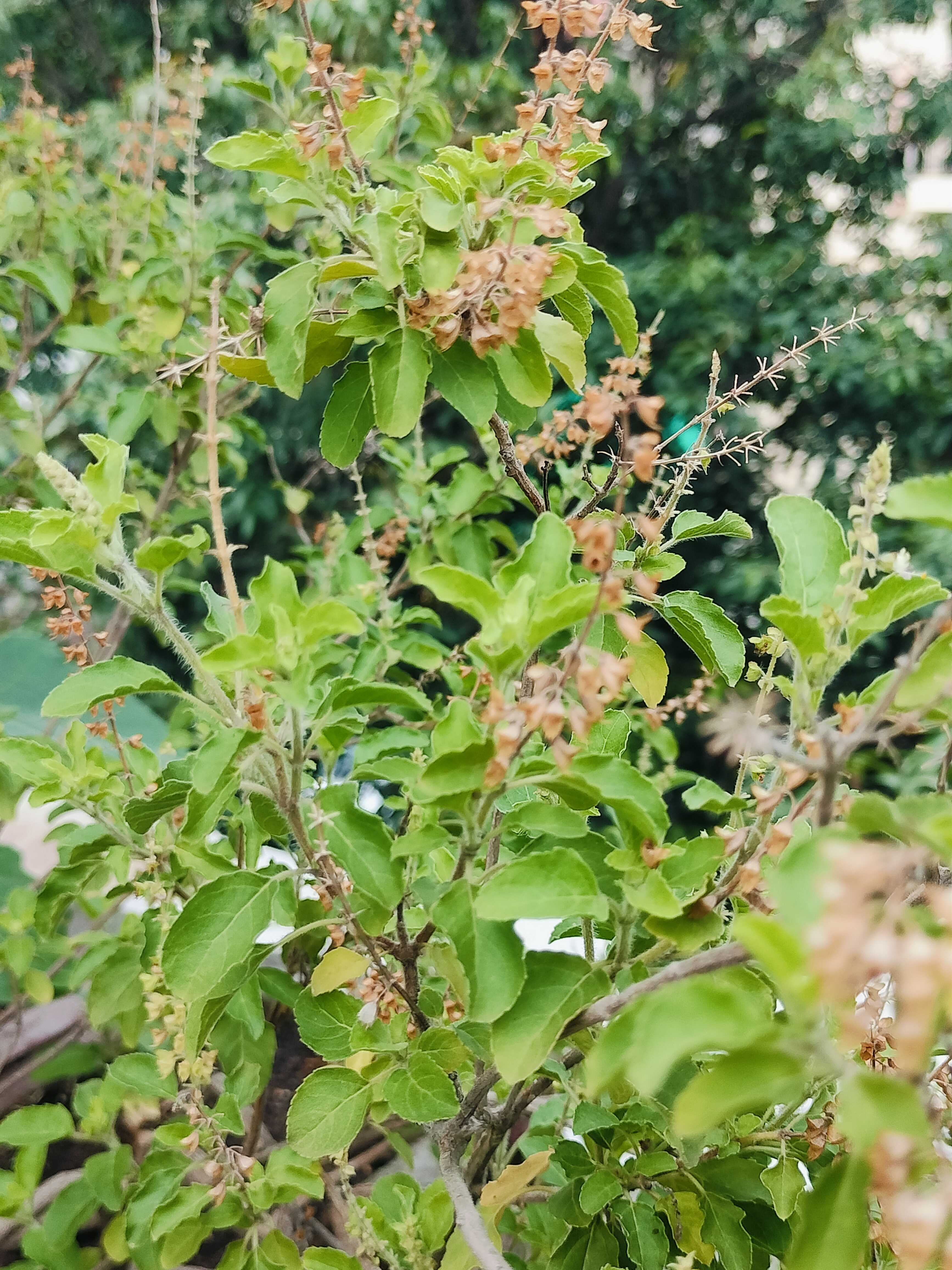
Discover Tulsi (Holy Basil), the Ayurvedic 'Queen of Herbs' known for boosting immunity, healing respiratory ailments, reducing stress, and purifying body and mind through eugenol and rosmarinic acid.
Mon, Feb 9, 2026Tulsi (Ocimum tenuiflorum), known as Holy Basil, is the most sacred and widely used medicinal herb in India. Called the 'Queen of Herbs' in Ayurveda, its leaves contain eugenol, rosmarinic acid, and ursolic acid – potent compounds that boost immunity, fight respiratory infections, reduce stress, and purify body and mind. Grown in almost every Indian household as both a spiritual symbol and a living pharmacy, Tulsi is often combined with Ginger and honey for the classic cold and cough remedy.
Tulsi (Ocimum tenuiflorum), known as Holy Basil, is the most sacred and widely used medicinal herb in India. Called the “Queen of Herbs” in Ayurveda, Tulsi is grown in almost every Indian household – worshipped as a divine plant and used as a living pharmacy. With powerful adaptogenic, antimicrobial, and anti-inflammatory properties, Tulsi has been protecting Indian families from infections, stress, and respiratory ailments for over 5,000 years.
Rasa (Taste): Katu (Pungent), Tikta (Bitter) Virya (Potency): Ushna (Hot) Vipaka (Post-digestive): Katu (Pungent) Dosha Effect: Balances Kapha and Vata; may increase Pitta in excess
Classical Applications:
| Nutrient | Amount |
|---|---|
| Calories | 23 kcal |
| Carbohydrates | 2.7 g |
| Fiber | 1.6 g |
| Protein | 3.2 g |
| Fat | 0.6 g |
| Vitamin A | 264 mcg |
| Vitamin C | 18 mg |
| Calcium | 177 mg |
| Iron | 3.2 mg |
| Potassium | 295 mg |
Note: Tulsi is nutrient-dense per calorie, especially rich in calcium and iron for a fresh herb. Its true therapeutic power lies in its essential oils (eugenol, methyl eugenol) and phenolic acids (rosmarinic acid, ursolic acid).
| Feature | Tulsi | Giloy |
|---|---|---|
| Best For | Cold, cough, respiratory health | Chronic fever, detox, liver |
| Dosha Effect | Kapha & Vata balance | Tridoshahara (all three) |
| Key Compound | Eugenol, Rosmarinic acid | Giloin, Berberine |
| Taste | Pungent, Bitter | Bitter, Astringent |
| Potency | Hot | Hot |
| Immunity Type | Antimicrobial, adaptogenic | Immunomodulatory, fever-fighting |
| How to Use | Tea, chew leaves, kadha | Kadha, juice, Guduchi Satva |
Q: Can I chew Tulsi leaves daily? A: Yes, chewing 4-5 fresh Tulsi leaves on an empty stomach is a traditional practice for immunity, oral health, and overall wellness. It is safe for daily use.
Q: Is Tulsi tea good for cold and cough? A: Yes, Tulsi tea is one of India’s most trusted home remedies for cold and cough. The eugenol and essential oils in Tulsi fight infections, reduce congestion, and soothe sore throat. Add Ginger and honey for enhanced effect.
Q: What is the difference between Rama Tulsi and Krishna Tulsi? A: Rama Tulsi has green leaves and a milder taste, while Krishna Tulsi has purple leaves and a stronger, more peppery flavor. Krishna Tulsi is generally considered more potent medicinally, while Rama Tulsi is preferred for daily consumption and tea.
Q: Can Tulsi help with stress and anxiety? A: Yes, Tulsi is a powerful adaptogen that helps the body cope with physical and mental stress. Its compounds reduce cortisol levels, calm the nervous system, and improve resilience to stress.
Q: Is Tulsi safe during pregnancy? A: Small culinary amounts (a few leaves in food or tea) are generally safe. However, large medicinal doses should be avoided during pregnancy as Tulsi may have uterine-stimulating properties. Consult your healthcare provider.
Q: Why do Indians worship the Tulsi plant? A: Tulsi is considered sacred in Hinduism – believed to be the earthly form of Goddess Lakshmi. Beyond spiritual significance, growing Tulsi at home provides natural air purification, mosquito repellent, and a ready supply of medicinal leaves – making it a practical living pharmacy.
Explore More: Fruits • Vegetables • Natural Remedies • Seasonal Picks • Wellness Tips