icons.svg
Turmeric – The Golden Healer
  • Turmeric – The Golden Healer

Discover Turmeric (Haldi), the Ayurvedic 'Golden Healer' known for fighting inflammation, boosting immunity, supporting liver health, and healing wounds through its active compound curcumin.

Mon, Feb 9, 2026

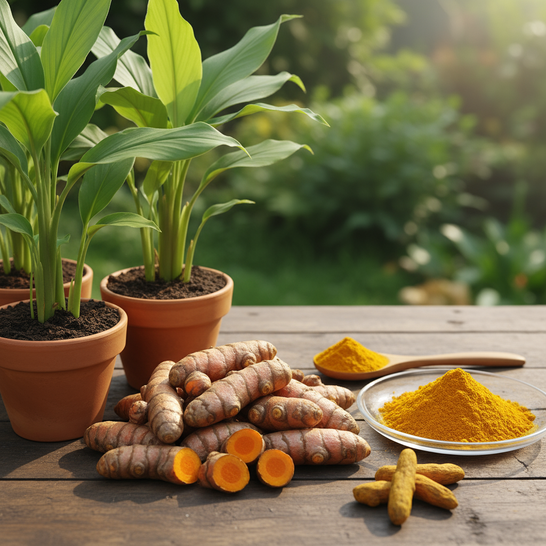
Turmeric (Curcuma longa), known as Haldi in Hindi, is a golden-yellow rhizome from the ginger family that has been India's most essential healing spice for over 4,000 years. Its active compound curcumin, along with curcuminoids and turmerone, provides potent anti-inflammatory, antioxidant, antimicrobial, and wound-healing properties. Called 'Indian Saffron' and the 'Golden Healer,' turmeric is often combined with Black Pepper for enhanced curcumin absorption (bioavailability).

🌿 Turmeric at a Glance

Turmeric (Curcuma longa), known as Haldi in Hindi, is a golden-yellow root spice from the ginger family that holds the title of India’s most essential healing spice. Used for over 4,000 years in cooking, medicine, and spiritual rituals, turmeric’s vibrant color comes from curcumin – its star bioactive compound with powerful anti-inflammatory, antioxidant, and antimicrobial properties. No Indian kitchen, Ayurvedic pharmacy, or traditional ceremony is complete without this “Golden Healer.”


✨ Why It’s Special / Importance

  • 🏆 India’s most essential healing spice – used in cooking, medicine, and rituals for over 4,000 years
  • 🔬 Contains curcumin (2-5%), curcuminoids, and turmerone – among the most researched bioactive compounds in the world
  • 🌍 Over 12,000 published scientific studies on curcumin’s health benefits – more than almost any other herb
  • 🫚 Bioavailability boosted 2,000% when combined with Black Pepper (piperine)
  • 🎨 Used as a sacred dye in Hindu rituals, weddings, and festivals across India

🏺 Traditional / Ayurvedic Uses

Rasa (Taste): Tikta (Bitter), Katu (Pungent) Virya (Potency): Ushna (Hot) Vipaka (Post-digestive): Katu (Pungent) Dosha Effect: Balances Kapha and Vata; may increase Pitta in excess

Classical Applications:

  • Classified as a Varnya (complexion enhancer) and Krimighna (antimicrobial) in Charaka Samhita
  • Used in Haridra Khanda – classical Ayurvedic formulation for skin allergies and urticaria
  • Combined with warm milk as Haldi Doodh (Golden Milk) – India’s most traditional immunity remedy
  • Applied externally on wounds, cuts, and skin infections as a natural antiseptic
  • Used in wedding rituals (Haldi ceremony) for skin purification and blessings

💪 Benefits / Health Effects

  • Anti-inflammatory: Curcumin inhibits NF-κB pathway – as effective as some anti-inflammatory drugs
  • Immunity Boost: Enhances immune cell function and fights viral, bacterial, and fungal infections
  • Joint Health: Reduces joint pain, stiffness, and inflammation in arthritis
  • Liver Detox: Supports liver function and promotes natural detoxification
  • Wound Healing: Accelerates wound closure and prevents infection (used traditionally on cuts)
  • Skin Health: Reduces acne, brightens complexion, and fights skin infections
  • Heart Health: May lower cholesterol, reduce plaque buildup, and support cardiovascular wellness
  • Brain Health: Curcumin crosses the blood-brain barrier and may protect against neurodegenerative decline

🥗 Nutritional Information (Per 100g, Ground Powder)

Nutrient Amount
Calories 354 kcal
Carbohydrates 65 g
Fiber 21 g
Protein 8 g
Fat 10 g
Iron 41 mg
Potassium 2525 mg
Vitamin C 25 mg
Calcium 183 mg
Curcumin 2-5%

Note: Turmeric powder is exceptionally mineral-rich, especially in iron and potassium. Its therapeutic power comes from curcumin and curcuminoids. Absorption is enhanced up to 2,000% when consumed with piperine from Black Pepper or with fats.


🔄 Quick Comparison: Turmeric vs Ginger – Anti-inflammatory Family

Feature Turmeric Ginger
Best For Inflammation, immunity, skin Nausea, digestion, cold & cough
Dosha Effect Kapha & Vata balance Vata & Kapha balance
Key Compound Curcumin, Curcuminoids Gingerol, Shogaol
Taste Bitter, Pungent Pungent
Potency Hot Hot
Unique Benefit 12,000+ studies, crosses blood-brain barrier Clinically proven nausea relief
How to Use Golden milk, curries, paste Tea, curries, Trikatu

🥄 How to Use / Prepare

Culinary Uses:

  • 🥛 Mix in warm milk with Black Pepper and honey for Golden Milk (Haldi Doodh)
  • 🍛 Add as a spice in curries, soups, rice dishes, and dals – the foundation of Indian cooking
  • 🍵 Brew turmeric tea with ginger and lemon for a warming immune drink
  • 🥤 Blend into smoothies, golden lattes, and wellness shots

Medicinal Preparations:

  • 🥛 Golden Milk (Haldi Doodh): Mix 1/2 tsp turmeric + pinch of Black Pepper in warm milk – India’s #1 immunity remedy
  • 🍯 Turmeric-Honey Paste: Mix turmeric with honey for sore throat, cough, and internal healing
  • 💊 Curcumin Supplements: Standardized extracts (500-1000 mg) with piperine for therapeutic doses
  • 🌿 Haridra Khanda: Classical Ayurvedic preparation for skin allergies and immune support

External Use:

  • Apply turmeric paste on wounds, cuts, and insect bites as a natural antiseptic
  • Use turmeric-gram flour face pack for skin brightening and acne treatment
  • Apply Turmeric-milk paste for joint pain relief (traditional poultice)
  • Haldi ceremony paste (turmeric + sandalwood) for wedding skin rituals

⚠️ Precautions / Warnings

  • ❗ Excess use may cause stomach upset, nausea, or diarrhea
  • ❗ May thin blood – avoid high doses before surgery or if on blood-thinning medications
  • ❗ Pregnant women should use only in normal culinary amounts
  • ❗ People with gallbladder problems should consult a doctor before high-dose supplementation
  • ❗ Curcumin supplements may interact with diabetes and blood pressure medications
  • ⚠️ Normal culinary use (1/2-1 tsp daily) is safe for everyone; high-dose supplements require guidance

🎉 Fun Facts / Trivia

  • 🌍 India produces over 80% of the world’s turmeric and consumes 80% of its own production
  • 🧪 Curcumin is one of the most researched natural compounds in the world – with over 12,000 published studies
  • 🎨 Turmeric has been used as a natural dye for fabrics, Buddhist monks' robes, and Hindu religious ceremonies for millennia
  • 💛 The famous “Haldi ceremony” before Indian weddings uses turmeric paste for skin purification and blessings
  • 🫚 Turmeric and Ginger are cousins – both belong to the Zingiberaceae (ginger) family
  • 🇮🇳 Erode in Tamil Nadu is called the “Turmeric City” – home to Asia’s largest turmeric market
  • 🧬 Curcumin’s bioavailability increases by 2,000% when combined with piperine from Black Pepper

Frequently Asked Questions (FAQs)

Q: Can I consume turmeric daily? A: Yes, consuming 1/2-1 teaspoon of turmeric powder daily in food or golden milk is safe and beneficial for most adults. It supports immunity, reduces inflammation, and promotes overall wellness.

Q: Why should turmeric be taken with black pepper? A: Curcumin, turmeric’s active compound, has poor bioavailability on its own. Piperine in Black Pepper enhances curcumin absorption by up to 2,000%. This is why traditional Indian recipes often combine turmeric with black pepper.

Q: Is Golden Milk (Haldi Doodh) really effective? A: Yes, Golden Milk is one of India’s oldest and most effective traditional remedies. The combination of turmeric, warm milk, and black pepper provides anti-inflammatory, immune-boosting, and sleep-promoting benefits. It is especially helpful during cold and flu season.

Q: Can turmeric help with joint pain? A: Yes, multiple studies show that curcumin reduces joint pain and stiffness in osteoarthritis and rheumatoid arthritis. Its anti-inflammatory effects are comparable to some conventional medications but with fewer side effects.

Q: Is turmeric good for skin? A: Yes, turmeric has been used for skin brightening, acne treatment, and wound healing for millennia. Apply turmeric face packs for glowing skin, or consume it internally for anti-inflammatory skin benefits. Note: external use may temporarily yellow the skin.

Q: How much curcumin is in turmeric? A: Regular turmeric powder contains about 2-5% curcumin by weight. For therapeutic doses, standardized curcumin supplements (containing 500-1000 mg curcumin with piperine) are recommended. For daily wellness, culinary turmeric is sufficient.


Explore More: FruitsVegetablesNatural RemediesSeasonal PicksWellness Tips


📚 Sources

  1. Charaka Samhita and Sushruta Samhita – Traditional Ayurvedic uses of Haridra (Turmeric)
  2. Hewlings SJ, Kalman DS (2017). “Curcumin: A review of its effects on human health.” Foods.
  3. Shoba G, et al. (1998). “Influence of piperine on the pharmacokinetics of curcumin in animals and human volunteers.” Planta Medica.
  4. USDA FoodData Central – Nutritional Information for Turmeric, Ground

← Back to Herbs