Forest Honey – Nature’s Hidden Golden Elixir
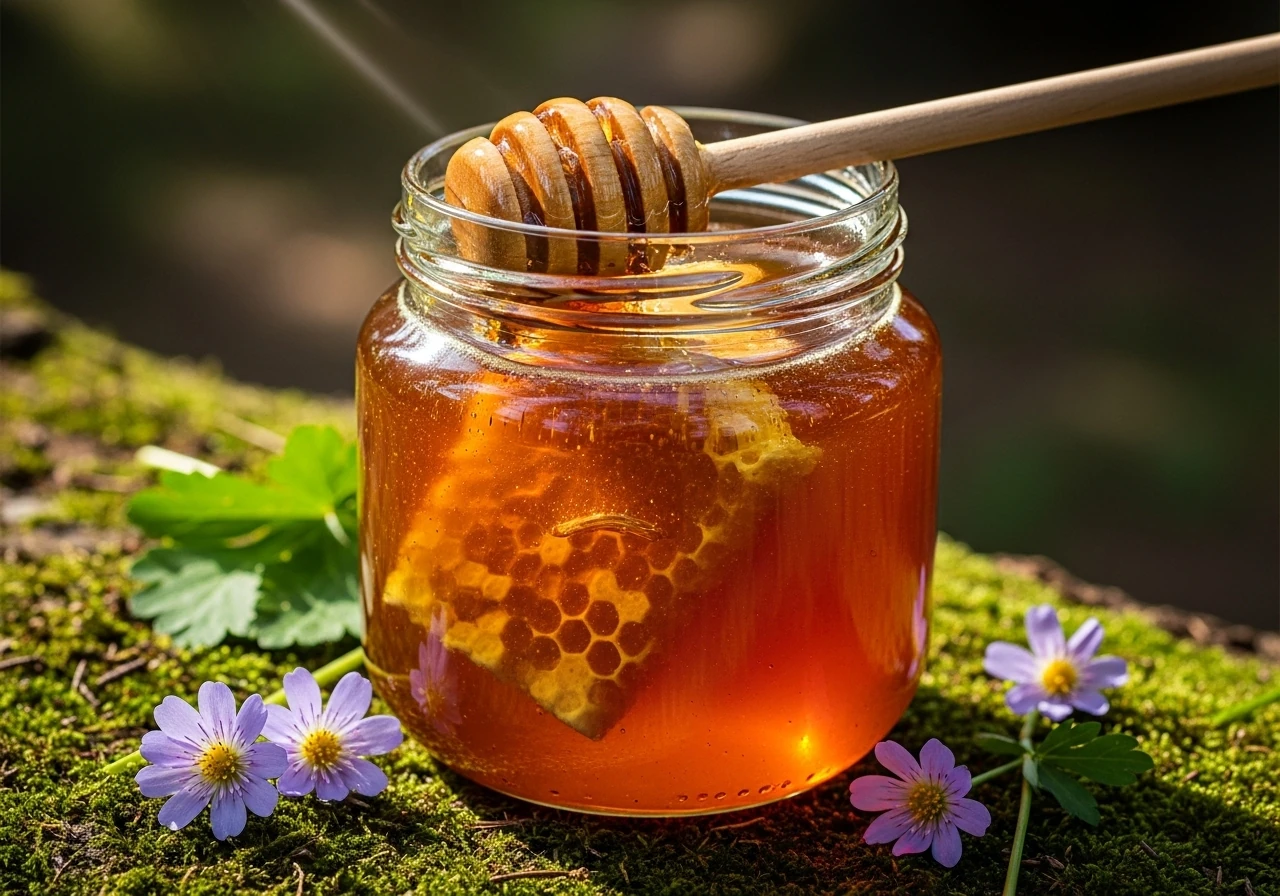
Deep within untouched forests, bees collect nectar from wildflowers and medicinal herbs to create a truly pure form of honey — Forest Honey. Unlike commercial honey, this wild variety is unprocessed, raw, and filled with nature’s healing power.
1. What Makes Forest Honey Special?
Forest Honey is sourced from wild beehives located in dense forests, away from pollution or pesticides.
It contains natural enzymes, antioxidants, bee pollen, and propolis, all of which are lost in filtered honey.
This makes it a powerful natural immunity booster and a symbol of pure, untouched wellness.
2. Ancient Uses and Healing Traditions
In ancient Ayurvedic texts, Forest Honey (called Van Madhu) was revered for its medicinal value.
It was used to:
- Heal wounds and infections naturally.
- Improve digestion and cleanse the stomach.
- Act as a carrier (Yogavahi) for herbal medicines.
- Boost energy and stamina during seasonal transitions.
Even tribal healers used it as a natural antiseptic and cough remedy.
3. How to Use Forest Honey in Daily Life
You can enjoy Forest Honey in simple, traditional ways:
- Morning Detox Drink: Mix 1 tsp honey with lukewarm water and lemon juice.
- For Cough Relief: Take with crushed black pepper or tulsi juice.
- For Skin Glow: Apply as a natural mask with turmeric or aloe vera gel.
- For Energy: Drizzle over fruits or nuts for a quick natural energy source.
🟡 Avoid adding honey to very hot water — it destroys enzymes and nutrients.
4. Health Benefits of Forest Honey
- Boosts Immunity: Rich in antioxidants that help fight free radicals.
- Supports Digestion: A natural prebiotic promoting healthy gut bacteria.
- Improves Skin Health: Acts as a moisturizer and natural healer for wounds.
- Relieves Cough and Cold: Its antibacterial nature soothes sore throats.
- Enhances Energy Levels: Provides quick natural energy without sugar spikes.
5. Identifying Pure Forest Honey
Real forest honey:
- Crystallizes naturally over time (a sign of purity).
- Has an earthy aroma and deep golden to dark brown color.
- Tastes slightly tangy and complex due to multiple forest flowers.
Avoid ultra-clear or overly sweet honey — it’s often processed or mixed.
Ancient Wisdom Meets Modern Wellness
Forest Honey bridges ancient healing traditions with modern wellness needs.
Every drop carries the essence of wildflowers, forest herbs, and pure nature, offering nourishment for both body and soul.
📚 Sources
- Charaka Samhita and Sushruta Samhita – Traditional uses of honey in Ayurveda.
- Singh, R. & Sharma, P. (2020). Wild Edible and Medicinal Plants of India. New Delhi: Botanical Publications.
- PubMed articles on honey and its medicinal properties: https://pubmed.ncbi.nlm.nih.gov