A colorful vegetable rich in vitamin C and antioxidants, supporting eye health, immunity, and metabolism.
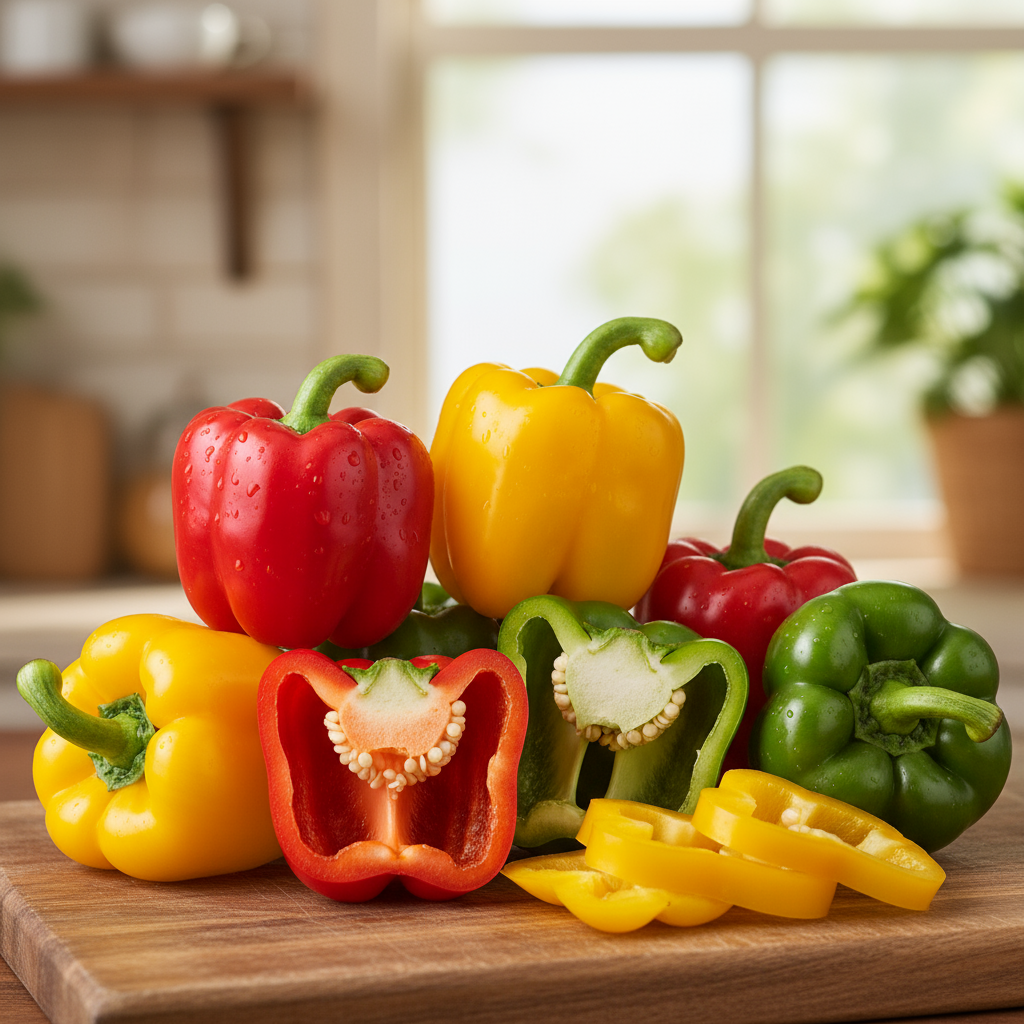
Mon, Jun 30, 2025Bell pepper (Capsicum annuum) is a vibrant and crunchy vegetable belonging to the nightshade family. It is rich in vitamin C, antioxidants, and carotenoids like beta-carotene and lutein, which help boost immunity and promote eye and skin health.
Bell peppers come in various colors — green, red, yellow, and orange — each with a unique flavor and nutrient profile.
They are low in calories and high in essential vitamins.
| Nutrient | Amount |
|---|---|
| Calories | 31 kcal |
| Carbohydrates | 6 g |
| Fiber | 2 g |
| Protein | 1 g |
| Vitamin C | 127 mg |
| Vitamin A | 157 µg |
| Potassium | 211 mg |
| Folate | 46 µg |
Bell pepper is considered light and cooling in nature.
It balances Pitta but may aggravate Vata when eaten raw in excess. Cooking lightly helps digestion.