🥬 Bottle Gourd at a Glance
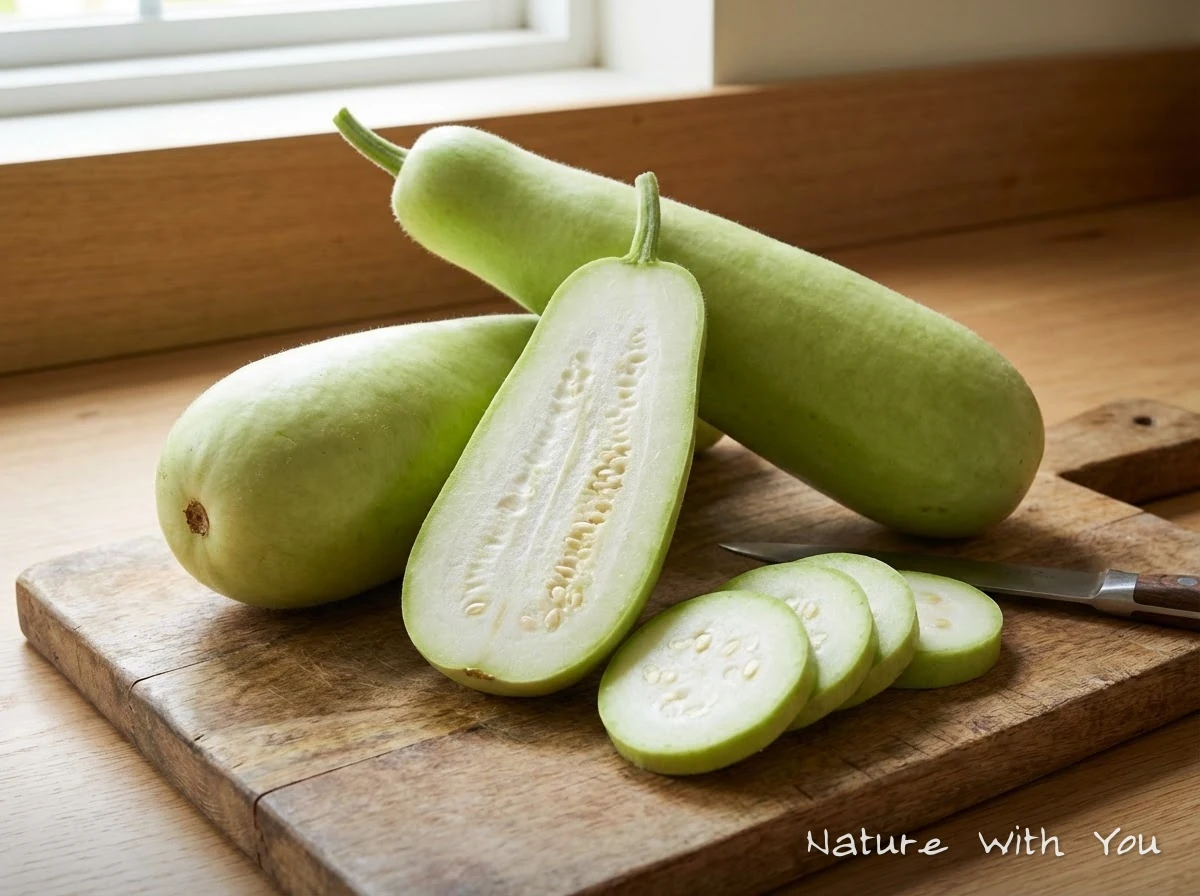
Bottle Gourd (Lagenaria siceraria), known as Lauki, Ghiya, or Dudhi in Hindi and Alabu in Sanskrit, is a pale green, bottle-shaped vegetable with a mild, slightly sweet taste and extremely high water content (over 92%). It is one of the lightest and most easily digestible vegetables in Indian cuisine, making it a favourite for those recovering from illness, fasting, or managing weight. Available primarily in summer and monsoon seasons, bottle gourd has been a cornerstone of Ayurvedic dietary therapy for centuries.
✨ Why It’s Special / Importance
- 💧 Over 92% water content – one of the most hydrating vegetables, ideal for hot weather
- ⚖️ Extremely low in calories (14 kcal per 100g) – among the lightest vegetables for weight management
- 🏺 Classified as Hridya (heart-supportive) and Laghu (light for digestion) in Ayurvedic texts
- 🍽️ A traditional fasting food – considered Sattvic (pure) and suitable for Upvas (fasting days) in many Indian traditions
- 🌍 One of the oldest cultivated plants – archaeological evidence of bottle gourd cultivation dates back over 10,000 years
🏺 Traditional / Ayurvedic Uses
Rasa (Taste): Madhura (Sweet)
Virya (Potency): Sheeta (Cool)
Vipaka (Post-digestive): Madhura (Sweet)
Dosha Effect: Balances Pitta and Vata; generally neutral for Kapha in moderation
Classical Applications:
- Classified as Hridya (heart-tonic) in Bhavaprakash Nighantu – supports cardiovascular health
- Used as Trishna-nashak (thirst-quencher) in hot weather and during fevers
- Recommended as Laghu (light) food for patients recovering from illness or undergoing Panchakarma
- Considered Mutra-virechaniya (mild diuretic) – supports urinary health
- Used in fasting diets (Upvas) as a Sattvic food that is easy on the digestive system
💪 Benefits / Health Effects
- ✅ Weight Management: Extremely low calorie (14 kcal/100g) with high water and fiber content – promotes satiety
- ✅ Digestive Health: Light, easy to digest, and gentle on the stomach – ideal during illness or fasting
- ✅ Cooling Effect: High water content and Sheeta Virya help cool the body in summer heat
- ✅ Heart Health: Ayurveda classifies it as Hridya; may help maintain healthy cholesterol levels
- ✅ Hydration: Over 92% water – helps maintain hydration during hot weather and fever
- ✅ Urinary Health: Mild diuretic properties support kidney and urinary tract function
- ✅ Sleep Support: Traditional remedy of lauki juice before bed for calming the nervous system
- ✅ Blood Pressure: Potassium content and low sodium help maintain healthy blood pressure
| Nutrient |
Amount |
| Calories |
14 kcal |
| Carbohydrates |
3.4 g |
| Fiber |
0.5 g |
| Protein |
0.6 g |
| Fat |
0.02 g |
| Vitamin C |
10 mg |
| Calcium |
26 mg |
| Potassium |
150 mg |
| Zinc |
0.7 mg |
| Water |
92.4 g |
Note: Bottle gourd’s nutritional value lies not in concentrated nutrients but in its exceptional lightness, high water content, and easy digestibility. It is one of the lowest-calorie vegetables available, making it ideal for weight-conscious diets and recovery meals.
🔄 Quick Comparison: Bottle Gourd vs Bitter Gourd – The Gourd Duo
| Feature |
Bottle Gourd (Lauki) |
Bitter Gourd (Karela) |
| Best For |
Digestion, cooling, weight loss, heart |
Blood sugar, blood purification, liver |
| Taste |
Mild, slightly sweet |
Intensely bitter |
| Dosha Effect |
Pitta & Vata balance |
Kapha & Pitta balance |
| Potency |
Cool (Sheeta) |
Hot (Ushna) |
| Key Benefit |
Lightest vegetable, high water content |
Natural blood sugar regulator |
| Calories |
14 kcal/100g |
17 kcal/100g |
| Best Season |
Summer & Monsoon |
Summer & Monsoon |
| Popular Dish |
Lauki ki sabzi, lauki halwa |
Karela sabzi, karela chips |
🥄 How to Use / Prepare
Culinary Tips:
- 🍛 Lauki ki Sabzi: Peel, cube, and cook with tomatoes, cumin, and mild spices – a staple North Indian side dish
- 🥘 Lauki Kofta: Grate lauki, mix with besan (gram flour) and spices, shape into balls, and cook in gravy
- 🍮 Lauki Halwa: Grate bottle gourd, cook slowly in ghee and milk with sugar and cardamom – a beloved Indian dessert
- 🥣 Lauki Dal: Add cubed lauki to moong or toor dal for a light, nutritious meal
- 🥛 Lauki Raita: Grate cooked lauki into yogurt with cumin and mint for a cooling side
- 🧆 Lauki Paratha: Mix grated lauki into wheat dough for soft, nutritious flatbreads
Traditional Home Remedies:
- 🥤 Lauki Juice: Extract fresh juice from raw bottle gourd, add a pinch of salt and Black Pepper – taken for cooling, heart health, and weight management
- 🍯 With Honey: Mix lauki juice with honey for a soothing remedy during fevers
- 🌿 Fasting Food: Cook plain lauki sabzi with minimal spices during religious fasts (Upvas)
⚠️ Precautions / Warnings
- ❗ CRITICAL: Never consume bitter-tasting bottle gourd or its juice. Bitter lauki contains toxic cucurbitacins that can cause severe vomiting, diarrhea, and even be life-threatening. If lauki tastes bitter, discard it immediately.
- ❗ Always taste a small piece of raw lauki before juicing – it should be mild and slightly sweet, never bitter
- ❗ Do not mix lauki juice with other bitter juices (like karela) – this can mask the bitterness warning
- ❗ Excess lauki juice may cause stomach cramps or loose stools in some people
- ❗ People with low blood pressure should be cautious with large amounts of lauki juice
- ⚠️ Normal culinary consumption (cooked lauki in meals) is completely safe and very healthy
🎉 Fun Facts / Trivia
- 🏺 Bottle gourd is one of the oldest cultivated plants – evidence of its use dates back over 10,000 years across Africa, Asia, and the Americas
- 🎵 Dried, hollow bottle gourds have been used to make musical instruments like the sitar, veena, and tumba for centuries
- 💧 The name “bottle gourd” comes from its traditional use as a water container when dried
- 🇮🇳 In India, lauki is one of the most commonly prescribed vegetables by Ayurvedic doctors for digestive recovery
- 🌱 Bottle gourd vines can grow up to 5 meters in a single season, producing multiple fruits
- 🍮 Lauki ka halwa (bottle gourd dessert) is a signature dish in North Indian cuisine, especially popular during festivals
- 🏋️ Despite being over 92% water, bottle gourd provides enough potassium and zinc to support daily wellness
Frequently Asked Questions (FAQs)
Q: Is bottle gourd good for weight loss?
A: Yes, bottle gourd is one of the best vegetables for weight management. At just 14 calories per 100g with over 92% water content, it provides satiety without adding significant calories. Its easy digestibility and mild taste make it suitable for daily consumption in weight-loss diets.
Q: Can I drink lauki juice daily?
A: Yes, in moderation (100-150 ml), fresh lauki juice can be consumed daily for its cooling and digestive benefits. However, always taste a small piece first – it must be mild and slightly sweet. If it tastes bitter, do NOT consume it, as bitter lauki contains toxic cucurbitacins.
Q: Why is bottle gourd used during fasting?
A: Bottle gourd is considered a Sattvic (pure) food in Ayurveda and many Indian traditions. It is extremely light, easy to digest, and cooling – making it ideal for fasting days when heavy or stimulating foods are avoided. Many communities permit lauki during Navratri, Ekadashi, and other fasts.
Q: How can I tell if lauki has become bitter (toxic)?
A: Always cut a small piece from the stem end and taste it raw before cooking or juicing. Fresh lauki should taste mild and slightly sweet. If it tastes bitter at all, the entire gourd should be discarded. Bitterness indicates the presence of cucurbitacins, which are toxic and can cause severe gastrointestinal distress.
Q: Is bottle gourd safe for babies and elderly?
A: Yes, cooked bottle gourd is one of the safest vegetables for babies (6+ months), elderly, and those recovering from illness. Its soft texture, mild taste, and easy digestibility make it an ideal introductory vegetable for infants and a gentle food for those with weak digestion.
Explore More: Fruits • Vegetables • Herbs • Natural Remedies • Seasonal Picks • Wellness Tips
📚 Sources
- Bhavaprakash Nighantu – Traditional Ayurvedic classification of Alabu (Bottle Gourd)
- Dey SS, et al. (2006). “Genetic variability and character association in bottle gourd.” Indian Journal of Horticulture.
- Prajapati RP, et al. (2010). “Lagenaria siceraria: A review of its phytochemistry and pharmacology.” Asian Pacific Journal of Tropical Medicine.
- USDA FoodData Central – Nutritional Information for Bottle Gourd (Calabash), Raw
← Back to Vegetables