

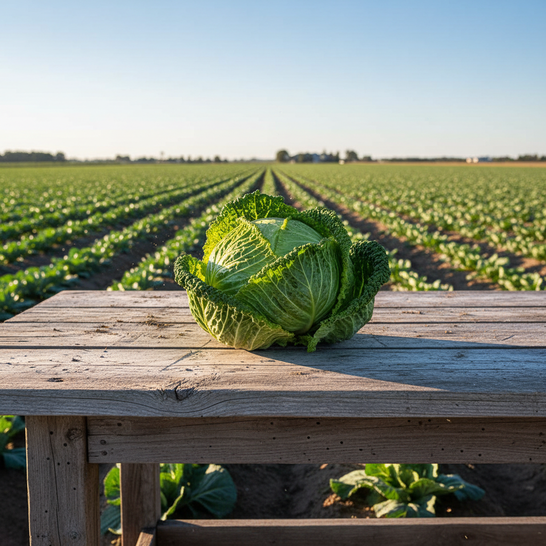
Cabbage
A leafy green or purple vegetable rich in fiber, vitamin C, and antioxidants, commonly used in salads, curries, and fermented foods.
Mon, Jun 30, 2025Cabbage is a versatile, nutrient-dense leafy vegetable that belongs to the Brassica family. It is high in fiber, vitamin C, antioxidants, and folate, making it excellent for digestion, immunity, heart health, and detoxification. Cabbage is widely used in raw salads, cooked dishes, and fermented forms like sauerkraut and kimchi.
Cabbage at a Glance
Cabbage is a dense-leaved vegetable that comes in green, red, or purple varieties.
It is low in calories but packed with nutrients and is commonly used in Indian, Asian, and Western cuisines.
Health Benefits
- ✅ Rich in fiber — promotes better digestion
- ✅ Contains vitamin C — supports immune health
- ✅ Helps reduce inflammation
- ✅ Detoxifies the body
- ✅ May reduce risk of certain cancers
- ✅ Rich in antioxidants — supports heart health
- ✅ Helps reduce cholesterol
- ✅ Beneficial for gut health
Nutritional Value (Per 100g, Raw)
| Nutrient | Amount |
|---|---|
| Calories | 25 kcal |
| Carbohydrates | 5.8 g |
| Fiber | 2.5 g |
| Vitamin C | 36% of RDI |
| Vitamin K | 72% of RDI |
| Folate | 43 µg |
How to Consume
- 🥗 Eat raw in salads or coleslaw
- 🍲 Add to soups, stews, or stir-fries
- 🍛 Cook in Indian-style curries
- 🥬 Steam or stir-fry with garlic
- 🧂 Use fermented — like kimchi or sauerkraut
Precautions
- ❗ May cause bloating or gas in some people
- ❗ Raw cabbage contains goitrogens, which may affect thyroid function in high amounts
- ❗ Excess raw intake may interfere with iodine absorption
- ❗ People with hypothyroidism should consume in moderation
Interesting Facts
- 🌍 Cultivated for over 4,000 years
- 🇩🇪 Sauerkraut (fermented cabbage) is a German specialty
- 🧊 Thrives in cooler climates and frost-tolerant
- 🧬 Red cabbage changes color based on pH (used in science experiments)
- 🥬 Belongs to the same family as broccoli and cauliflower
Related Items