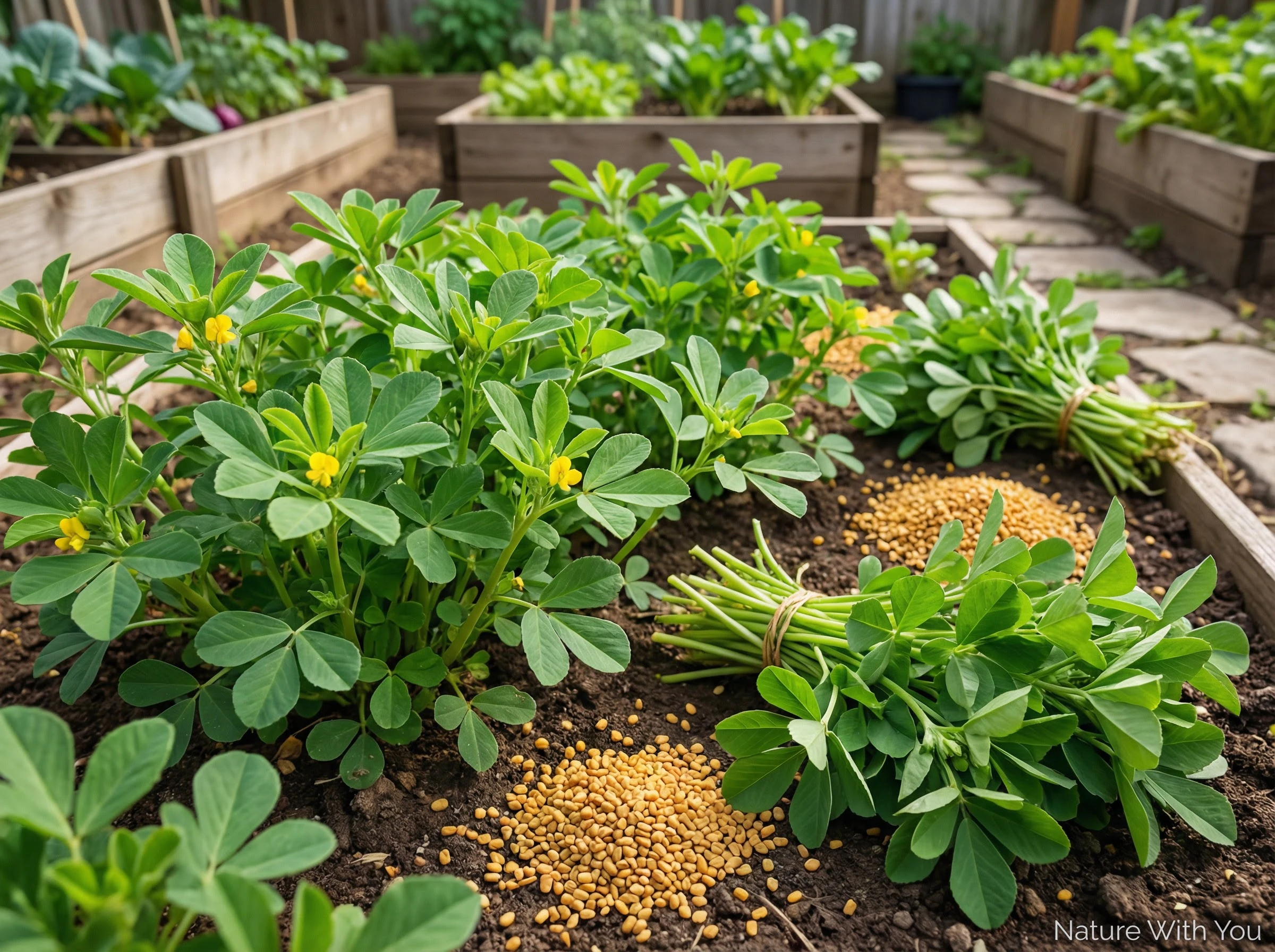
🥬 Fenugreek at a Glance
Fenugreek (Trigonella foenum-graecum), known as Methi in Hindi and Methika in Sanskrit, is a remarkable plant where both the leaves and seeds play distinct and important roles in Indian food and medicine. The fresh leaves (methi saag) are a beloved winter vegetable, the dried leaves (kasuri methi) are an irreplaceable flavouring in curries, and the seeds (methi dana) are used in tempering, home remedies, and Ayurvedic formulations. Few plants offer such versatility – fenugreek truly earns its title as a “seed and leaf powerhouse.”
✨ Why It’s Special / Importance
- 🌿 Dual-purpose plant – both leaves and seeds are extensively used in cooking and medicine, each with distinct properties
- 🔬 Contains 4-hydroxyisoleucine and galactomannan fiber – scientifically validated compounds for blood sugar regulation
- 🍼 One of the most trusted natural galactagogues (lactation boosters) – used by nursing mothers across India for centuries
- 🏺 Classified as Deepana-Pachana (digestive stimulant) in Ayurveda – balances Agni (digestive fire)
- 🍛 Kasuri Methi (dried fenugreek leaves) is the “secret ingredient” behind the signature aroma of butter chicken, dal makhani, and paneer dishes
🏺 Traditional / Ayurvedic Uses
Rasa (Taste): Tikta (Bitter), Katu (Pungent)
Virya (Potency): Ushna (Hot)
Vipaka (Post-digestive): Katu (Pungent)
Dosha Effect: Balances Vata and Kapha; may increase Pitta in excess
Classical Applications:
- Classified as Deepana-Pachana (appetite and digestion enhancer) in Charaka Samhita
- Used for Prameha (diabetes management) – seeds recommended soaked overnight for blood sugar control
- Traditional Stanya-janana (galactagogue) – methi ladoos given to new mothers to boost milk production
- Recommended as Vayu-nashak (reduces flatulence and gas) in Bhavaprakash Nighantu
- Seeds used in classical formulations for joint pain, hair health, and reproductive wellness
💪 Benefits / Health Effects
- ✅ Blood Sugar Regulation: Galactomannan fiber and 4-hydroxyisoleucine slow sugar absorption and improve insulin sensitivity
- ✅ Digestive Health: Stimulates appetite, reduces gas and bloating, and supports healthy digestive fire (Agni)
- ✅ Lactation Support: One of the most trusted natural galactagogues – used by nursing mothers across India
- ✅ Cholesterol Management: Soluble fiber (galactomannan) may help reduce LDL cholesterol levels
- ✅ Hair Health: Fenugreek seed paste and soaked water traditionally used for hair strengthening and reducing hair fall
- ✅ Iron-Rich: Fresh methi leaves provide significant iron (1.93 mg/100g) along with protein – rare for a leafy vegetable
- ✅ Joint Health: Anti-inflammatory properties of diosgenin may help reduce joint pain and stiffness
- ✅ Hormonal Balance: Diosgenin in seeds supports hormonal health in both men and women
Fresh Methi Leaves (Per 100g)
| Nutrient |
Amount |
| Calories |
49 kcal |
| Carbohydrates |
6 g |
| Fiber |
4.2 g |
| Protein |
4.4 g |
| Fat |
0.9 g |
| Iron |
1.93 mg |
| Calcium |
40 mg |
| Vitamin C |
3 mg |
| Potassium |
31 mg |
Methi Seeds (Per 100g)
| Nutrient |
Amount |
| Calories |
323 kcal |
| Carbohydrates |
58 g |
| Fiber |
25 g |
| Protein |
23 g |
| Fat |
6.4 g |
| Iron |
33.5 mg |
| Calcium |
176 mg |
| Magnesium |
191 mg |
Note: Fenugreek seeds are nutritional powerhouses – exceptionally high in fiber (25 g), protein (23 g), and iron (33.5 mg) per 100g. The fresh leaves offer a milder nutritional profile but are valuable for their iron and protein content, uncommon among leafy vegetables.
🔄 Quick Comparison: Fenugreek (Methi) vs Spinach (Palak) – Leafy Green Showdown
| Feature |
Fenugreek (Methi) |
Spinach (Palak) |
| Best For |
Blood sugar, lactation, digestion |
Iron, bone health, eye health |
| Taste |
Bitter, aromatic |
Mild, slightly sweet |
| Dosha Effect |
Vata & Kapha balance |
Pitta & Vata balance |
| Potency |
Hot (Ushna) |
Cool (Sheeta) |
| Key Compound |
4-Hydroxyisoleucine, Galactomannan |
Lutein, Zeaxanthin, Oxalates |
| Protein |
4.4 g/100g (leaves) |
3.2 g/100g |
| Best Season |
Winter (fresh leaves) |
Winter & Spring |
| Unique Feature |
Both seeds and leaves used |
Versatile in raw and cooked forms |
🥄 How to Use / Prepare
Culinary Tips – Fresh Leaves (Methi Saag):
- 🫓 Methi Paratha: Chop fresh methi, mix into wheat dough with spices – India’s favourite winter breakfast
- 🥘 Methi Aloo: Cook with cubed potatoes and spices – a classic North Indian side dish
- 🍛 Methi Dal: Add chopped methi to toor or moong dal for a nutritious bitter-savory meal
- 🫓 Methi Thepla: Gujarati spiced flatbread with methi – a popular travel food and snack
- 🥗 Methi Matar Malai: Cook with peas in a creamy gravy for a rich, flavourful dish
Culinary Tips – Dried Leaves (Kasuri Methi):
- 🍗 Crush and sprinkle over butter chicken, dal makhani, or paneer dishes as a finishing touch – the signature restaurant aroma
- 🍛 Add to gravies, curries, and naan dough for a subtle, aromatic bitterness
Culinary Tips – Seeds (Methi Dana):
- 🫘 Use in tempering (tadka) – fry seeds in oil until they crackle, add to dal or vegetable dishes
- 🥒 Add to pickle (achar) preparations for flavour and preservation
- 🌱 Sprout methi seeds for a nutrition-packed salad addition
Traditional Home Remedies:
- 💧 Soaked Methi Water: Soak 1 tsp seeds overnight, drink the water on an empty stomach – a widely practiced remedy for blood sugar management
- 🍯 Methi Ladoo: Mix methi seed powder with jaggery, ghee, and dry fruits – traditional postpartum food for new mothers to boost lactation
- 💇 Hair Pack: Soak methi seeds, grind into paste, and apply to scalp for 30 minutes – traditional remedy for hair fall and dandruff
⚠️ Precautions / Warnings
- ❗ Excess fenugreek seeds may cause stomach upset, diarrhea, or bloating
- ❗ Pregnant women should avoid medicinal doses of fenugreek seeds – may have uterine-stimulating properties (small culinary amounts are safe)
- ❗ May lower blood sugar – diabetics on medication should monitor levels and consult their doctor
- ❗ Can cause a maple syrup-like body odor in some people when consumed in large quantities
- ❗ May interact with blood-thinning medications due to mild anticoagulant properties
- ⚠️ Normal culinary use (methi sabzi, parathas, kasuri methi in curries) is safe for everyone
🎉 Fun Facts / Trivia
- 🌍 Fenugreek has been cultivated for over 6,000 years – seeds were found in the tomb of Tutankhamun in ancient Egypt
- 🍁 The compound that gives fenugreek its distinctive aroma (sotolone) is the same chemical responsible for the smell of maple syrup
- 🇮🇳 India is the world’s largest producer of fenugreek, with Rajasthan producing over 80% of India’s output
- 🍗 Kasuri methi gets its name from the Kasur region (now in Pakistan), where dried fenugreek leaves were first popularized as a spice
- 🏋️ Fenugreek seeds contain 23% protein – among the highest protein content of any seed or legume
- 📜 Ancient Romans used fenugreek to flavour wine, and Greeks used it as cattle fodder – giving it the Latin name “foenum-graecum” (Greek hay)
- 🧪 4-Hydroxyisoleucine, the blood-sugar-regulating amino acid in fenugreek, is found almost exclusively in this plant
Frequently Asked Questions (FAQs)
Q: Is fenugreek good for diabetes?
A: Yes, fenugreek is one of the most scientifically validated natural foods for blood sugar management. The galactomannan fiber slows sugar absorption, while 4-hydroxyisoleucine stimulates insulin secretion. Soaking 1 tsp of methi seeds overnight and drinking the water on an empty stomach is a widely practiced traditional remedy. However, it should complement – not replace – medical treatment.
Q: What is the difference between methi leaves and methi seeds?
A: Fresh methi leaves (saag) are a winter vegetable used in parathas, sabzi, and dal – they provide iron, protein, and a distinctive bitter flavour. Methi seeds (dana) are small, hard, golden seeds used in tempering, soaked water remedies, and medicinal formulations – they are far more concentrated in fiber, protein, and bioactive compounds like 4-hydroxyisoleucine.
Q: Can fenugreek help with hair loss?
A: Traditionally, yes. Fenugreek seeds soaked overnight, ground into a paste, and applied to the scalp are a widely used Indian home remedy for hair fall, dandruff, and hair strengthening. The lecithin and protein content in seeds is believed to nourish hair follicles. Scientific evidence is limited but traditional use is widespread.
Q: Is fenugreek safe during pregnancy?
A: Fresh methi leaves in normal cooking quantities (sabzi, paratha) are generally safe during pregnancy. However, medicinal doses of fenugreek seeds should be avoided during pregnancy as they may have uterine-stimulating properties. After delivery, fenugreek is actively recommended to boost lactation.
Q: How can I reduce the bitterness of methi leaves?
A: The most effective methods are: (1) Add a pinch of sugar or jaggery while cooking; (2) Blanch the leaves briefly in boiling water before using in recipes; (3) Cook with potatoes (methi aloo) – the starchiness balances the bitterness; (4) Use younger, tender leaves which are less bitter than mature ones.
Explore More: Fruits • Vegetables • Herbs • Natural Remedies • Seasonal Picks • Wellness Tips
📚 Sources
- Charaka Samhita and Bhavaprakash Nighantu – Traditional Ayurvedic uses of Methika (Fenugreek)
- Neelakantan N, et al. (2014). “Effect of fenugreek (Trigonella foenum-graecum L.) intake on glycemia: a meta-analysis.” Journal of Ethnopharmacology.
- Turkyılmaz C, et al. (2011). “The effect of galactagogue herbal tea on breast milk production and short-term catch-up of birth weight in the first week of life.” Journal of Alternative and Complementary Medicine.
- USDA FoodData Central – Nutritional Information for Fenugreek Leaves and Seeds
← Back to Vegetables